Peru - from Lima to the south - Paracas, Ica, Nazca, Arequipa
- Paracas
- Intermezzo: Lima, San Isidro (Czech Embassy neighborhood)
- Ica, Huacachina
- Nazca
- Arequipa
- Practical Information (2025 Prices)
Paracas
The bus ride from Lima to Paracas took about four hours and led mostly through a desolate desert with not much to see.
An hour after leaving Lima, we received an email stating that we could pick up our documents for the postal vote—in Lima, of course. The election of 2025 was the first one where postal voting was possible in Czechia and we didn’t want to miss out on this civilizational achievement. We fought quite hard for the possibility to vote by mail, we exchanged several emails about that with our embassy in Lima. Initially, they didn’t want to register us on the voters’ list. We had to point out that we are not required to prove residency abroad and that the law doesn’t specify how long we must be in the country for it to be considered a “long-term stay.” Finally, we got registered, so we didn’t want to lose the chance to vote just because of uncollected ballots. It’s a shame the email didn’t reach us a bit earlier, this way we knew another trip back to Lima awaits us.
In Paracas, the bus dropped us off on the edge of town, leaving us with more than a kilometer to walk to our accommodation. We refused the offered taxi and dragged the luggage to the hotel ourselves—good thing our large bag has wheels.
After checking in and unpacking, we headed out to explore Paracas. We quickly realized that the town, and especially the waterfront, is touristy through and through—there’s practically nothing authentic here. Waiters shout at us from restaurants, vendors from shops, and all agencies try to sell tour offer. We already know that in Peru, they try this with tourists regularly, but in Paracas, so many touts are concentrated in a small space that ignoring them is much more demanding.
Instead, we sat down on a bench a bit further away and did our own research online to see where and for how much we could get a trip to the Islas Ballestas—which is exactly why we came here. Prices vary widely, but all tours are essentially the same; it just depends on what you find and bargain for. We aren’t very good at bargaining, but we know how to search, so in the end we took an offer for 51 PEN per person (including port fees). They originally tried to push the same trip on us for double that, so we consider it a success.
Exhausted from the choosing process, we went for a coffee, which I desperately needed after the night on the bus, and then straight to dinner. Choosing in a street full of restaurants where everyone is offering you something is no easy task. Eventually, we found a slightly less touristy place a bit further out, offering a menu with ceviche and fried fish at a reasonable price. Along with it, we got a pint of chicha morada, a refreshing drink made from purple corn. We got so much food that we struggled to finish it all.
The next morning, we set off for the Islas Ballestas. The islands are over an hour away by speedboat. On the way, we stopped at the “Candelabro” geoglyph on the edge of the peninsula. Then we headed at full speed toward the islands, along with dozens of other tour boats. For environmental protection reasons, all vessels must follow the same route and sail only in the morning, so there really isn’t much difference between the tours.
The Islas Ballestas are nicknamed the “Poor Man’s Galapagos.” Unique fauna lives here—penguins, seals, and many species of seabirds. While it’s certainly not as grand as the real Galapagos, it’s enough for us for now (plus it costs a fraction of the price). Originally, guano was mined on the islands; today, mining is strictly regulated and animal protection is the priority. Apparently, the locals realized that tourists bring in more money than bird droppings.
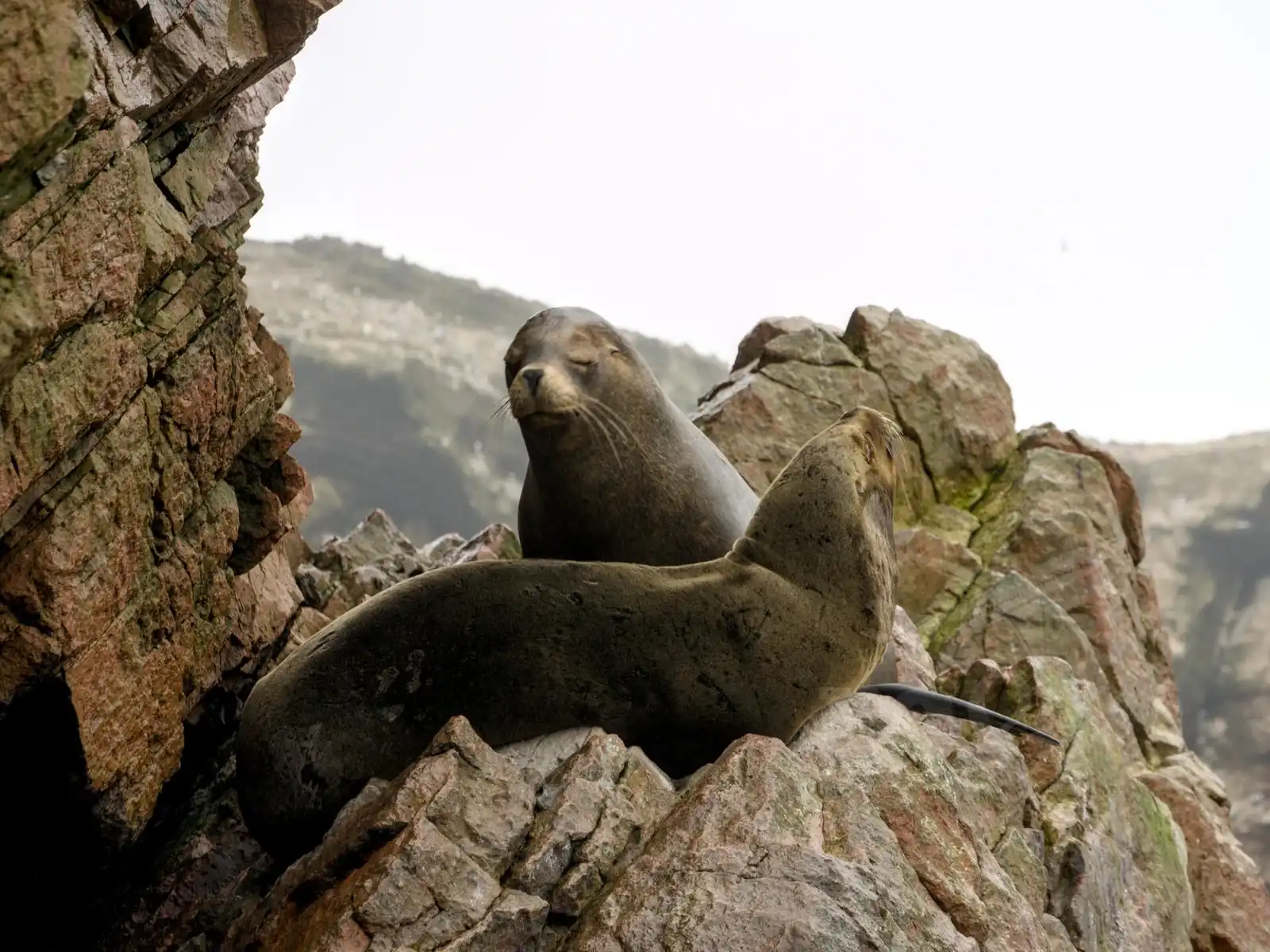
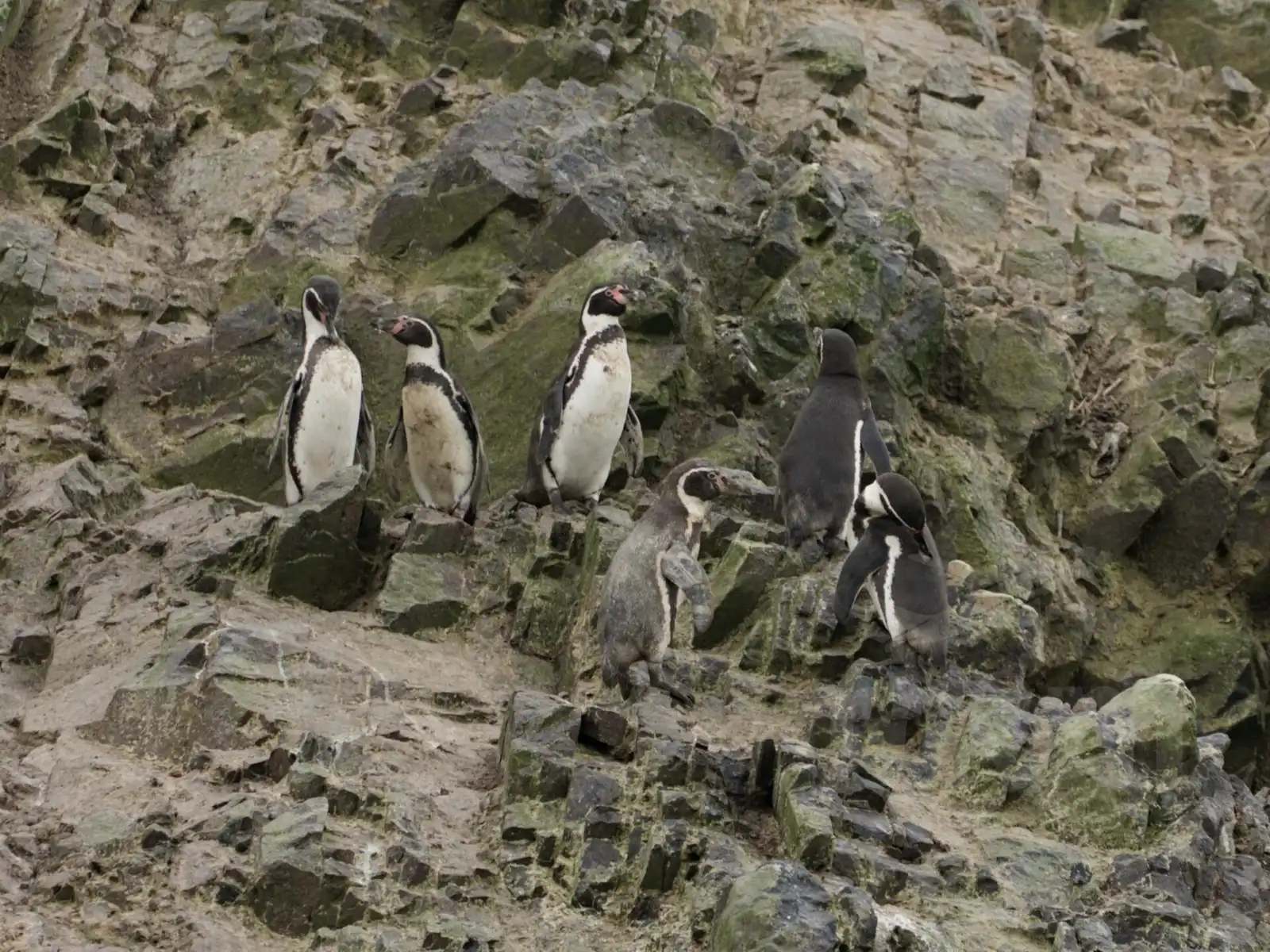
On the boat, we passed between rocks where penguins and seals were sunbathing, and we occasionally spotted them in the water too. We snapped one photo after another—I carry a camera with a telephoto lens specifically for these occasions. We saw many seals, but only a few penguins. The local colony was decimated by bird flu a few years ago, hopefully it will recover soon. The ride between the islands doesn’t last long, and after a few hours, we were back in the port.
In one of the side streets near our accommodation, we discovered a restaurant with prices for locals. We had a menu del día for 20 PEN, which is a bit above average for Peru, but compared to the tourist traps on the waterfront, it’s a great price. What we saved on lunch, we easily spent in the afternoon—we had pisco sour and chilcano, popular local drinks, in a bar overlooking the sea. By the way, almost all places advertise “happy hour,” but in Paracas, it seems every hour is happy—they offer it all day (and sometimes it doesn’t end up any cheaper than the prices written in the menu).
We decided to rent bikes the next day and explore the desert reserve on the peninsula. We found a rental shop on Google Maps with great reviews. The bikes were in good condition and for a fair price, so we booked them. After breakfast, we set off. Riding a bike through the desert is a fascinating experience—sand is everywhere (and soon enough, also in your mouth and eyes). It went well at first, but near the coast, an unpleasant wind picked up. However, the views of the desert falling into the sea were absolutely beautiful.
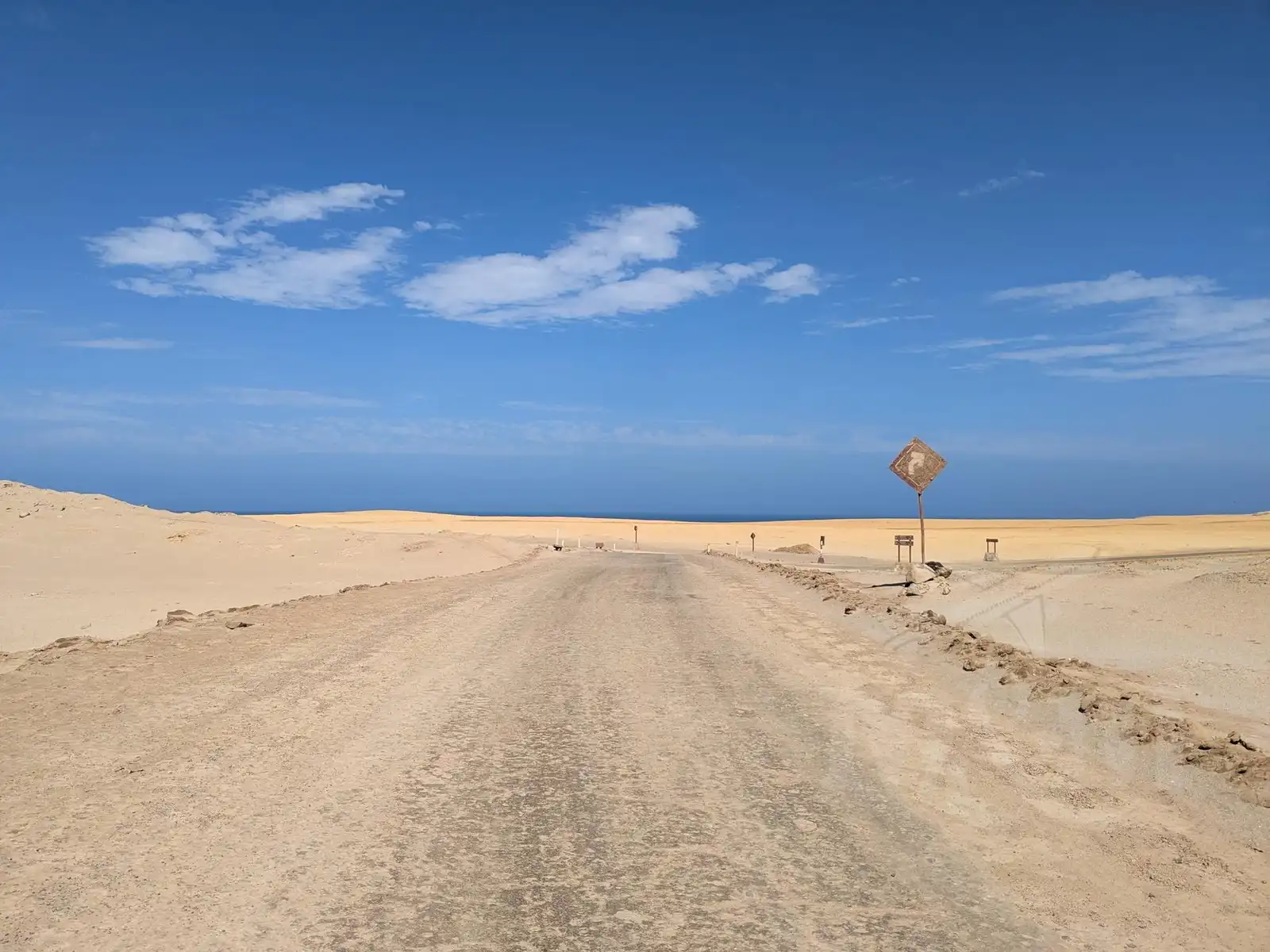
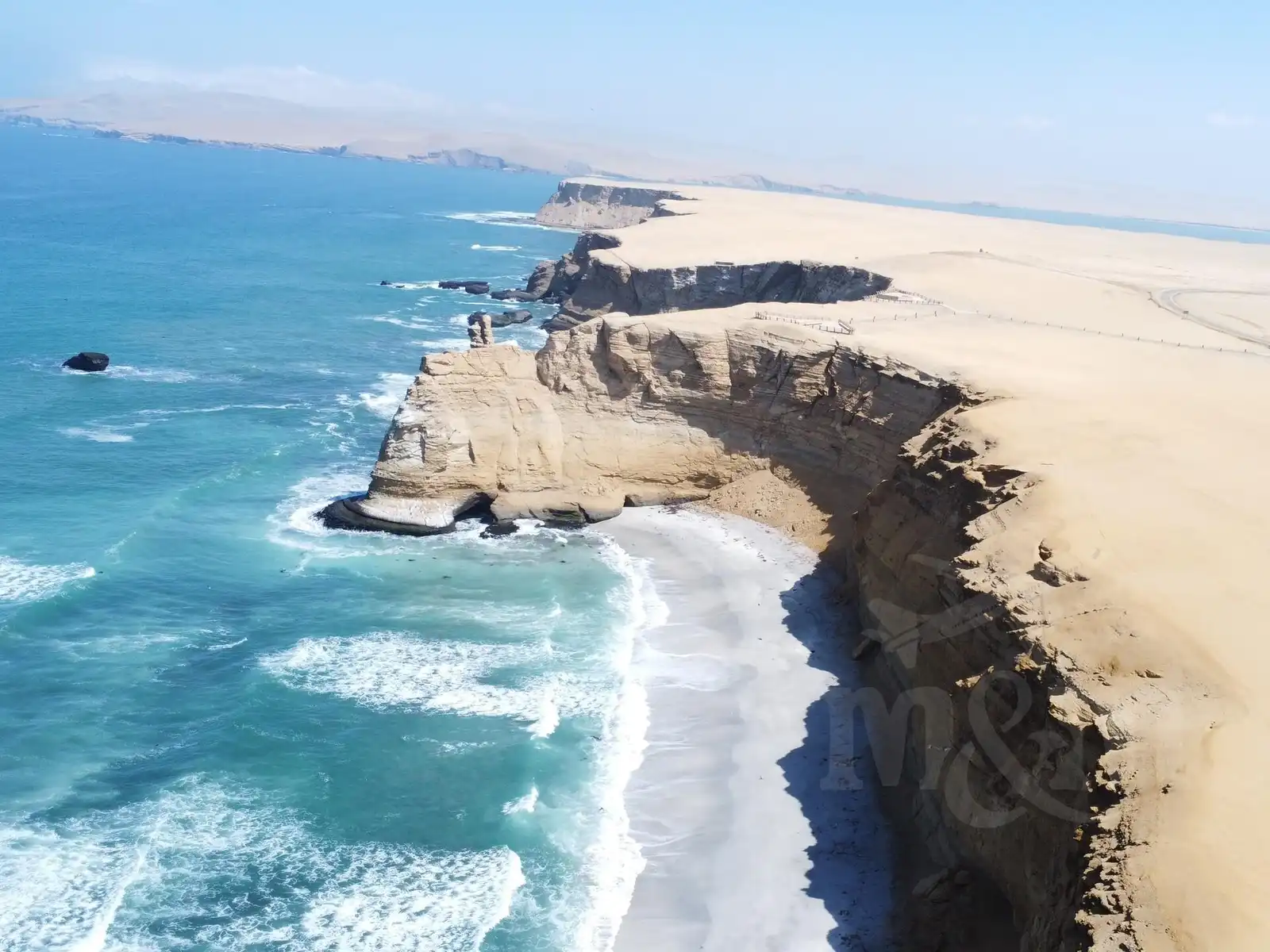
We wanted to reach the end of the road at La Mina beach, but the path went uphill and directly against the wind. We managed the hill on the lowest gear, but those less than two kilometers took us nearly half an hour. The way back was easier—with the wind at our backs, we were back in Paracas around 2 PM. We returned the bikes and still caught the menu del día at our favorite restaurant.
In the evening, we said goodbye to Paracas and headed back to Lima to pick up our postal ballots.
Intermezzo: Lima, San Isidro (Czech Embassy neighborhood)
The Czech Embassy in Lima is located in the San Isidro diplomatic district, so we strategically found accommodation within walking distance. On the evening we arrived, we took an Uber to our lodging, dropped our things, and fell into bed. Our accommodation was modest—a room in an apartment where the owner lived—but it felt very pleasant, even though we had to do without breakfast.
In the morning, we were in no hurry. We went for a proper breakfast at a café nearby and only then headed to the embassy. It is located in a beautiful villa surrounded by a garden. The nice front entrance wasn’t meant for us, though—we had to go through the back to the consular department office. We showed our passports and received envelopes with the identification slips for the postal vote. In a few minutes, we were out.
We could have had the envelopes sent by mail, but Peruvian postal services outside Lima are not exactly known for reliability, and we had no idea when (or if) the ballots would reach us. Moreover, during our two-month journey, we didn’t stay anywhere for more than a few days. Picking them up in person at the embassy was the only certain way. Thanks to these ballots, we will be able to vote and send the votes in advance, because we know that on the election day in early October, we will be in Cusco—which is more than 24 hours away from the nearest polling station at the embassy. The whole process is quite convoluted, but we felt that these elections were important and definitely didn’t want to skip them.
With the ballots in our pockets, we immediately bought bus tickets from Lima. We didn’t go back to Paracas and headed straight to our next stop, the city of Ica. So we got into an Uber again, this time toward the bus station, and continued our journey.
All in all, our sense of civic responsibility cost us nine extra hours on the bus, one “wasted” day in Lima, and roughly 200 PEN (about 60 USD) just for the tickets. It’s much more effort than the average voter in Czechia has to put in, where the ballot box is barely a few minutes’ walk away. But we’re glad we could be a part of it—we used the historically first opportunity to vote from abroad by mail. The results ultimately pleased us much less, but we did our best…
Ica, Huacachina
We arrived in Ica after dark. The bus station didn’t feel very welcoming—there were lots of people everywhere shouting “taxi.” But we prefer Uber if it’s available, because we know the price in advance and avoid the annoying bargaining.
We found accommodation on the edge of town near the Huacachina oasis. We didn’t want to sleep directly in the oasis—it would be more expensive, and it looked like there were mostly noisy party hostels there. Our hotel was large and quite modern (by the way, the only one in all of Peru where we saw an elevator), but suspiciously empty. We might have been the only guests on the whole floor.
Breakfast wasn’t included, and we forgot to buy supplies in the evening. Without the prospect of food, Magda refused to leave the bed, so I was persuaded to do a morning run to a store on the outskirts of Ica. I caught a panettone—a sweet bread that is mainly eaten here at Christmas. We didn’t care, as long as it had sugar in it!
When we finally dragged ourselves out of the hotel, we headed to the oasis. It was less than a kilometer along a broken road that was partially buried in sand. Just before the oasis, we left the road and headed up the ridge of a dune. Walking in deep sand is an experience in itself—with every step, you slide back a bit, so for a few hundred meters of elevation, you use perhaps triple the energy. But the view from the top of the oasis and the endless desert was worth it. The buildings in the oasis itself aren’t exactly great architecture (half of them are falling apart and the other half are hotels with pools), but the lake with palm trees in the middle of dunes simply never gets old for a Central European.
Our main goal was a buggy ride into the desert and sandboarding (something like snowboarding, but on sand). It’s a total tourist classic, but where else can you experience that? In the oasis, almost every agency offers this combination. We chose one with good reviews and arranged a two-hour “sunset tour” via WhatsApp for 50 PEN per person (about 15 USD). Payment took place directly at the start of the tour. Before that, we managed a great lunch a bit away from the main bustle—the local ceviche was simply excellent.
Before the start, the driver strapped us in properly. The belts looked like they were from a plane, and we soon understood why. The ride was quite fast—sharp turns and drops over the edges of dunes tossed us around in our seats. It’s like a roller coaster, but with a much better view. After a while, we stopped, and our driver, who was also the guide, pulled out boards. The descent was done lying on our stomachs. I don’t know if they have sandboards for standing rides; in any case, we didn’t get them. But it was great fun, and we repeated the ride and descent several times. The icing on the cake was the sunset at the top of a dune, as the sun slowly hid in the sea of sand. Truly a magical sight.
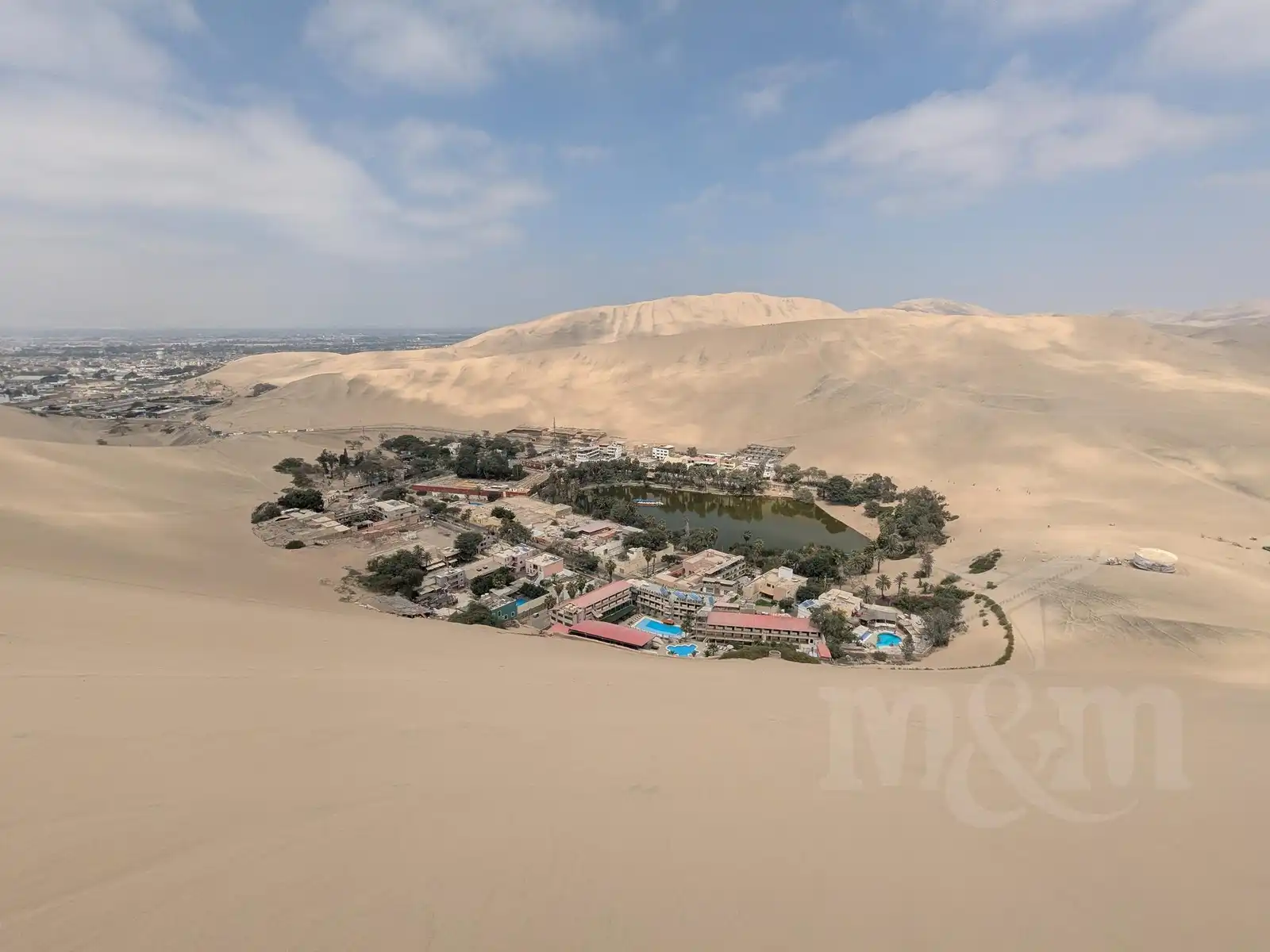
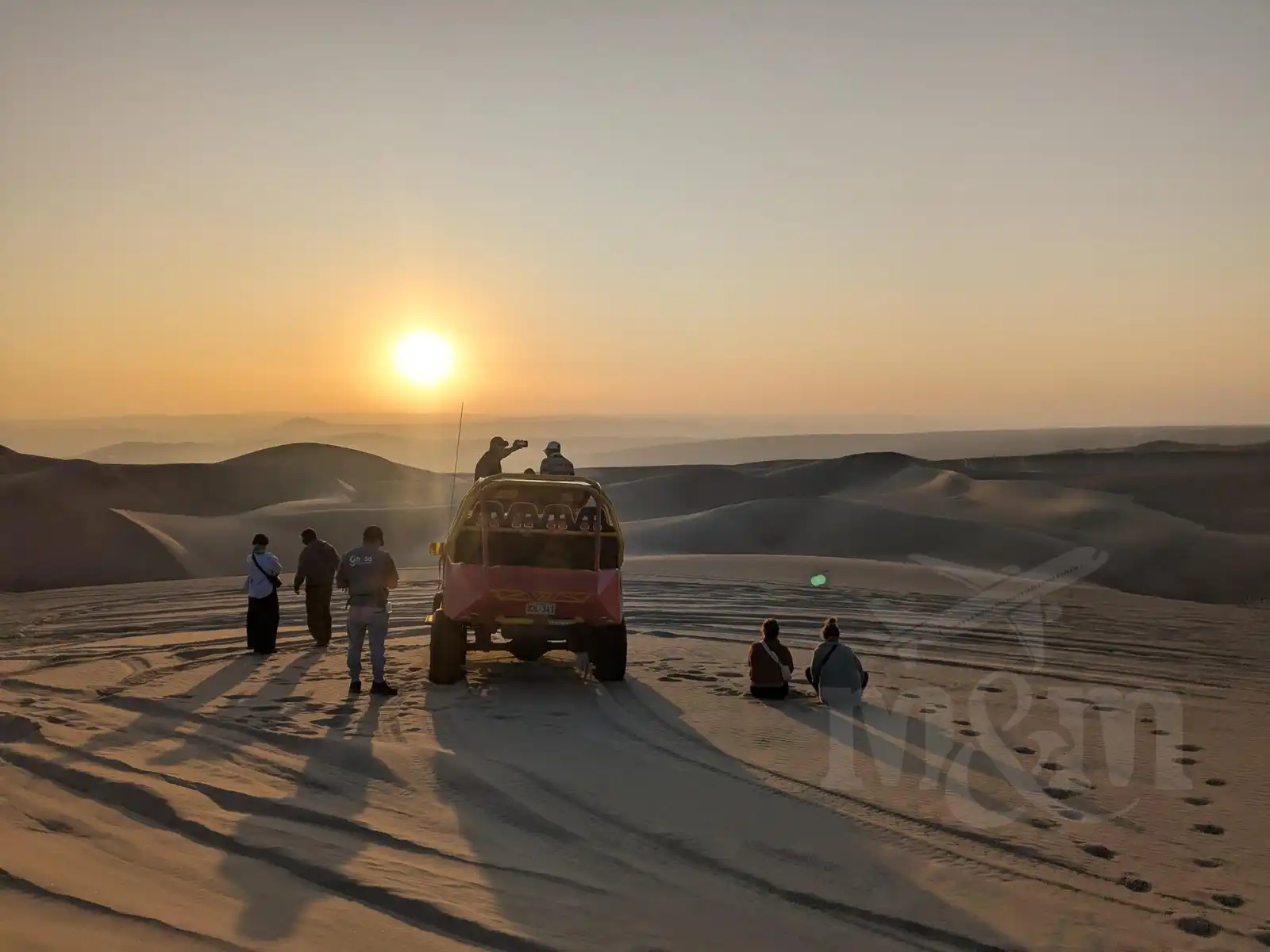
On the way back, we felt like trying some local wine. The area around Ica is famous for its vineyards and the production of pisco (grape brandy). Instead of organized tours, we chose our own way and stopped at one of the wine shops. We got a tasting of eight types of wine and pisco, complete with an expert explanation. It was entirely in Spanish, so we understood every fifth word, but the tasting convinced us—we left with a bottle in hand and the feeling that it cost us significantly less than a half-day trip.
The next day, we decided we had seen everything essential in the oasis and took a taxi to the center of Ica. After quite a while, we had a great meal at a vegetarian restaurant and finished the voting bureaucracy: printing the ballots and sending them via the local post (Serpost)—our first experience with Peruvian postal services. We spent the remaining few hours in the hot city over coffee and a tasting of picarones (something like donuts, but made of pumpkin and sweet potatoes). In the late afternoon, we had only a short bus transfer to Nazca.
Nazca
We arrived in Nazca late in the evening, long after sunset. The journey followed the famous Pan-American Highway—which sounds grand, but in reality, it’s just an ordinary road with one lane in each direction. The legendary geoglyphs and lines lie directly around it, but in the dark, we saw absolutely nothing of them. We just walked quickly through the town to our accommodation and went straight to sleep.
In the morning, we started figuring out how to actually visit these mysterious figures. The most popular choice is undoubtedly sightseeing flights from a small airport on the edge of Nazca, but those are (quite logically) rather expensive. Moreover, we weren’t entirely convinced by the photos from the planes—we thought the shapes might be even better visible on satellite images in Google Maps. So we chose a more economical option: a lookout tower directly by the road, from which at least a few main figures can be seen. We decided to head there on our own by local bus.
From the height of the tower, three geoglyphs are visible—the Tree, the Hands (which remind some people more of a chicken), and the Lizard. The lizard is unfortunately cut in half by the highway, which was built here even before the figures were discovered. A kilometer further, you can visit the Cat figure and, from the slope above it, observe the straight lines crossing the plain all the way to the horizon. Here too, a few coins are paid to a guard, even though there’s absolutely nothing far and wide. We got back to Nazca the same way—we just waved at a passing bus. In total, this trip cost us 19 PEN per person, and we were back in the center by noon.
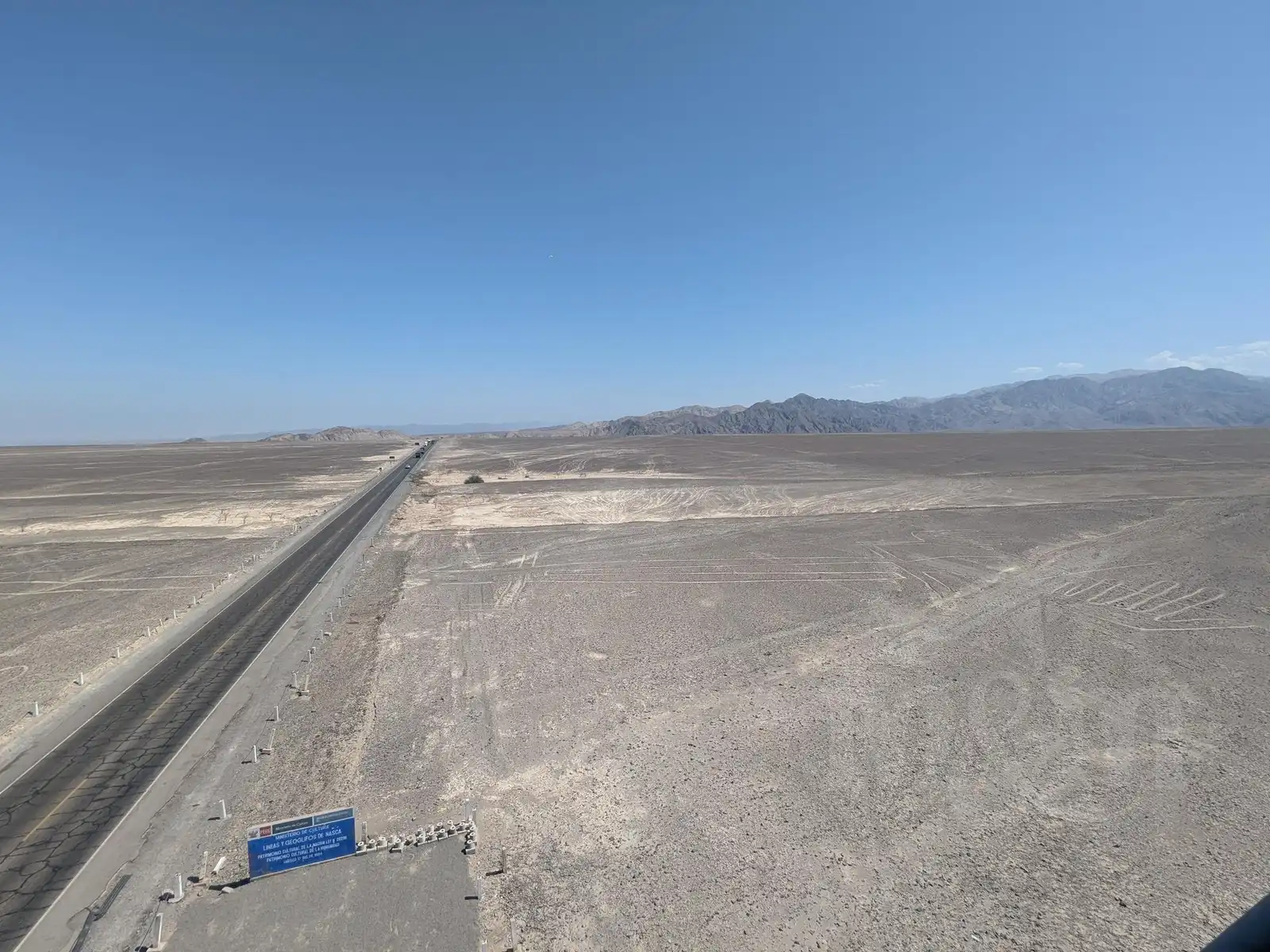
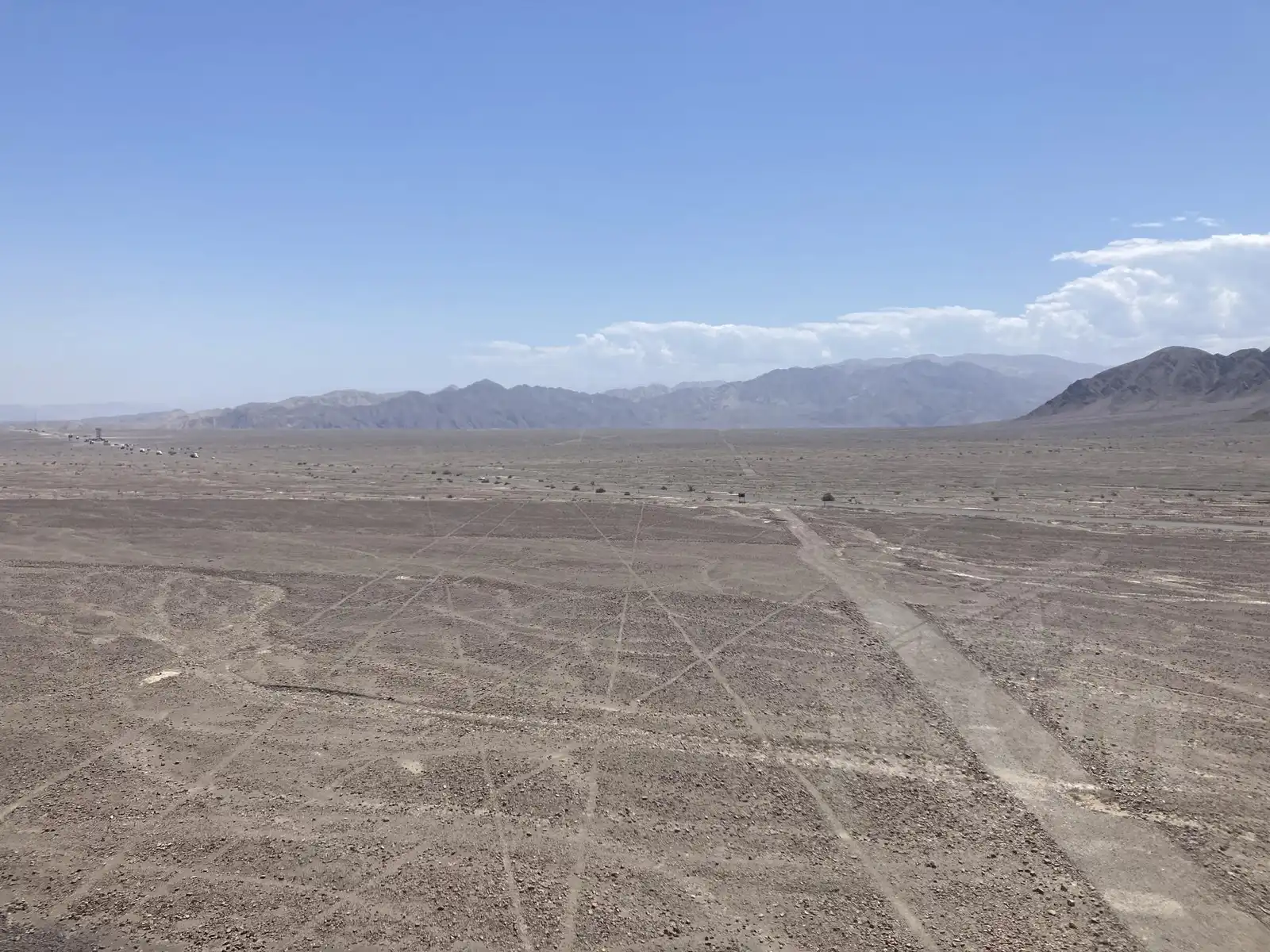
For lunch, we had a cheap menu del día on the square. It filled us up, but it wasn’t exactly a gastronomic experience, so we had to fix our mood with a coffee and a pancake in a nearby café. Before our night departure to Arequipa, we visited a small local planetarium to find out more about those mysterious lines. The planetarium offers tours in English only in the evening after sunset, and I must say we highly recommend a visit. We learned many interesting things about the Nazca culture and the history of discovering the lines.
A huge amount of work on their preservation was done by German mathematician Maria Reiche, who dedicated her entire life to the research. Soon, a film called Lady Nazca should even be released, mapping her fascinating fate. Moreover, the lecture at the planetarium was led by someone who knew Maria personally, which added authenticity to the whole experience.
Then there was nothing left but to board the night bus that took us all the way to Arequipa.
Arequipa
We arrived in Arequipa at dawn, as the city was just waking up. At the station, which lies quite far from the center, we had a fresh juice and something sweet for breakfast and then took an Uber to our accommodation. We were lucky again—they checked us in immediately after our arrival, which was more than welcome after the night transfer.
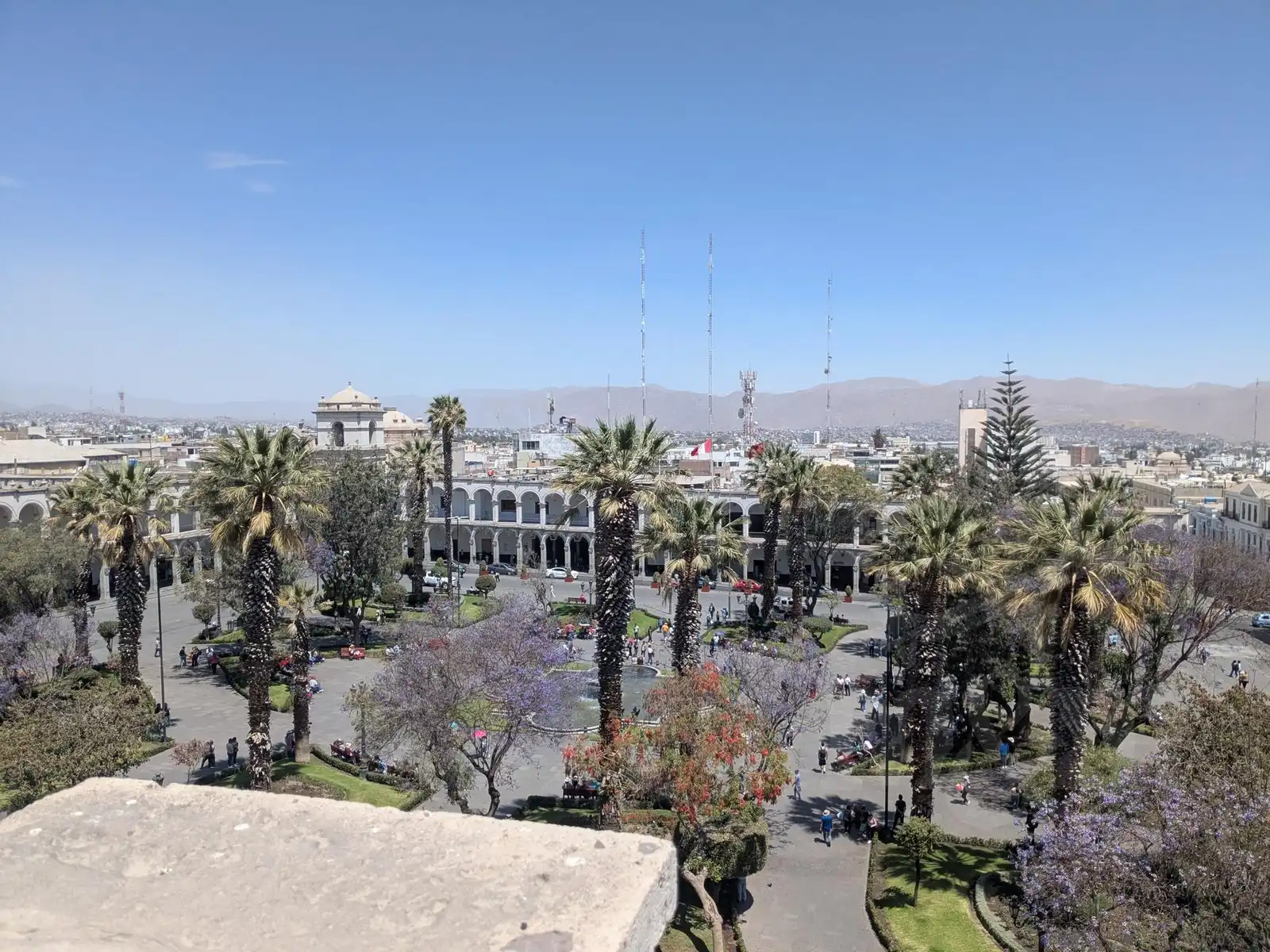
The sun was shining, and everything indicated that a beautiful day awaited us. Despite mild fatigue, we set out to explore. We walked through the main square and surrounding streets full of snow-white buildings made of sillar volcanic stone, thanks to which Arequipa is nicknamed the “White City.” Our goal was Mundo Alpaca—a museum of the Michell company, one of the largest wool processors in Peru. Entry is free, and besides interesting facts about wool processing, you’ll also find an outdoor enclosure with llamas and alpacas. It was our first close encounter with these animals, and we spent quite a bit of time with them. You can also get their feed there, for which these photogenic and incredibly cute animals will willingly run to you.
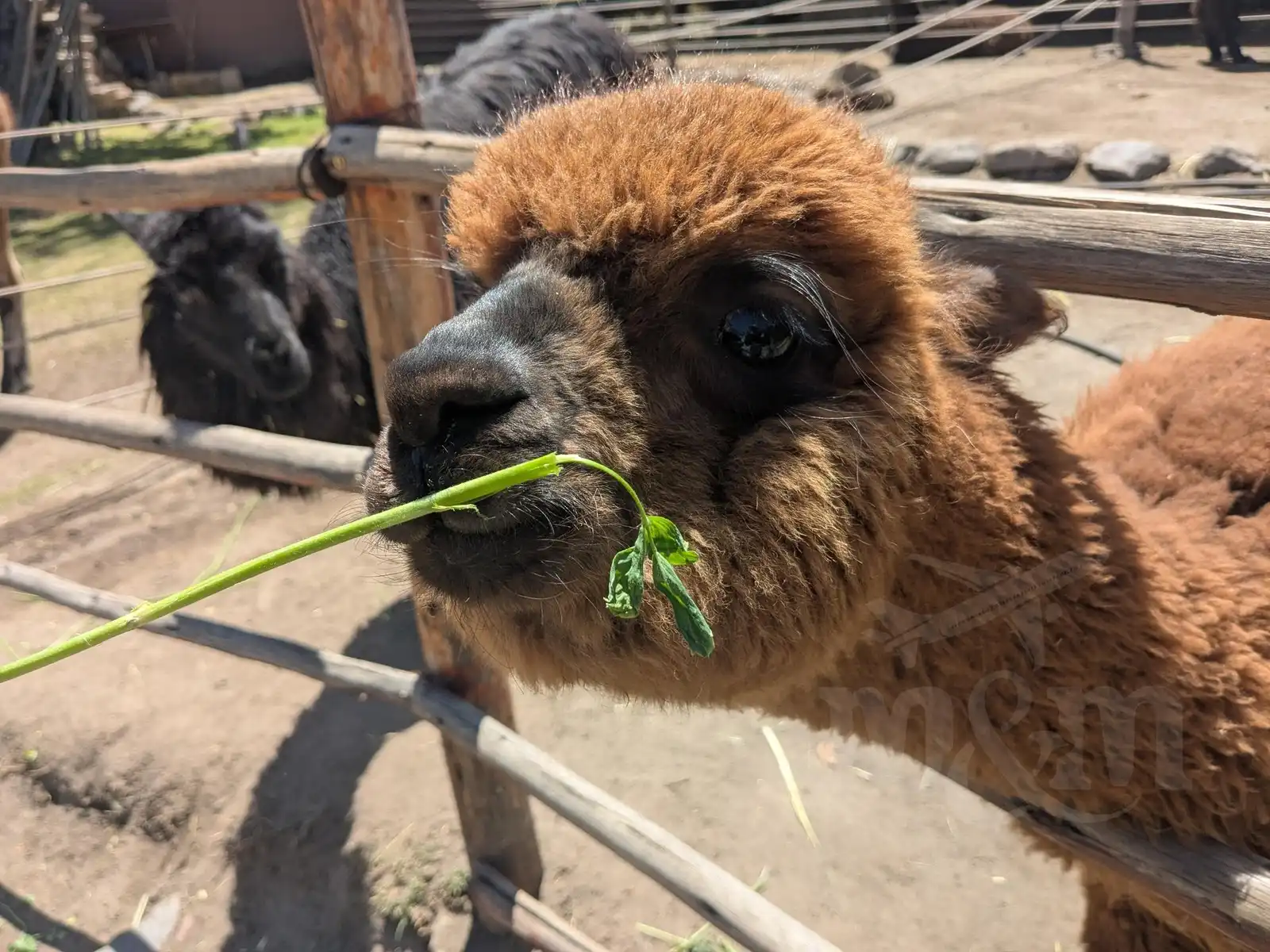
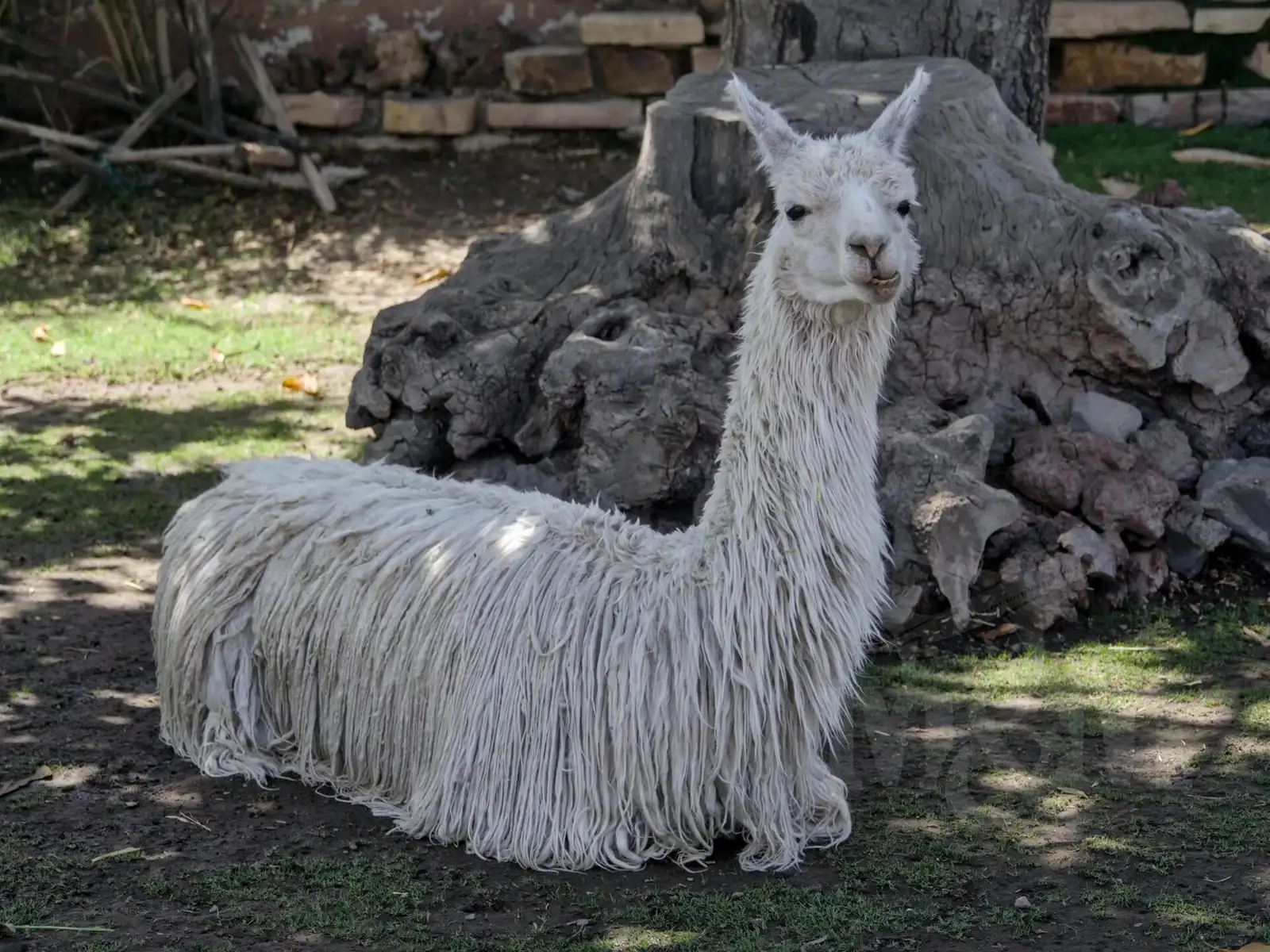
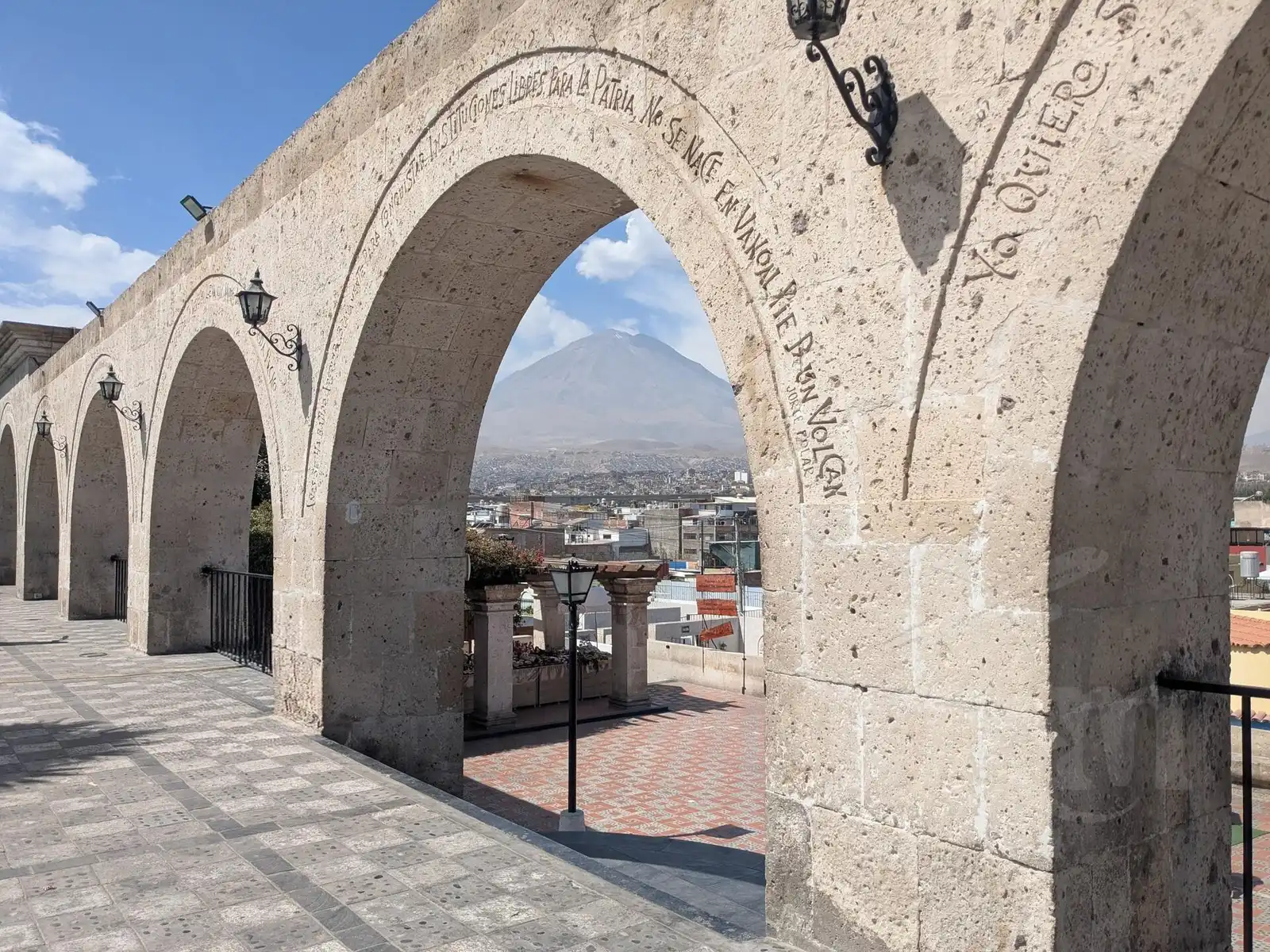
When we had looked at the llamas enough, we continued to the Yanahuara viewpoint, where a Latin American food festival was taking place. I couldn’t resist and tasted great meat at an Argentinian stall—by the way, that’s where I first encountered the typical Argentinian Spanish pronunciation live, where they pronounce “pollo” (chicken) as “posho,” which confused me a bit. Magda, meanwhile, played it safe with sweet picarones. Both were absolutely delicious.
In Arequipa, we didn’t miss a tour of the cathedral. Its interior is beautiful, but the best experience awaited us at the end—climbing to the bells on the roof. From there, a breathtaking view opens up over the entire city and the surrounding Misti and Chachani volcanoes. We definitely recommend it.
We spent the rest of the afternoon planning the next day. We strongly considered a trip to the Colca Canyon, which is said to be one of the deepest in the world. In the end, however, we rejected it. A one-day tour means over 8 hours on a bus and only a single hour at the canyon itself (plus time for lunch and a folklore program we didn’t particularly care about). After all those transfers, we just didn’t want to spend all day on a bus seat for an hour of a viewpoint, especially for a relatively expensive entrance fee. We concluded that Colca only makes sense if one can stay longer and go on a trek.
Instead, we chose a shorter alternative—the Salinas y Aguada Blanca reserve north of the city. They promised us only 4 hours on the road, views of a salt lagoon, and potentially a thermal bath. We went with an organized tour (50 PEN per person) because transport to these places is almost impossible on your own. In the evening, news of a fire north of the city made us a bit uncertain, but we hoped the trip wouldn’t be canceled because of it.
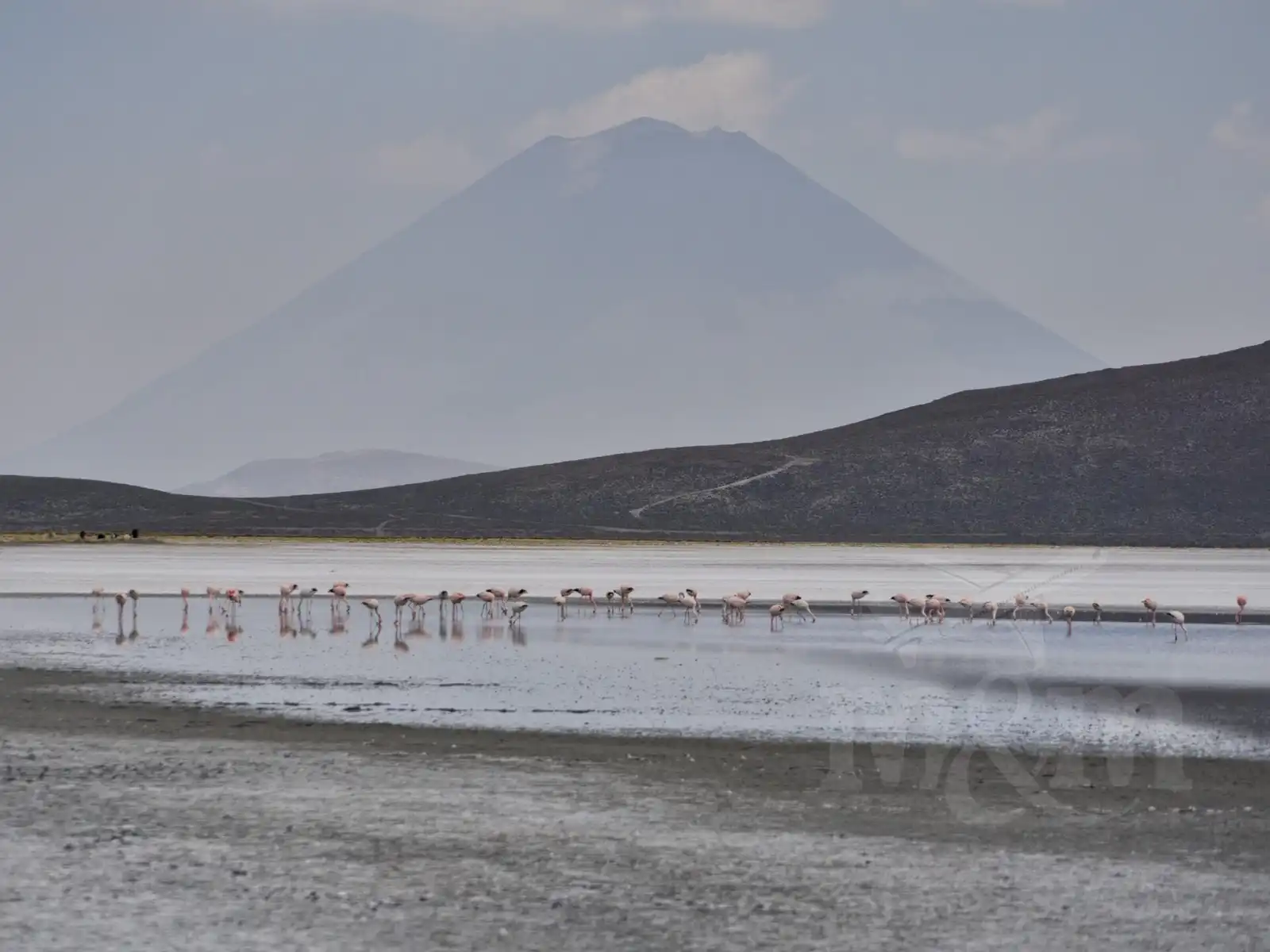
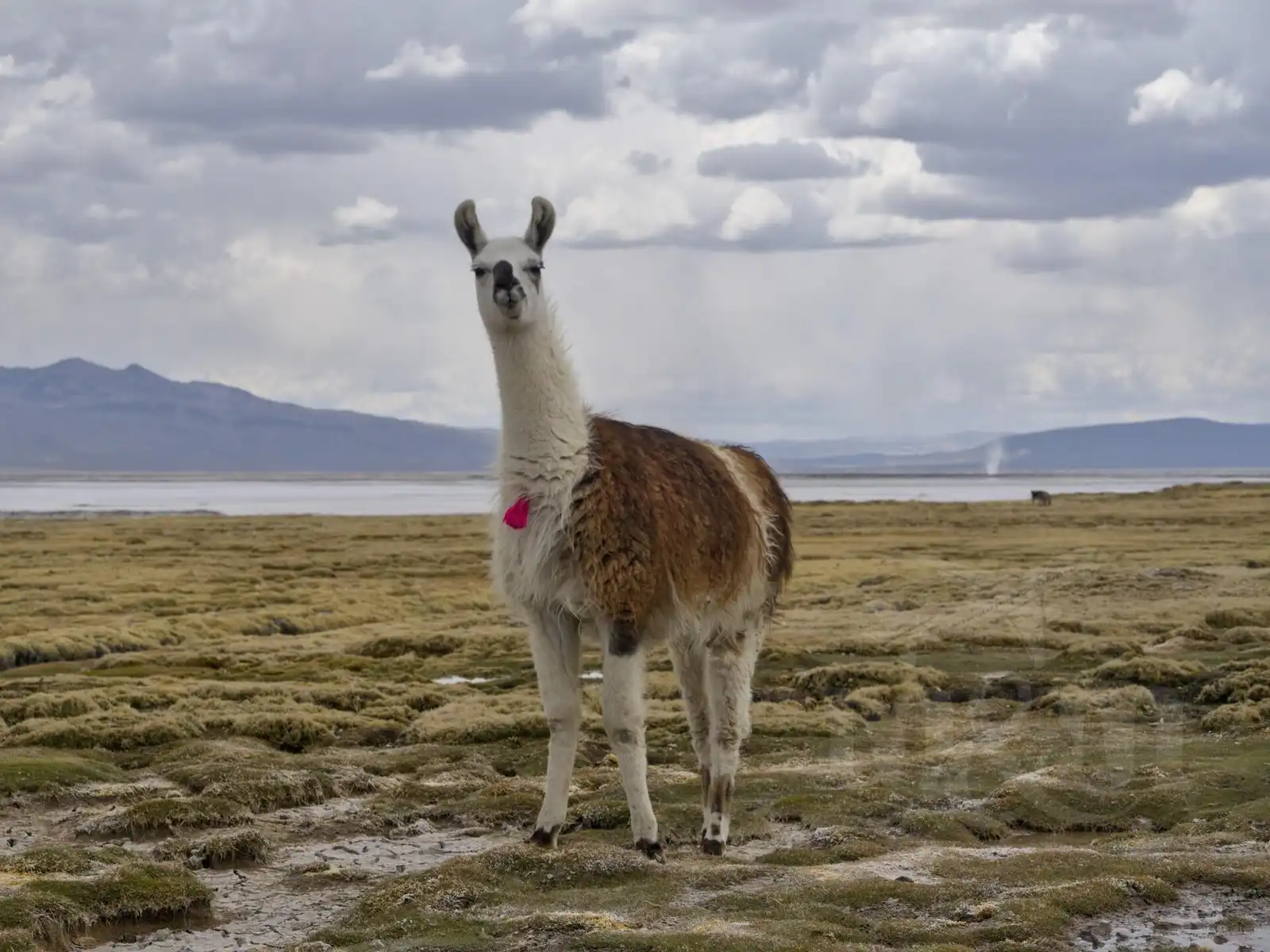
The fire didn’t stop the trip, but it somewhat disrupted the views of the volcanoes. At the first stop, almost nothing could be seen but smoke in the distance, and the smell of smoke was in the air. The journey continued along one of the worst roads we’ve ever experienced—and that’s saying something in Peru! After an hour of shaking, we reached a small village where they tried to sell us a few souvenirs. But then the salt lagoon opened up before us, with llamas grazing on it. It was a beautiful sight, enhanced by flamingos on the lake’s surface with the silhouette of a volcano in the background. I took plenty of photos and afterwards had a hard time choosing the best ones. We didn’t have time left for the thermal pool, but we still liked this area very much.
After returning to the city, we were a bit tired of Peruvian cuisine, so we went for pizza—it was a welcome and tasty change. And since we had a bit of time left, we went to say goodbye to the llamas one more time at Mundo Alpaca.
Arequipa made a great impression on us. Perhaps the fact that it was sunny the whole time contributed to it (do you also feel that the weather can completely change the perception of a place?). In the evening, another night transfer awaited us, this time to the former heart of the Inca Empire (and today’s capital of Peruvian tourism)—to Cusco.
Practical Information (2025 Prices)
- Transport to Mirador de las Lineas de Nasca: No need for a tour, it is possible to take a bus from the roundabout on the edge of Nazca. One way cost 5 PEN (approx. 1.5 USD) per person. Buses are frequent; you can get back just as easily. We saved a lot compared to the offered organized tour for 70 PEN (approx. 28 USD).
- Nazca Planetarium: We definitely recommend it; the explanation was interesting, even if it’s not very modern. It cost us 25 PEN (approx. 7.5 USD) per person.
- Taxi: Uber didn’t work well for us in Arequipa; we waited a long time. Locals tend to use the InDrive app, where there isn’t a fixed price in advance, but the price is negotiated.