Peru - Huaráz and NP Huascarán
We arrived in Huaraz at around six in the morning. We managed to catch some sleep during the journey, Magda can sleep through almost anything, whereas Martin was woken up by every sharp turn . We both stumbled off the bus feeling quite dazed. From the station, we walked straight across the city to our accommodation. It was less than two kilometers, but dragging a large rolling suitcase over broken Peruvian sidewalks turned out to be quite a challenge.
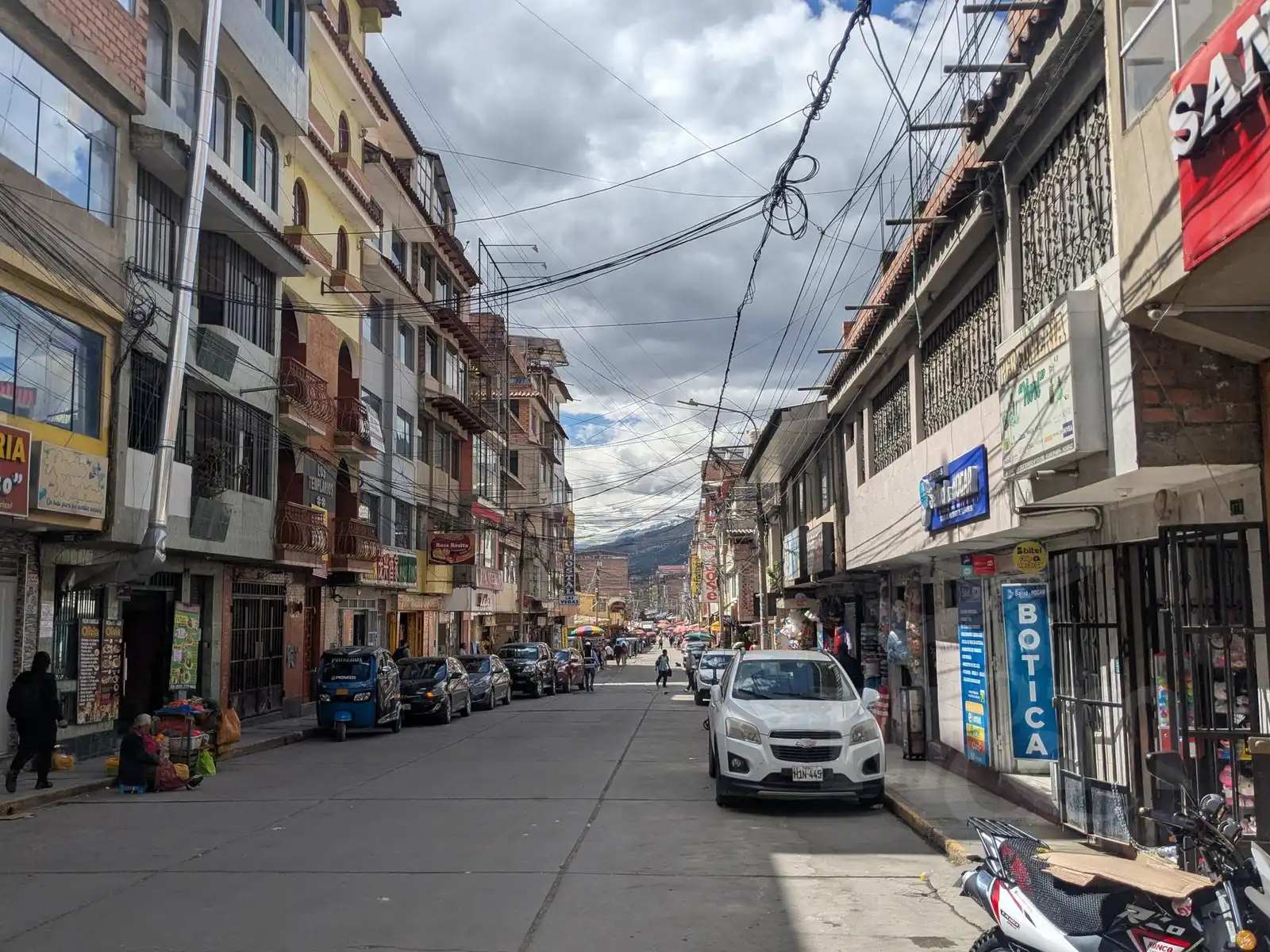
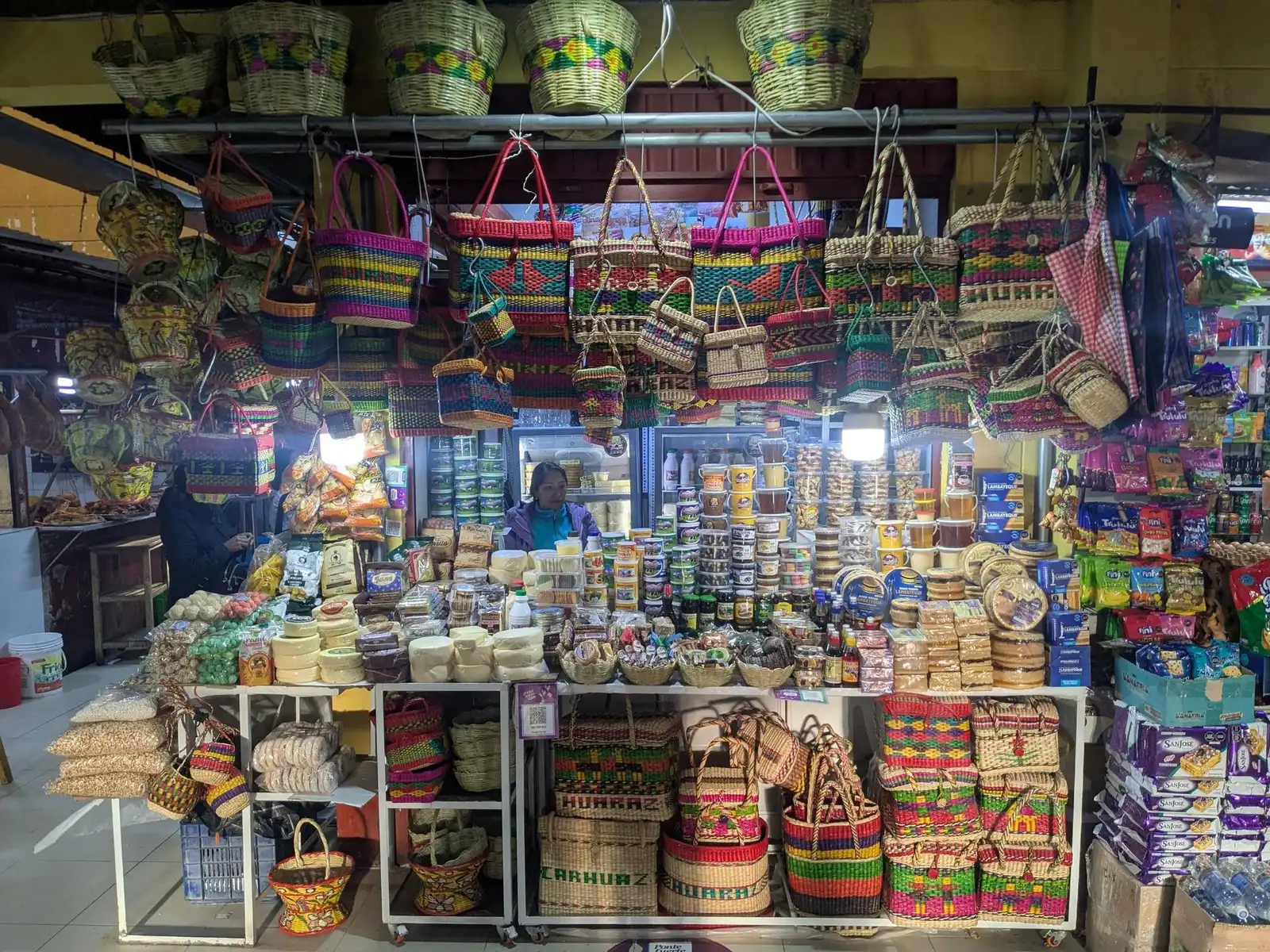
Huaraz is far from being as touristy or polished as the parts of Lima we visited. The houses are unfinished, the streets are dirty, and the sidewalks are full of holes. On every corner, local women in colorful traditional dress and typical hats sit and sell everything you can imagine: from fresh fruit and pastries to chickens or hot meals served straight from a pot. This early in the morning, we resisted the shopping and focused solely on reaching our destination.
Our accommodation was very simple and cheap, but it had its charm. It was run by an elderly lady who didn’t know a word of English, and we struggled to understand even her Spanish. However, she was incredibly kind—immediately upon arrival, she prepared breakfast for us (even though we weren’t officially entitled to it until the next morning) and checked us in right away, even though official check-in was still several hours away. The room was small but sufficient for sleeping. The biggest “highlight” was the shower: electrical wires wrapped only in electrical tape were sticking out of the shower head. It didn’t look very safe, and I was a bit scared, but nothing happened and the hot water actually flowed.
We didn’t manage much on our first day in Huaraz. The sharp ascent from sea level to 3,500 m above sea level took its toll—we had slight headaches and our stomachs felt uneasy. We spent part of the day catching up on sleep and the rest gathering information for the next day’s trips, hoping we would be sufficiently acclimated by then. On the main square, there is an iPeru tourist information office where they speak English and don’t try to sell you anything like they do elsewhere.
Laguna Churup
For our second day in Huaraz, we chose a trip to Laguna Churup. It’s located close to the city, and cheap local collectivos (shared vans that have no fixed schedule and simply leave when they are full) go there. The info center gave us exact instructions on where to catch the van and how much it should cost. The journey takes about an hour.
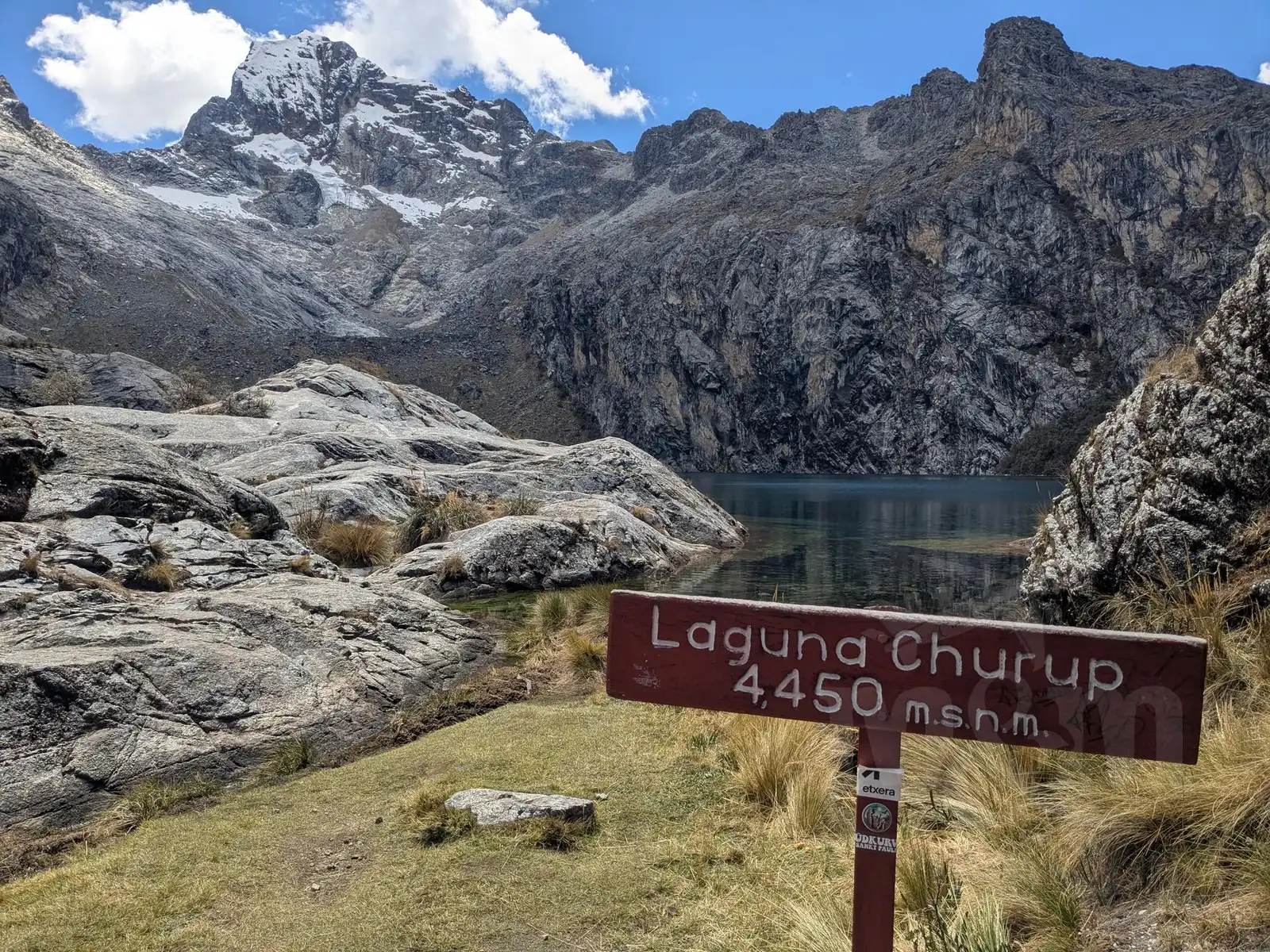
The hike to the lagoon was lined with beautiful views, but we ran out of breath unexpectedly quickly. We were far from acclimated and made several mistakes (too fast a pace with too few stops, not enough water, and almost no food), so when we were still a few hundred meters short of the destination, we seriously considered giving up. We had different opinions on whether to continue and couldn’t agree. In the end, the option to push on won—it wasn’t supposed to be much further. What we didn’t know was that the steepest part was still ahead of us. The last 100 meters involve more climbing than hiking, with ropes bolted into the rock for support. Going down was even worse than going up. After three and a half hours, we finally “crawled” to the edge of the water. The lagoon is beautiful, but for the first ten minutes, we were just gasping for air instead of admiring the view.
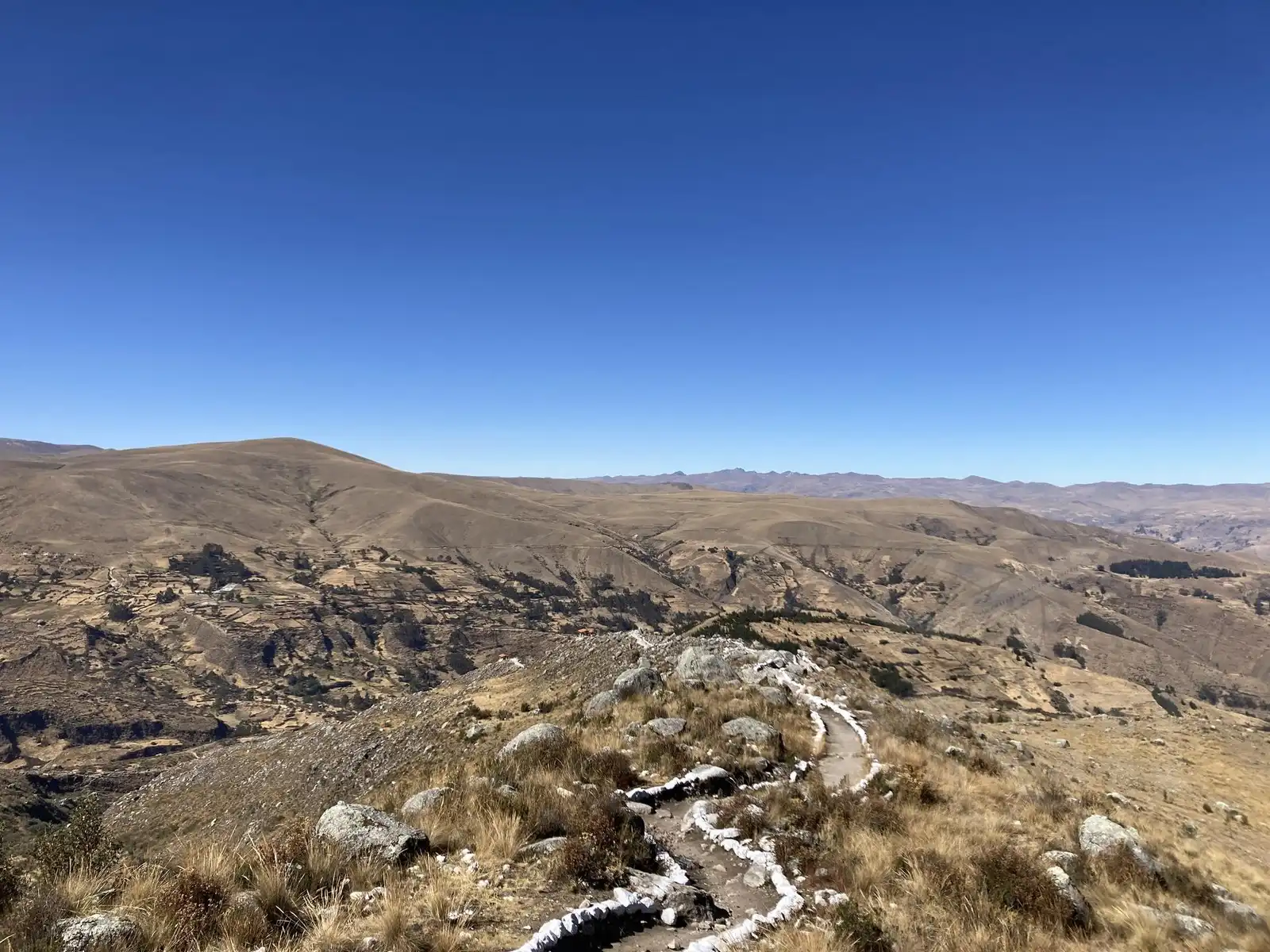
The way down was also demanding due to fatigue, but fortunately, we at least found an alternative route that avoided the rope climbing. Even with forced breaks, we were back at the collectivo in an hour and a half. However, back in Huaraz, we both felt quite miserable. Magda collapsed straight into bed, and I went for a very slow walk around the neighborhood. A purchased Coke helped calm my stomach a bit, but for that day, we were definitely done.
The next day was officially declared a rest day. We just wandered through the city and explored the local market, where you can find everything from exotic fruit to spare parts for a tractor. We went for a great lunch at an Indian restaurant that had vegetarian options; for 18 PEN, we got a huge portion of food and a great juice. We followed that up with ice cream and coffee, keeping the whole day very relaxed. Fortunately, it helped us recover.
Pastoruri Glacier
After our experience with Churup, we decided to reconsider our original plan for the tough hike to Laguna 69. We didn’t want to risk another demanding climb with an 800-meter elevation gain and chose a gentler option instead: an organized trip to the Pastoruri Glacier. Although it is located at an impressive 5,100 m above sea level, the walk from the parking lot is only two kilometers with a slight incline. The tour cost us 40 PEN per person. Generally, we don’t like organized tours and prefer going solo, but it was impossible to get here reasonably on our own.
At 8:00 AM, we were dutifully waiting for our ride, but no one showed up. We contacted the agency via WhatsApp, but no one replied. Just as we were losing hope after 40 minutes, thinking the trip had left without us, someone finally got back to us saying everything was fine and they would pick us up at nine. Around nine, someone actually arrived and led us to a van, where we sat for another half hour before departing. That’s how we learned that in Peru, “starting at 8:00” can easily mean 9:30.
The journey to the glacier takes nearly three hours. Our guide spoke only Spanish, so we didn’t get much from the explanation. Before reaching the destination, another Peruvian “bonus” awaited us. Despite having a valid national park ticket, the local community does not recognize it and collects their own entrance fee of 25 PEN per person. Sure, the 150 CZK won’t kill us as tourists from wealthy Europe, but the principle of paying entrance fee several times is just annoying. We would be less frustrated if we saw some value for money, like a toilet included in the price. But that’s not the case; the entrance fee is purely a source of income, and you still pay separately for a toilet (which is often not very clean).
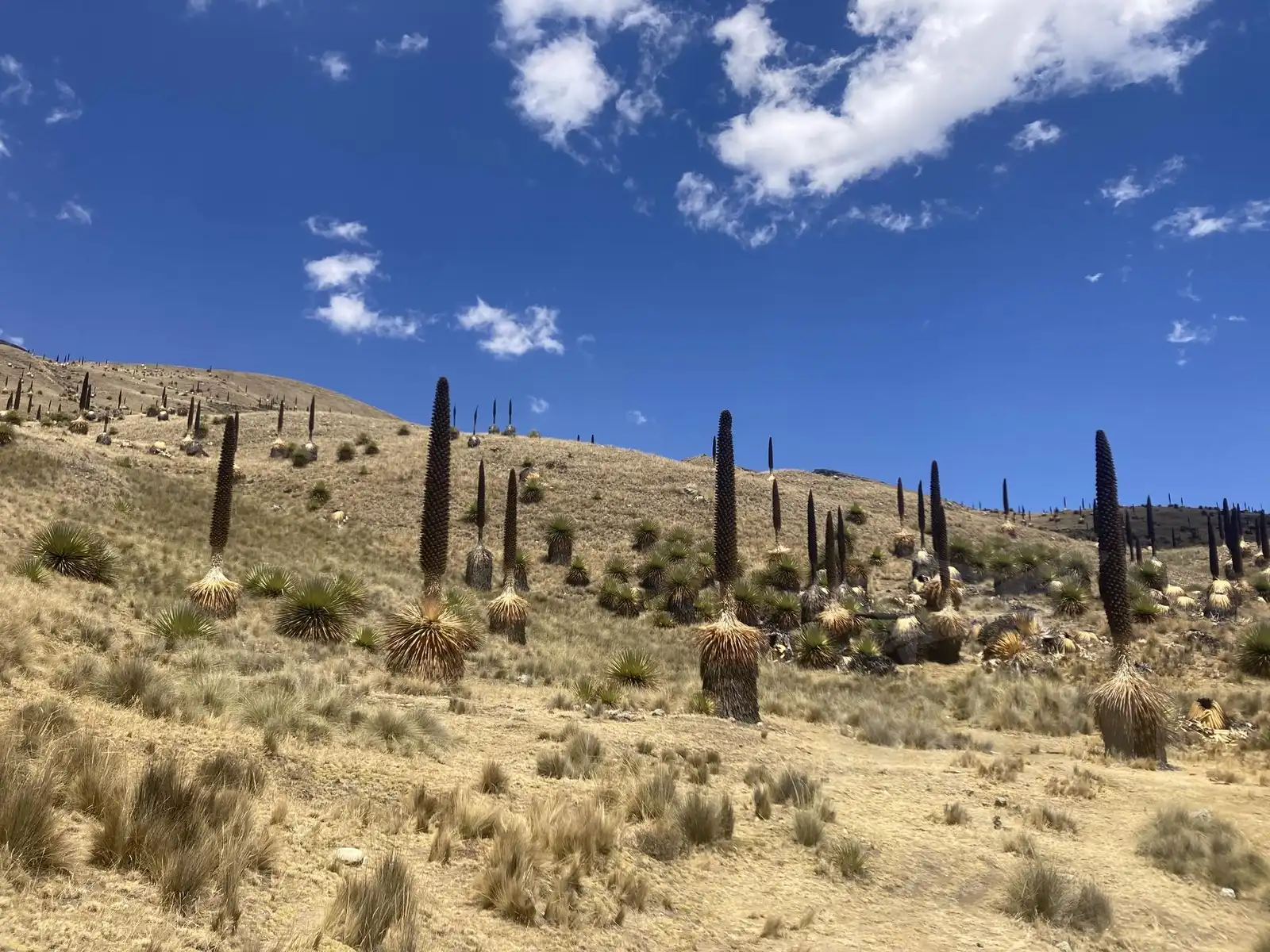
However, the landscape around Pastoruri is fantastic—green grassy pampa at altitudes over 4,000 meters. Bizarre giant plants called Puya Raimondii grow here, looking like something from another world. We took a few photos with them and then finally headed to the glacier.
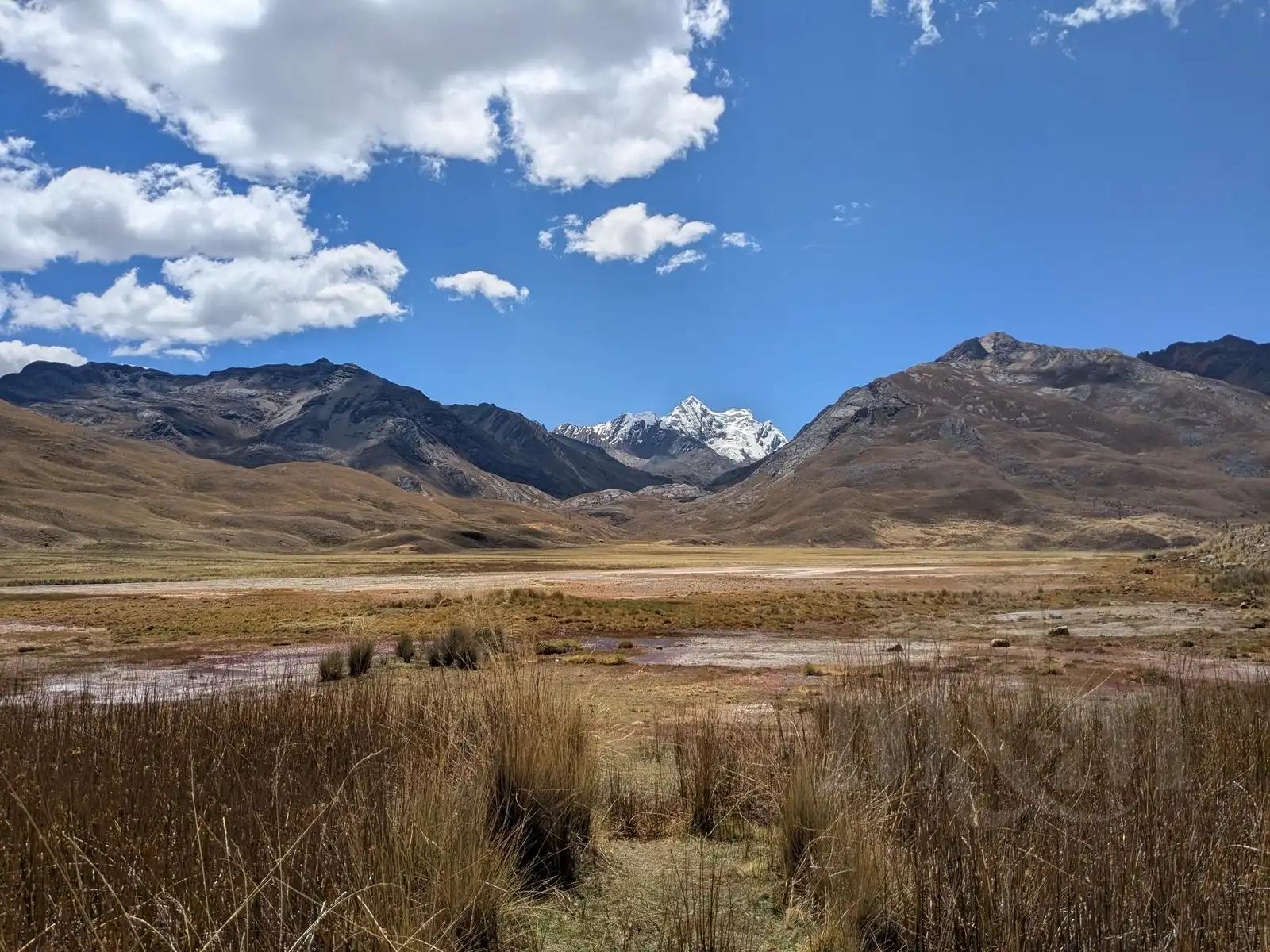
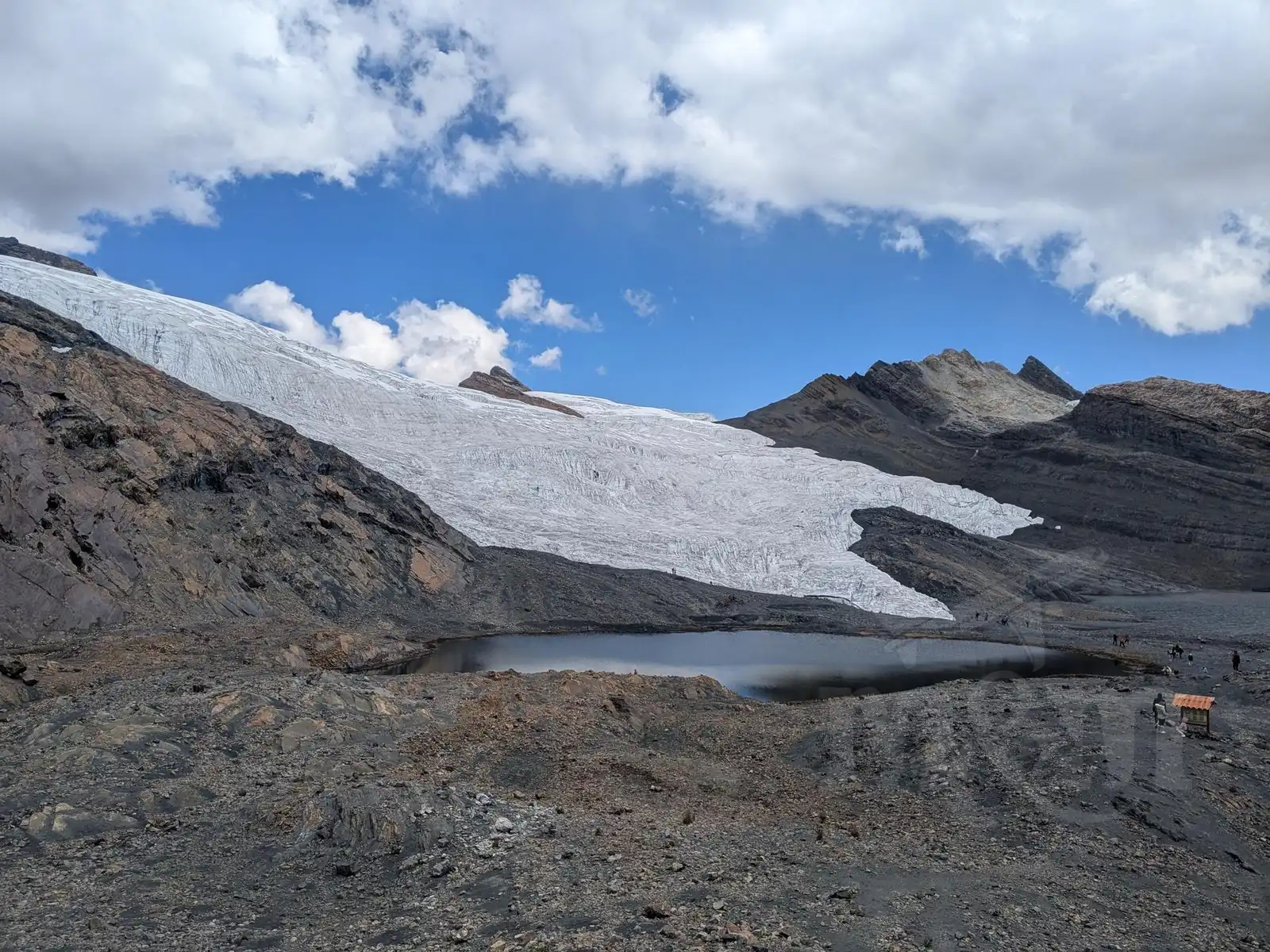
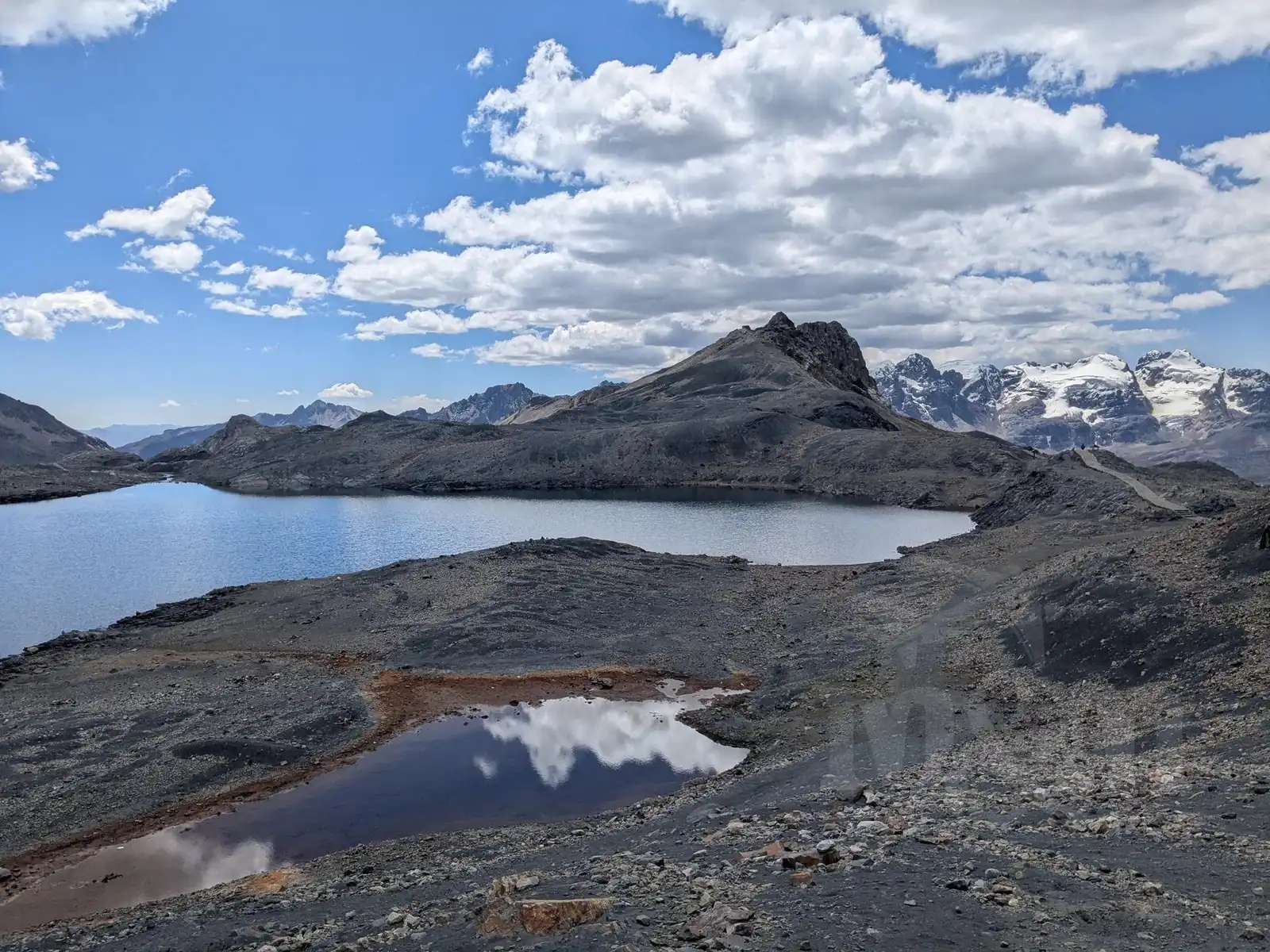
We got off of the van at almost 5,0000 m above sea level and very slow walked the 2 km to the glacier. Locals offer rides on donkeys, but our pride wouldn’t allow that. The view of the glacier with its glacial lake is breathtaking but also sad. Signs with historical photos show that the glacier has lost half its area in the last few decades and will likely disappear completely soon. It would be hard to deny global warming here.
Upon returning to Huaraz, we did a major supply run: a kilo of hard cheese, buns, pasta, and cans of tuna. The next day, we were heading out for the 4-day Santa Cruz trek, which is in the wilderness with no possibility of buying food. We packed our tent and sleeping bags and, with full backpacks, set off at four in the morning.
Santa Cruz Trek
The journey from Huaraz to the start of the Santa Cruz trek takes several hours and is an experience in itself that you won’t soon forget.
The first phase is easy: collectivos to Yungay are frequent and the route follows a paved road. The second part—from Yungay to Vaquería—is more adventurous. When we saw the van in the morning, we felt a bit relieved—several large backpacks were already loaded on the roof. So, we weren’t the only crazy people heading out there. Besides us, there were a few locals carrying live roosters in bags—and they didn’t appreciate traveling in cramped spaces, making it loudly known.
The “road” (if you can call a dusty path with giant holes a road) is quite terrible. The van stopped at a gas station where fuel was poured into the tank from a bucket. But as soon as the car starts climbing the mountain switchbacks and the panorama of the surrounding majestic peaks—Huascarán, Huandoy, and Pisco—opens up before you, you suddenly forget the somewhat hellish ride.
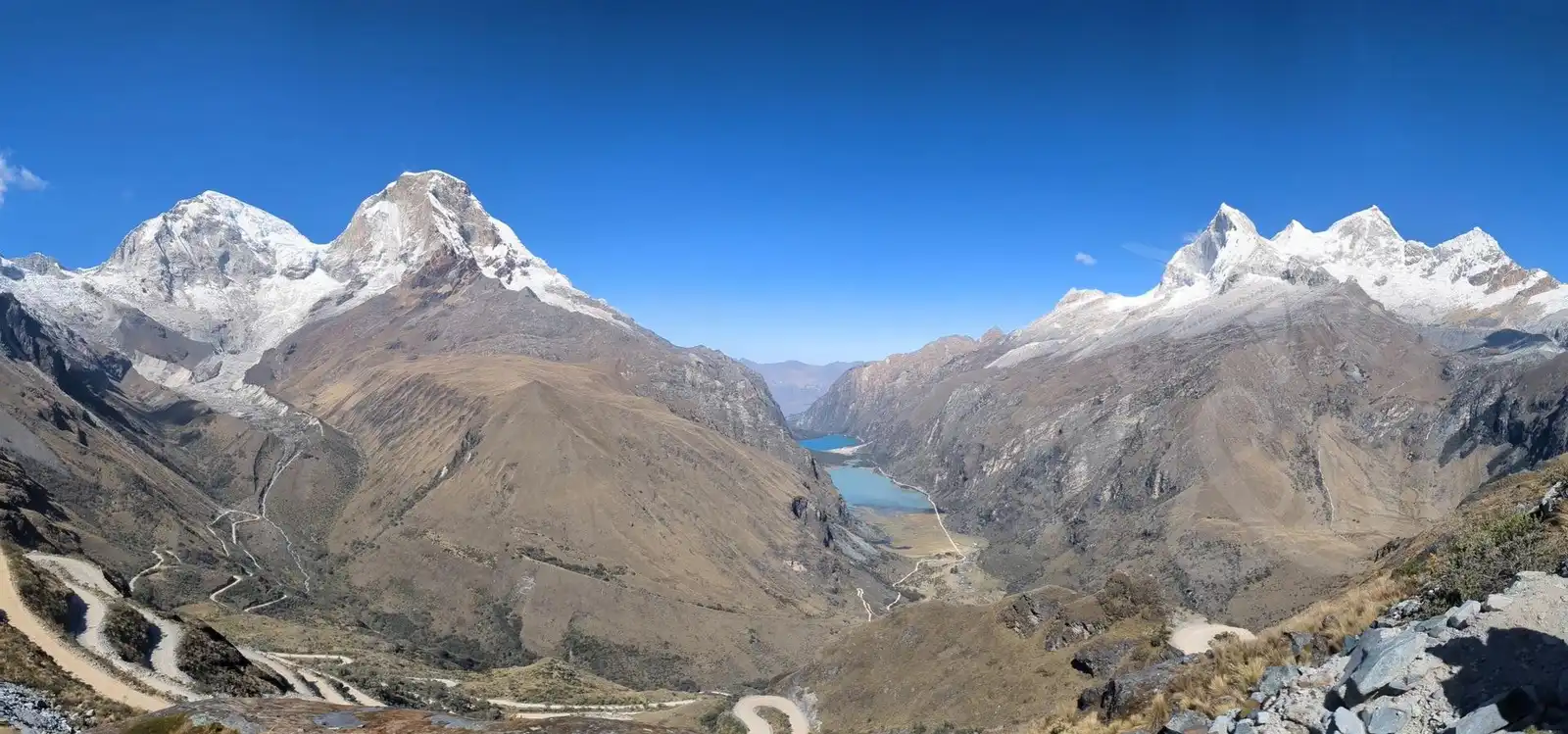
We also passed the Llanganuco Lagoon, the site of the 1970 Czech expedition tragedy. Magda spotted the memorial plaque with the Czech flag; I was busy admiring the view of the lagoon on the opposite side at that moment, so I didn’t see anything. In Vaquería, where the road ends, we shouldered our packs and set off.
By the time we reached Paria camp after 10 km (where organized tours usually end their first day), we were considering calling it a day, but we caught up with Océane, a Swiss girl who had also gotten off our collectivo. We started chatting and found out she was from Geneva and worked as a paramedic (which could come in handy in the mountains…). She wanted to continue to a camp a few kilometers further and a few hundred meters higher today. Not wanting to look weak (and knowing our tomorrow-selves would thank us for saving a few meters of elevation), we pushed on too. Along the way, we met Fernando, a Peruvian who teaches yoga in Huaraz. The last few meters of elevation were a real struggle. Our little “fellowship” finally decided to stop at an altitude of 4,150 m.
We pitched our tents and cooked some food (pasta with canned tuna). We collected water from a small stream—we had a filter, the Swiss had disinfection tablets, and the Peruvian drank the water straight, saying it was definitely better than tap water in Huaraz. It was quite cold and started to rain, so we crawled into our sleeping bags very early.
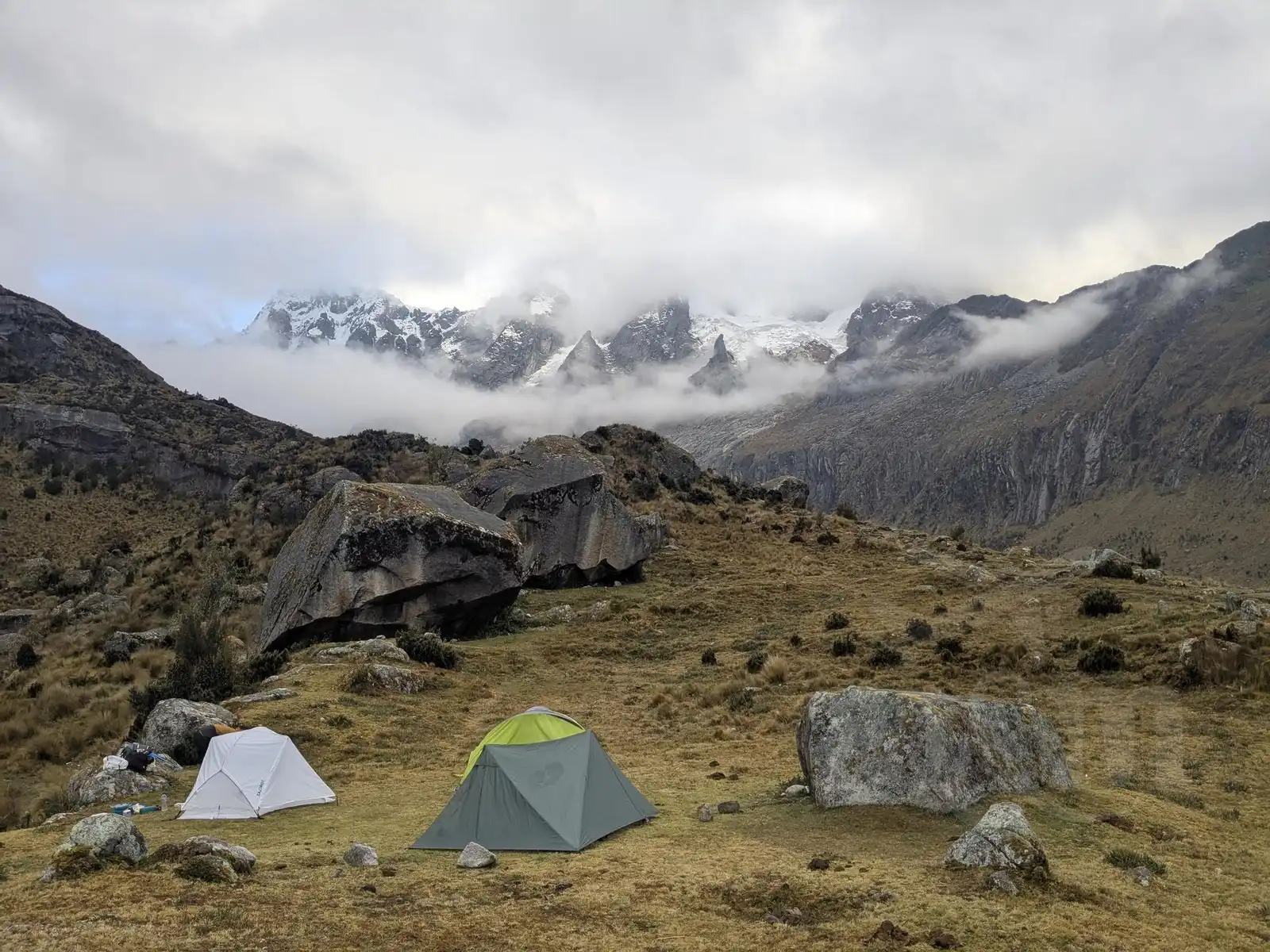
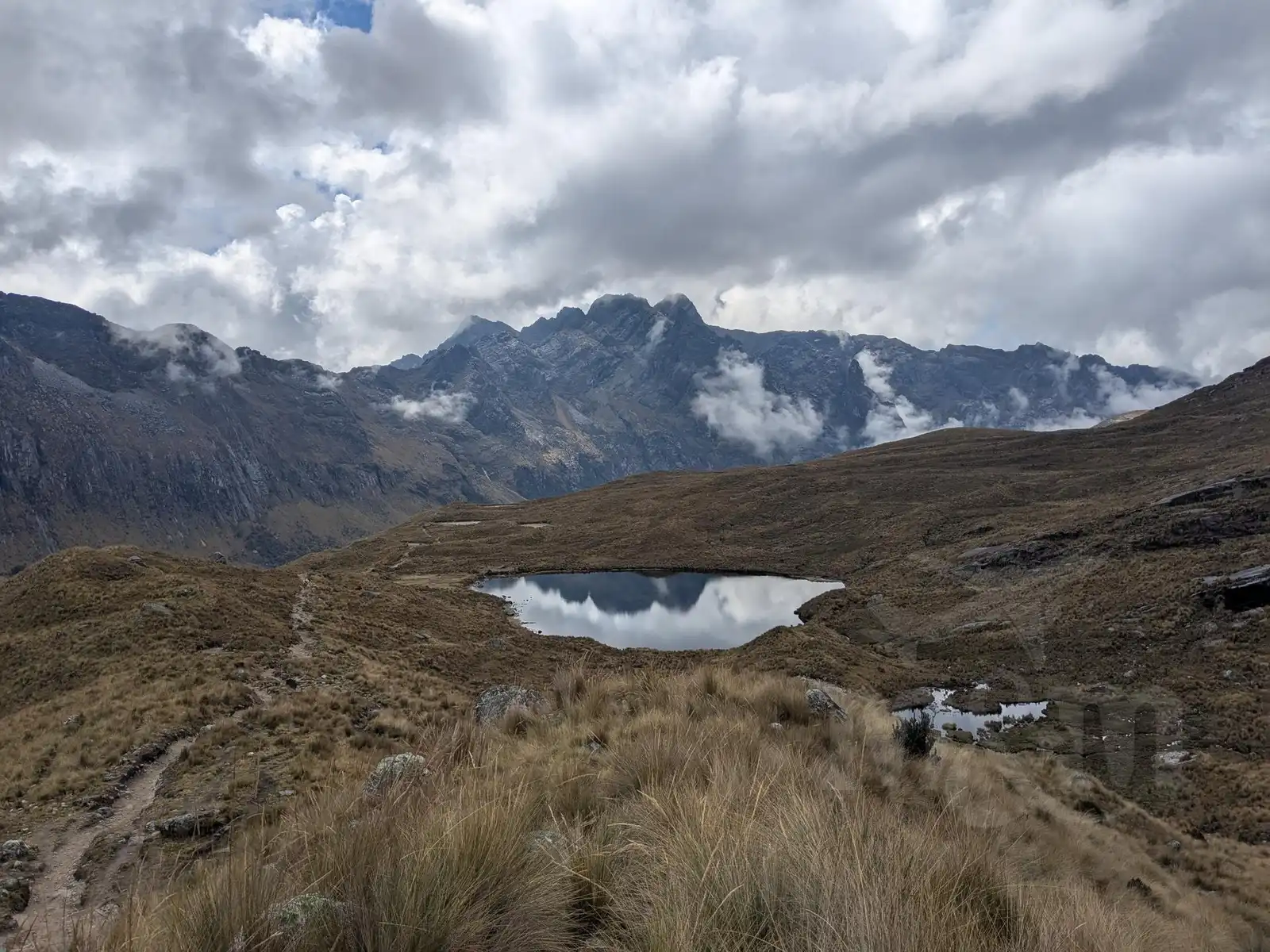
Waking up wasn’t easy for us, so on the second day, we were the last ones to get up. Our companions were already packing their tents. We made breakfast (porridge and coca tea) and didn’t rush too much. We agreed that we might meet in the evening at the Alpamayo basecamp if we made good time. Before we finished packing, several groups from organized tours overtook us—but they have it easier. They walk light because donkeys carry their gear. We carry everything on our backs.
Ahead of us was the ascent to the highest point of the trek, the Punta Union pass at 4,750 m. Along the way, of course, we cursed this whole stupid idea. But we hiked bravely and reached the top around noon. It was snowing at the summit; we took a few photos and overtook some of the organized tours that were sitting up there for half an hour posing for photos. We descended toward the Taullipampa camp. Although we were quite tired, it was still quite early. So we just took a short snack break and continued toward the Alpamayo basecamp.
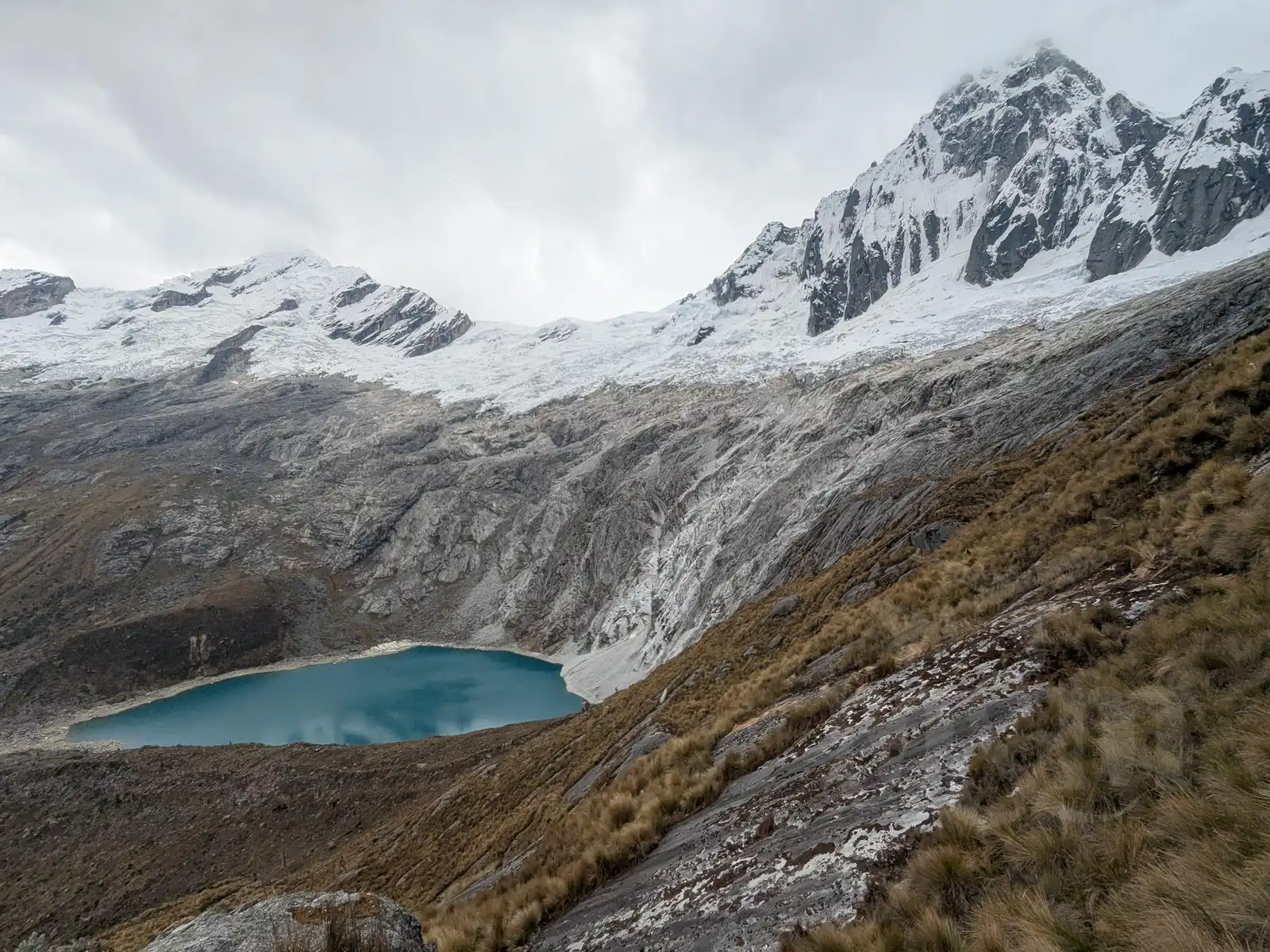
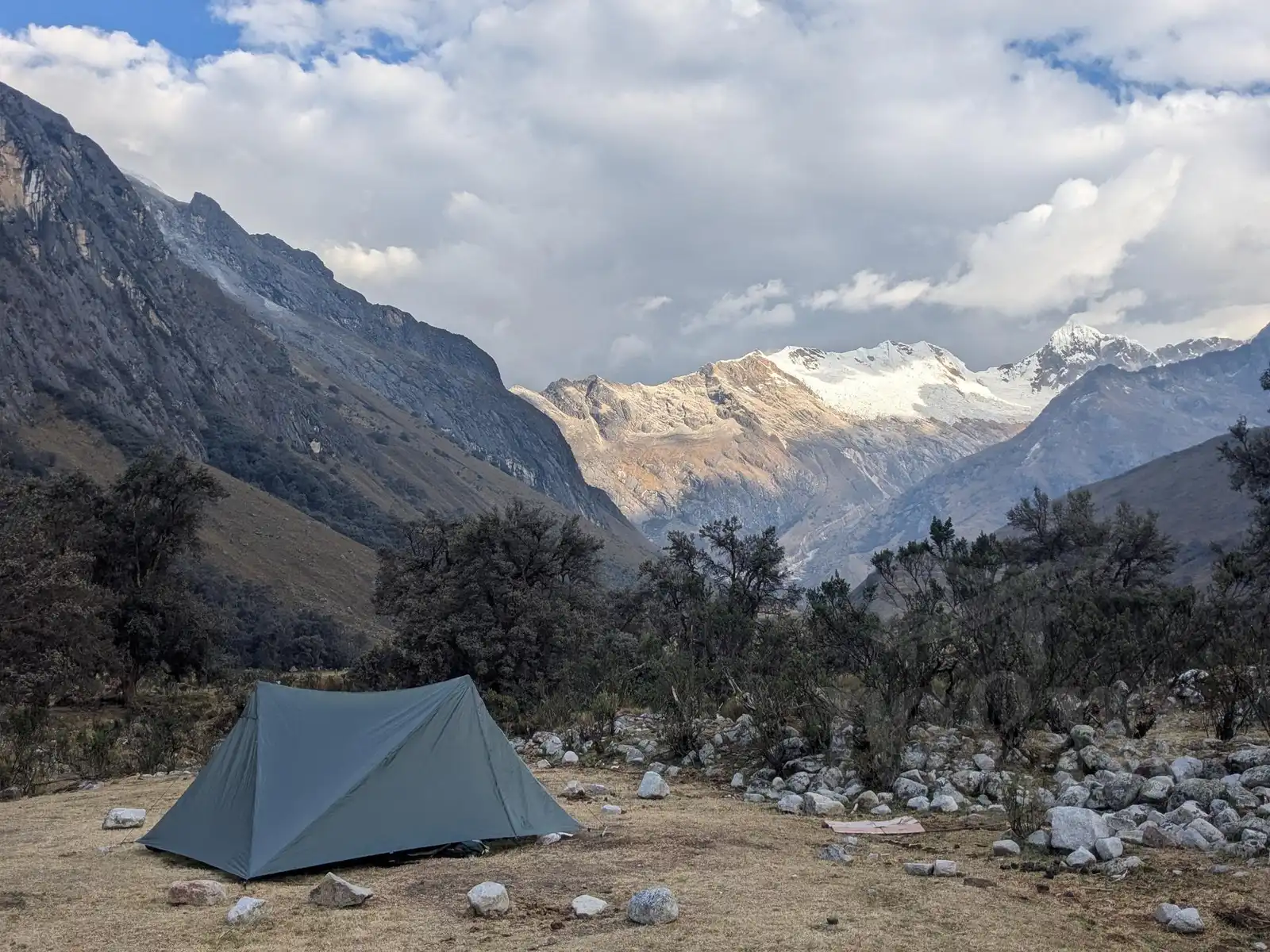
Here we were somewhat betrayed by (the otherwise amazingly useful) mapy.cz. According to the app, it was only supposed to be about 200 meters of elevation gain. It definitely wasn’t. The path mostly follows contour lines, which apparently aren’t entirely accurate… In short, we had to climb much more than we expected (and more than we liked) and reached the Alpamayo basecamp with our last bits of strength. Océane and Fernando were there much earlier and even managed to see the nearby Arhuaycocha Lagoon; we saved it for the morning. The valley is deep and the sun sets behind the mountains early, so it got cold very quickly again. Fernando went for a swim in the nearby stream flowing from the glacial lagoon, which we admired but didn’t join. We cooked our food, pitched the tent, and after a bit of chatting outside (wearing every layer of clothing we had), we crawled back into the sleeping bag.
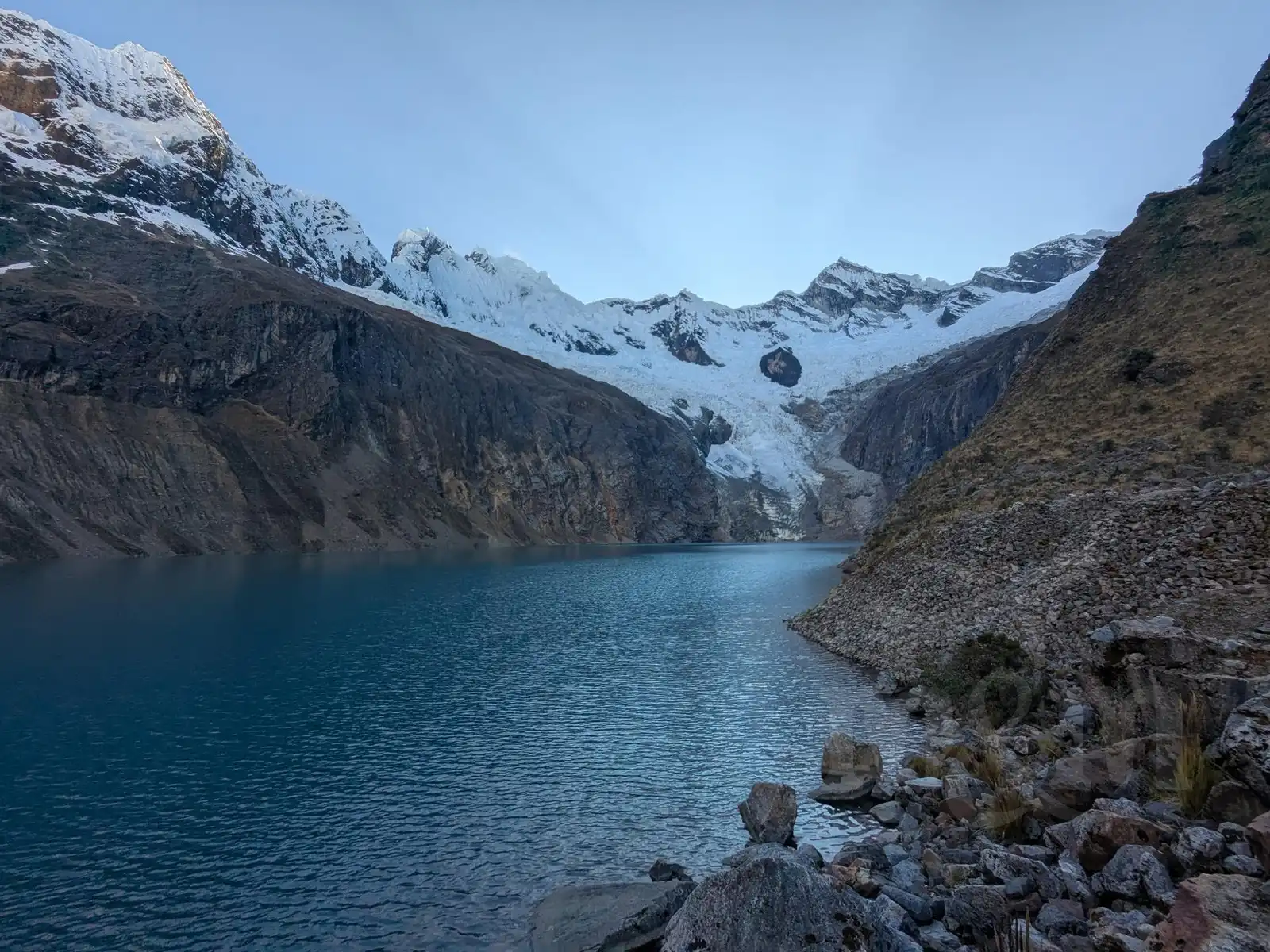
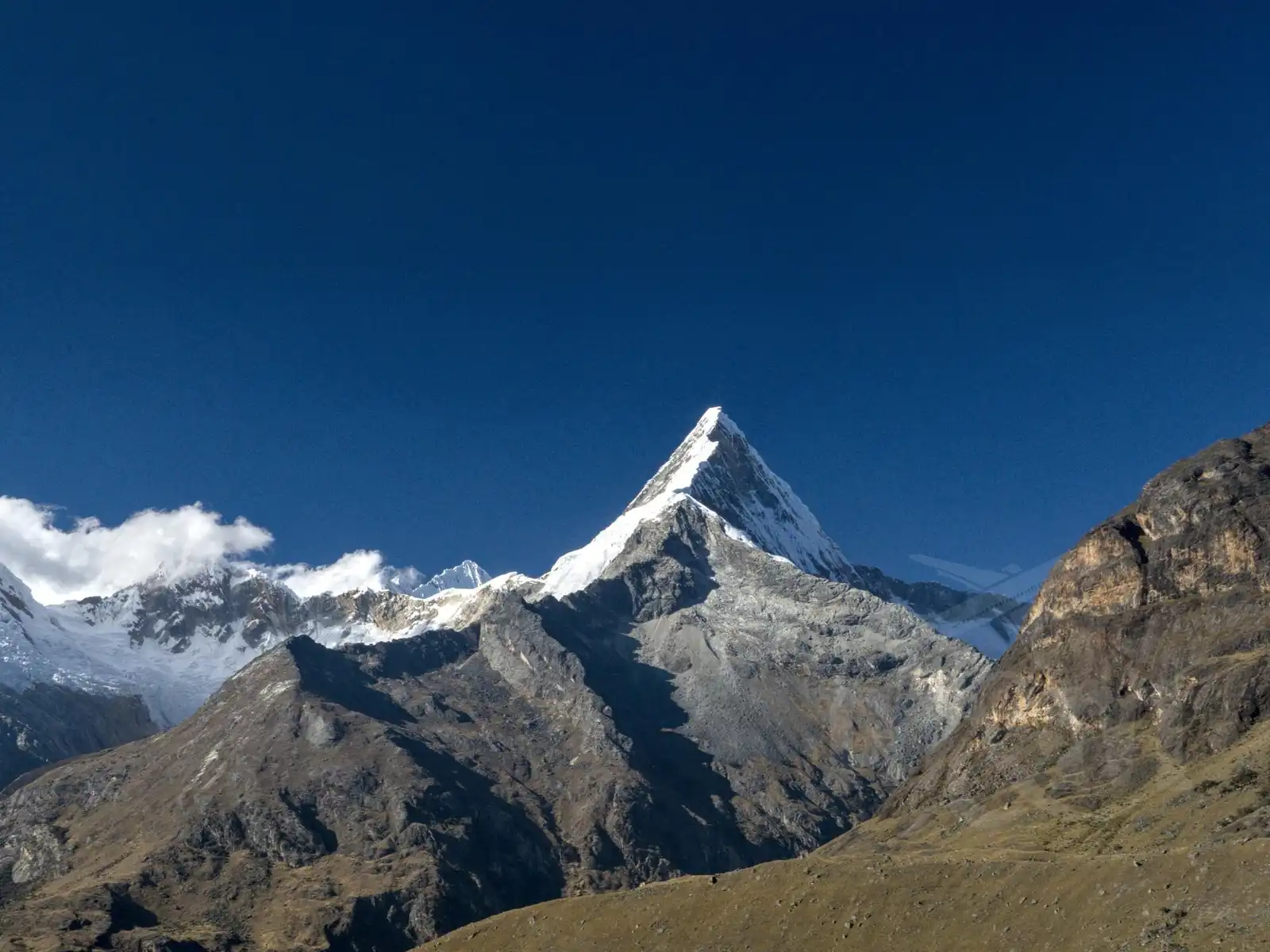
The next day we went on our own; the second half of our Fellowship decided to finish the trek today on day 3 (which is certainly possible from Alpamayo basecamp, especially skipping Arhuaycocha Lagoon—but we still wanted to go there). We took it a bit easier, heading up to the lagoon for sunrise (since the sun rises behind the mountains, sunrise there is quite late). From there, you also get a view of Mount Artesonraju, famous from the Paramount logo. Only then did we have breakfast, pack up, and set off. All that remained was the descent. We knew that would be faster, but our legs would hurt more in the evening. Most of the way follows a stream that occasionally forms small lakes. At one point, we had to wade. We covered over 20 km (800 meters down) and ended the evening about 5 km (but also 600 meters of elevation) before the end of the trek. We pitched the tent next to the path, slightly hidden behind some rocks.
On the last day, we didn’t rush at all and slept in. We calmly made breakfast, packed, and set off for the final stretch. The descent is quite steep; in places, it’s just a narrow path in the middle of a scree field. We passed a few individuals climbing up, doing the trek in the opposite direction. We didn’t envy them at all; they chose the harder variant with much more elevation gain. Before noon, we reached the end of the trek on the outskirts of Cashapampa. A collectivo was waiting there, offering to take us to Yungay for the connection to Huaraz. We suspected it was more of a taxi, but several of us arrived at once and the price per person (20 PEN) wasn’t bad, so we went for it. In Yungay, we switched to the collectivo to Huaraz. We were looking forward to lunch and a shower.
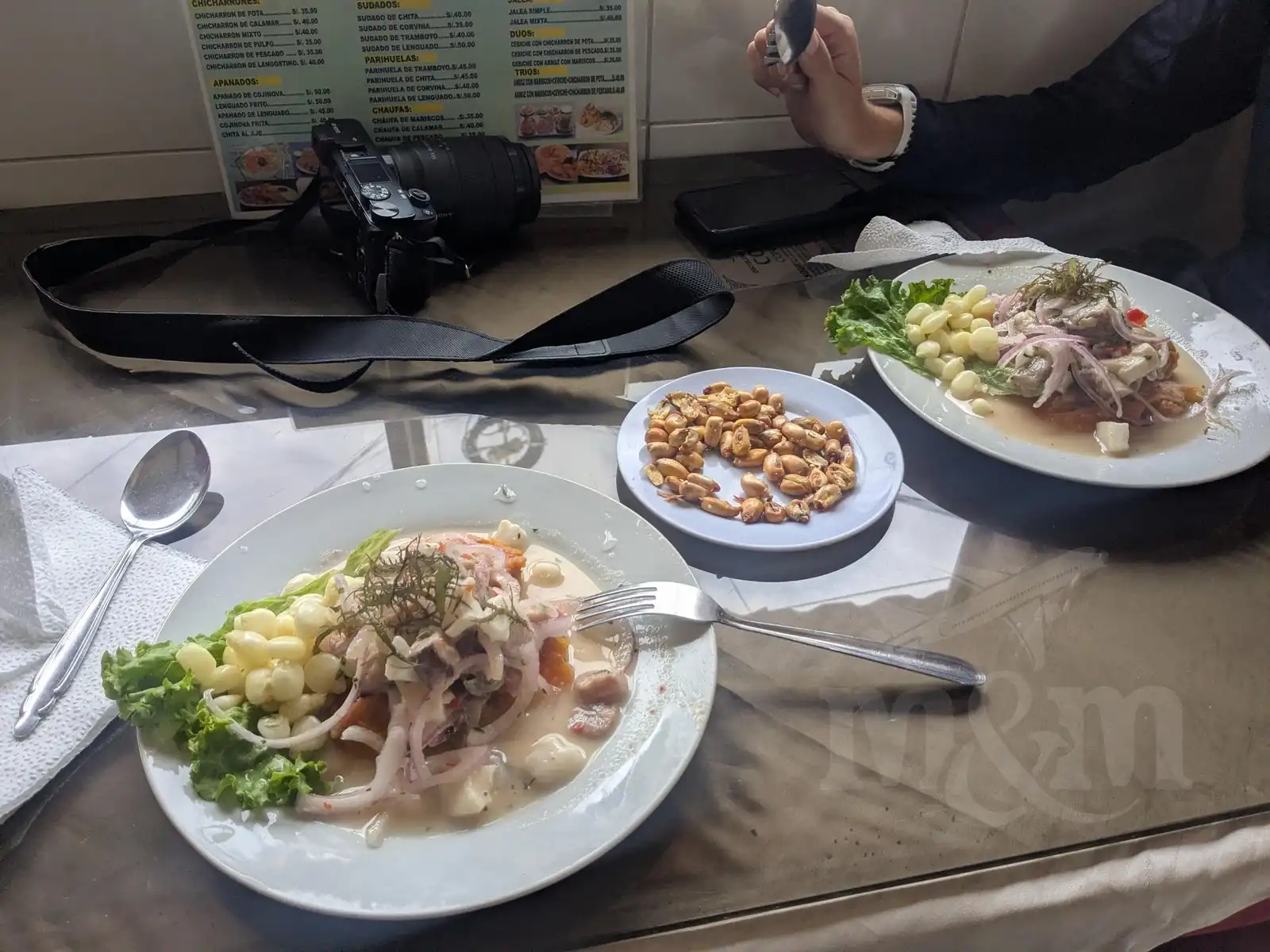
We sorted lunch immediately upon arrival in Huaraz, stopping at a nearby cevicheria. We ordered the daily menu, which here meant ceviche (a typical Latin American dish, raw fish marinated in citrus juice, served with onion) as a starter and fish with manioc as the main course. It was a lot, but we were hungry, so we managed (even Magda 😉). We also got a large glass of excellent fruit juice. By the way, the daily menu isn’t in the printed menu at all, but it’s written on a board in the restaurant and the locals order nothing else. If we had ordered the same combination of dishes from the regular menu, it would have cost much more.
After lunch, we returned to our accommodation where our luggage was stored. The host expected us to stay one more night, as we had agreed beforehand. We received our room promptly and could go for a shower, which was really pleasant after 4 days. We gathered our dirty laundry and took it to a nearby laundry, where they washed it for us by the next day for 10 PEN (about 60 CZK)—and they didn’t even ruin the wool clothes.
The next day was very relaxing, and in the evening, we took the night bus to Lima. This time we took a significantly cheaper bus from Allinbus; it cost about half as much as the bus we took to Huaraz (108 PEN total, about 660 CZK) and seemed perfectly fine. It didn’t have Wi-Fi or a screen with movies, but the Wi-Fi hadn’t worked most of the time anyway and we did fine without the movies. In Lima, we only transferred; we didn’t want to stay there, so after a few early morning hours of waiting, we boarded a bus again—this time for only about 4 hours, on our way to Paracas.
Practical Information (2025 Prices)
- Tourist Information: iPeru on the main square in Huaraz is a good source; at least someone there speaks English. They don’t try to sell you anything as it is a state agency.
- Transport to Treks:
- The collectivo to Laguna Churup departed from the intersection of Av. Agustín Gamarra and Antonio Raimondi and cost 20 PEN (approx. 3 USD) per person for a round-trip ticket.
- Santa Cruz Trek: The collectivo to Yungay departs from Caraz Street and cost 8 PEN (approx. 2.5 USD). The collectivo from Yungay to Vaquería cost 30 PEN (approx. 9 USD); one departure was at 8:00 AM, other departures were uncertain, depending on how full the van was.
- Huascarán NP Entrance Fee: Available in three variants—one-day (30 PEN - 9 USD), three-day (60 PEN - 18 USD), and monthly (150 PEN - 50 USD). For the Santa Cruz trek, some rangers accept the 3-day pass, but in our case, they required the 30-day one. Some communities do not recognize the park pass and demand an additional entry fee. This applies to the Pastoruri Glacier, Lake Paron, and the Huayhuash trek, where they come to collect a fee after you pitch your tent (we didn’t go, but heard it from others).
- Where to Eat: A cheap dining option is the menu del día. It can be found in most restaurants around lunch and includes soup, a main course, and a drink for prices around 8–20 PEN (approx. 2.5–6 USD). Usually, menu del día is not offered on Sundays.
- Night Buses: According to our experience, night buses are mostly fine; there’s no need to take the most expensive ones (Cruz del Sur or Peru Hop). Most companies offer roughly the same thing. The difference may be in the seat type (cama - fully reclining to a flat position, semicama - partially reclining). It’s always good to read reviews first.