Lima, Peru
We arrived in Peru after two night flights with a layover in El Salvador. During the layover, I at least managed to taste a local specialty at the airport—pupusas, which are corn flour tortillas filled with cheese and served with cabbage. Well, it wasn’t the best meal of my life, but perhaps airport food isn’t the most representative.
Lima
We landed in Lima at 3:30 AM. Our internal clocks were completely messed up anyway, so it didn’t even feel that strange to arrive so early.
I had a dilemma at the airport about whether to declare my drone to customs (officially you should in Peru and pay a refundable deposit). In the end, I decided to do it, but the customs officer just waved his hand at the sight of my small drone.
At four in the morning, at least a café with pastries was open, so we sat there with a coffee and waited for dawn. We didn’t feel like going anywhere in the dark.
After sunrise, it was still cloudy and gloomy outside. As we later learned, this is how Lima looks most of the time in winter—they call it the “donkey’s belly” (panza de burro). When you look at the sky, you can really see that grey donkey belly. We didn’t even want to leave the airport; it didn’t look very inviting. But waiting there for long didn’t make sense either. So, we finally got up and headed into the whirl of a Lima morning—full of smog, grey skies, and honking cars. Pure Peruvian romance welcoming us.
From the airport, we chose the Airport Express bus, which goes directly to the Miraflores district—a safe and touristy part of the city where we were staying. It is a comfortable and reliable way to get from the airport to the center.
The bus route led through the Callao district, which has a reputation as one of the most dangerous areas in all of Peru. Even the view from the window told us why—many houses were unfinished, often without windows, doors, or a roof. Living here is certainly no picnic.
Fortunately, after arriving in Miraflores, it was only a short walk to the hostel where we went to store our luggage. Even though Miraflores is considered a safe neighborhood and is recommended to tourists, we didn’t feel entirely confident the first day. Maybe it was the exhaustion from the long flight, maybe the culture shock—anyway, we preferred to stick to the main streets and stayed in the hostel after dark.
After a short rest, we went to find food. Tired and with little desire to experiment that day, we rejected the idea of trying local specialties right away and ended up in a standardized Burger King. When you want to avoid surprises, globalized chains are a safe bet.
We still had two practical tasks left that day: get local money and a local SIM card. Getting local money went smoothly—the hostel recommended a nearby exchange office where we exchanged a few hundred dollars after checking the rate. (Later, we mainly used Banco de la Nación ATMs, which do not charge fees.)
Buying a SIM card was a bigger challenge. Because of coverage and price, I chose the operator Claro, and we headed to their large store in Miraflores.
Inside, there were about 30 employees, but we still waited more than half an hour for our turn. I had prepared a few key phrases in Spanish, so the explanation went well, but the process itself was much more complicated than I expected.
We had to present a passport (we expected that), but in addition, I had to leave a fingerprint on the paper instead of a signature. I wanted to add three crosses just for fun, but they probably wouldn’t have gotten the joke. Then they sent me to another counter to pay, followed by more waiting until the shop assistant in the warehouse actually found a SIM card. And it didn’t even end there—we had to wait again for the activation itself, this time at yet another counter.
The whole process took almost an hour, and this was for a common thing that almost every tourist handles. You can’t really talk much about efficiency here. On the way out, I chatted with a German couple who had been waiting even longer than us. In the end, the staff activated a monthly plan for them instead of a prepaid card. They hoped they would manage to cancel it somehow later…
Exhausted by all the chores and the time jump, we returned to the hostel before dark, locked ourselves in the room, and went to bed early. Our first day in the Southern Hemisphere was behind us.
The second day, we felt considerably better. Sleep and breakfast at the hostel helped. In a better mood, we went to the info center where we wanted to participate in a Free Walking Tour. For us, this is a proven way to get a basic overview of a city, get tips from locals, and find out where it makes sense to go and where it’s better not to go at all. You don’t pay for the tour itself in advance—at the end, you give the guide an amount based on how beneficial the tour was for you.
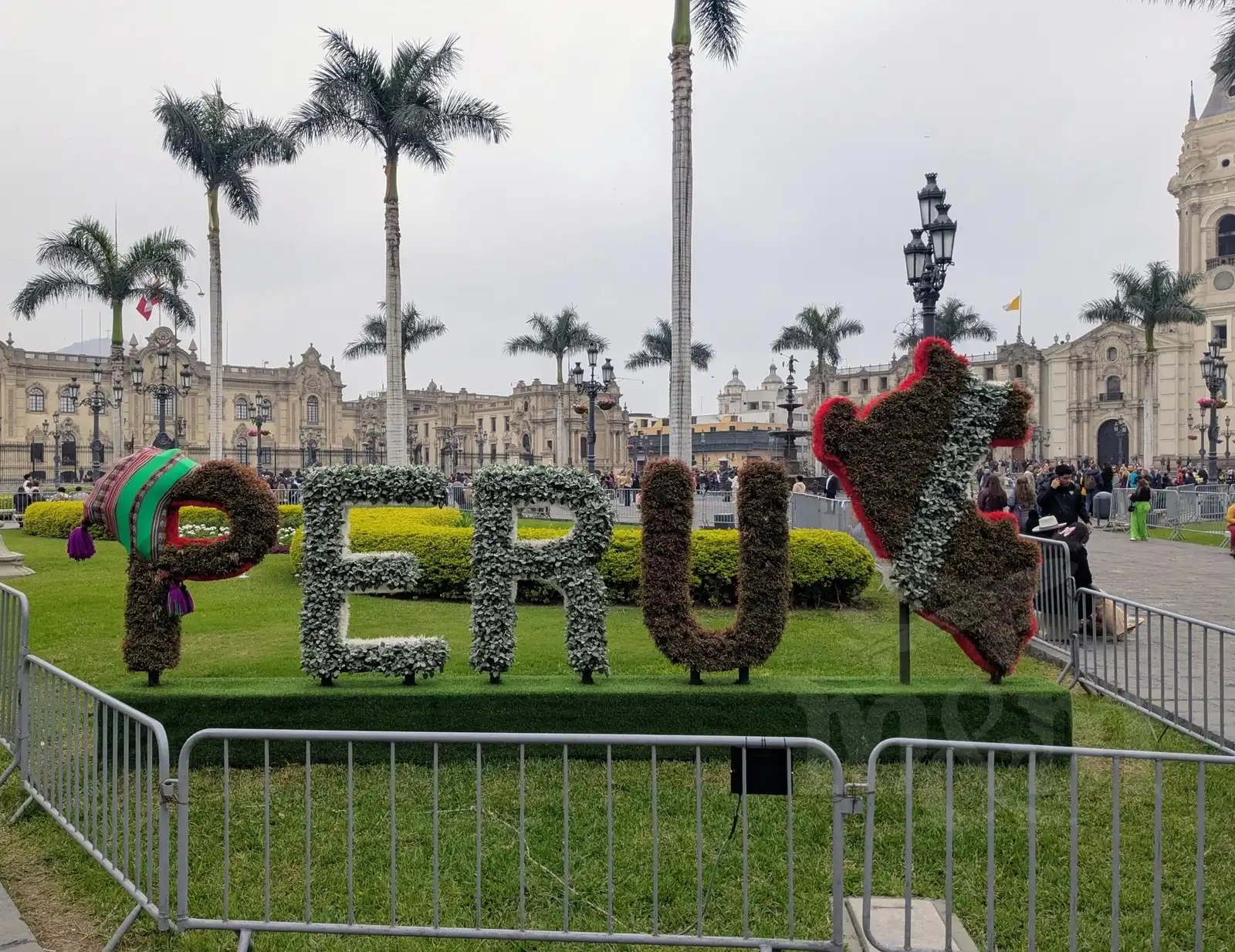
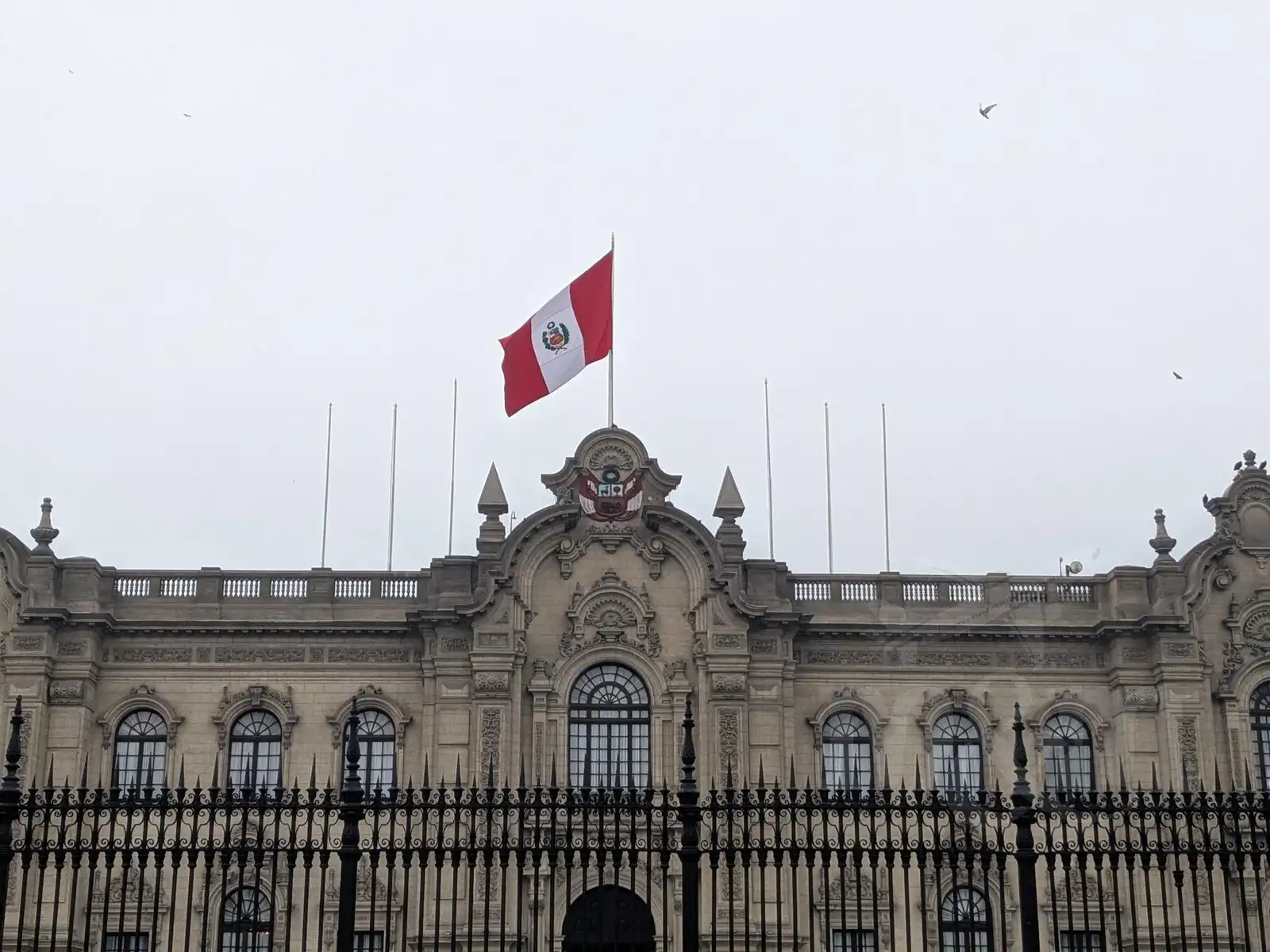
The tour helped us understand how Lima works. The guide showed us how to use public transport (which isn’t the easiest thing in this city), and together we moved to the historic center. We tasted a local version of churros (filled with chocolate) and got some local tips. The tour ended with a free tasting of pisco, the local grape brandy, in one of the local restaurants. Of course, we didn’t refuse that.
Afterwards, we went to lunch with a few other participants. We got a bit ripped off here—the restaurant was clearly aimed at tourists based on the prices. Lunch cost us 95 PEN (about 30 USD), which is really a lot by local standards. Lesson for next time: check the prices first before sitting down at the table.
In the evening, we returned to Miraflores and felt a bit more confident this time. We even ventured out after dark and went to buy dinner at a local panadería—we had warm empanadas filled with meat and cheese.
By the third day, we felt much more at home in Lima. Perhaps the fact that the sun finally came out helped—the city felt instantly friendlier.
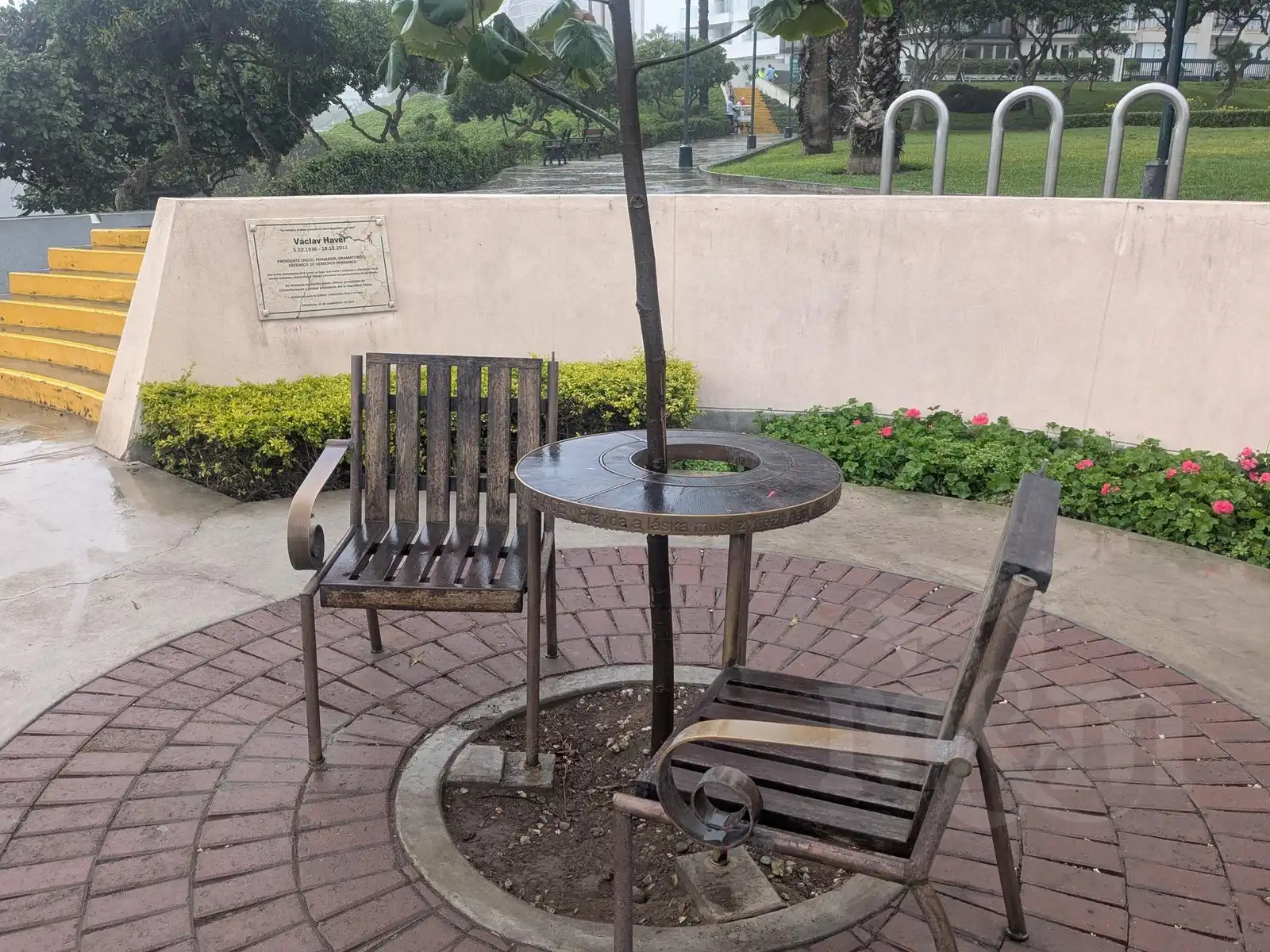
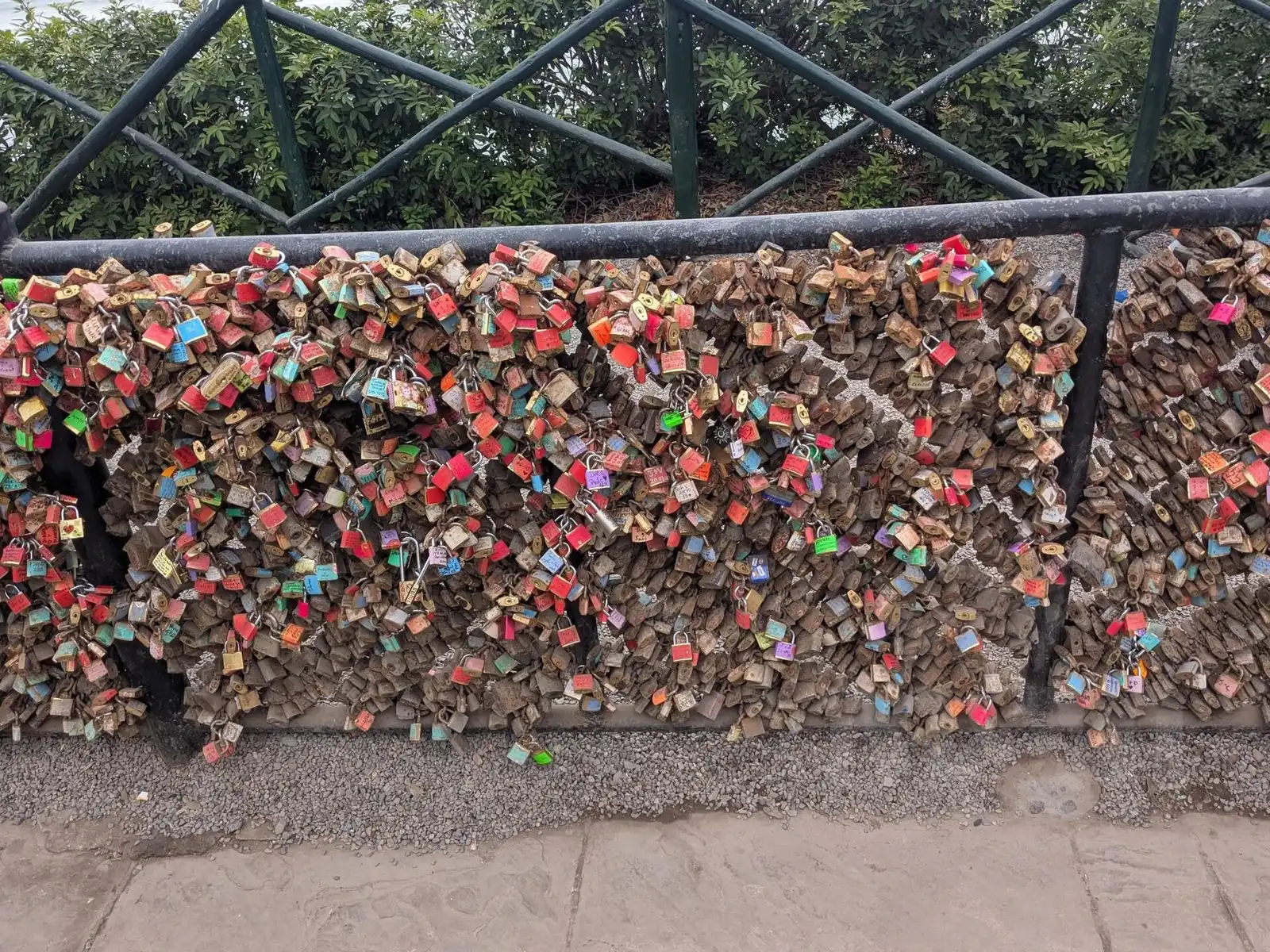
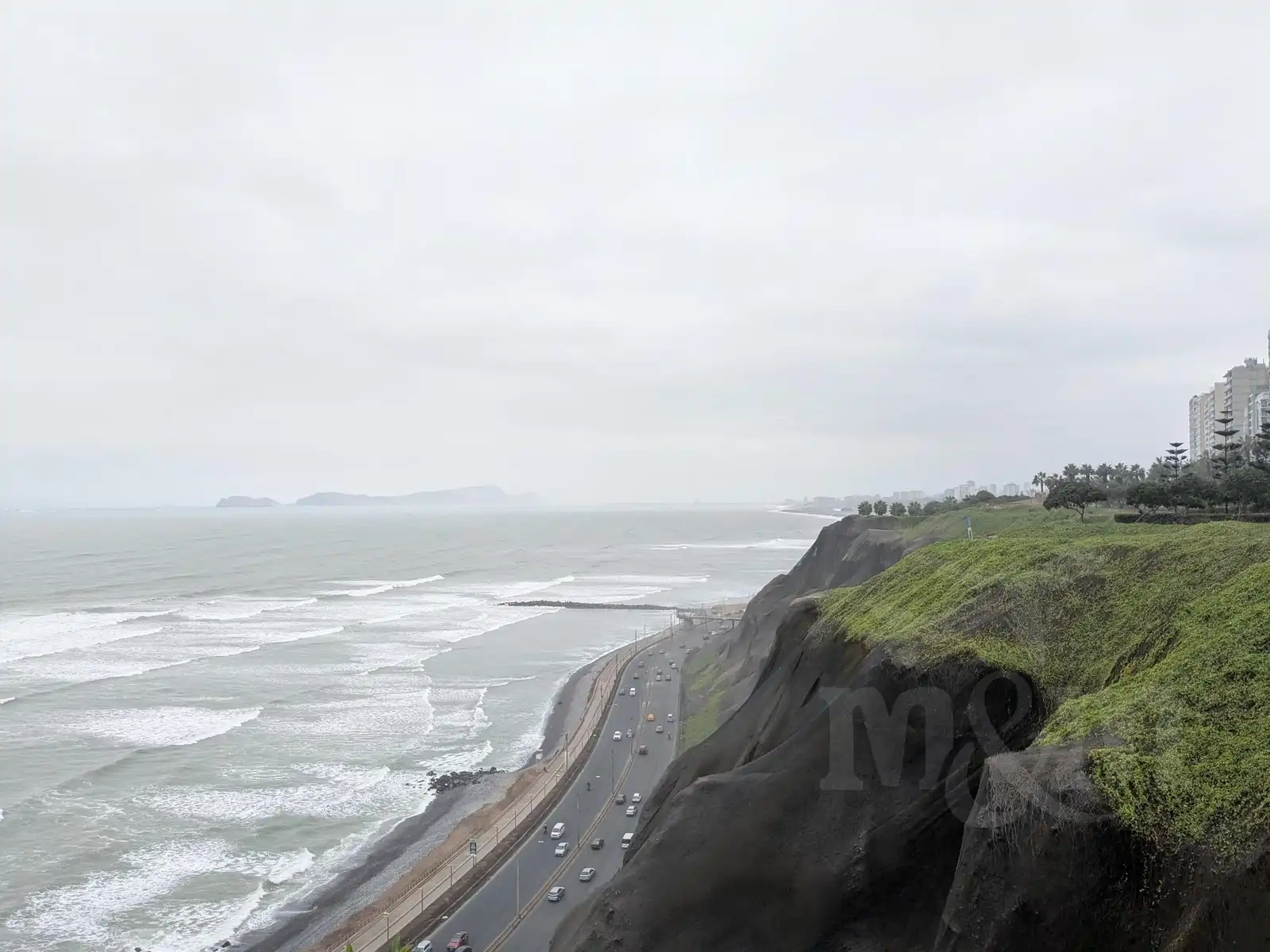
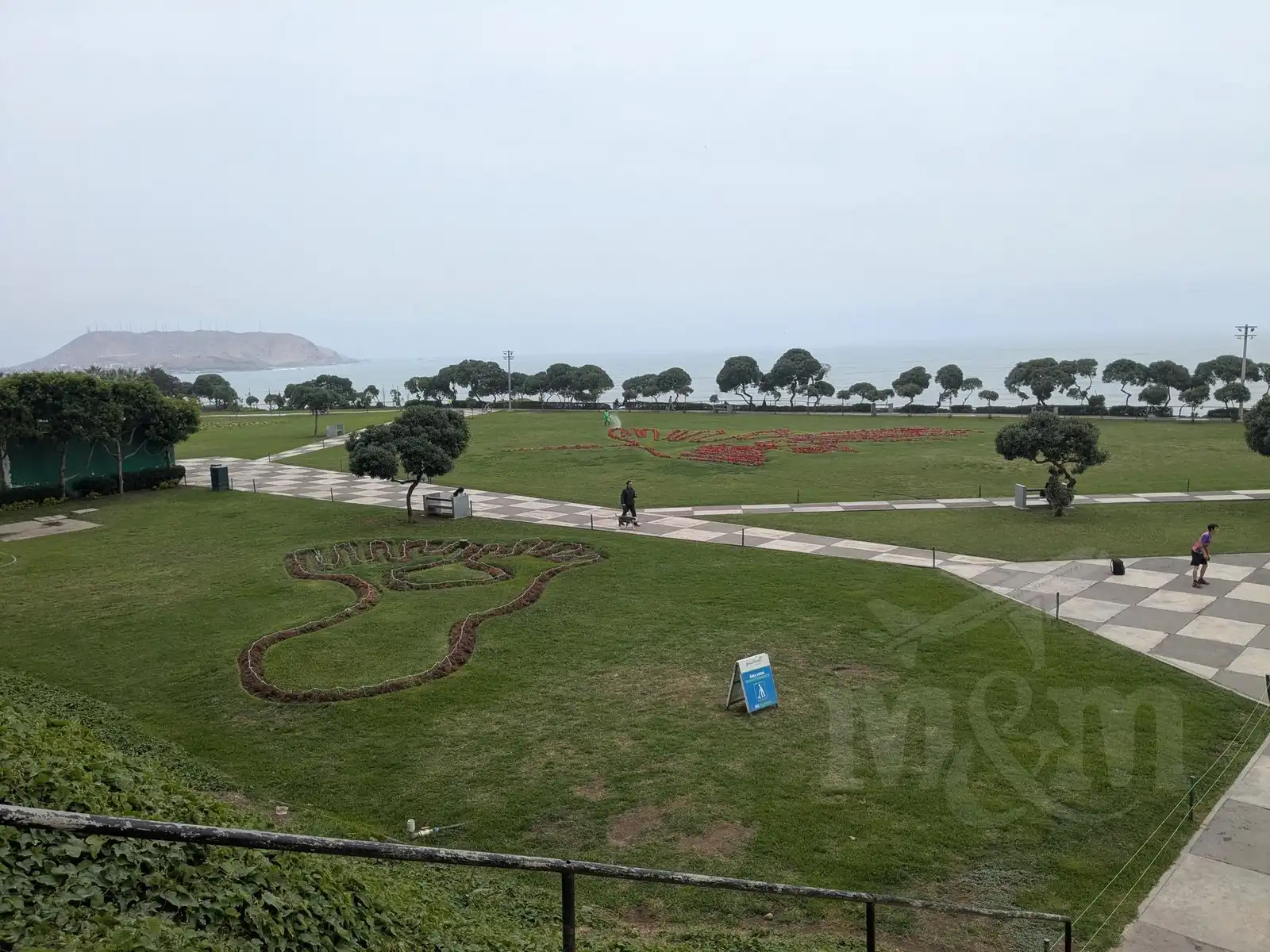
We went for a walk through the coastal parks that stretch along the cliffs above the ocean. In Parque el Libro, we were pleased to find a Václav Havel bench—a nice surprise so far from home. Near the Parque del Amor, I was most intrigued by a fence completely covered in love locks. I thought to myself that it would be a job for Janek Rubeš (a Czech YouTuber). A little further is Maria Reiche Park (at the time we didn’t know who she was), where flowerbeds are planted in the patterns known from the Nazca Lines. In decent weather, it was a very pleasant walk.
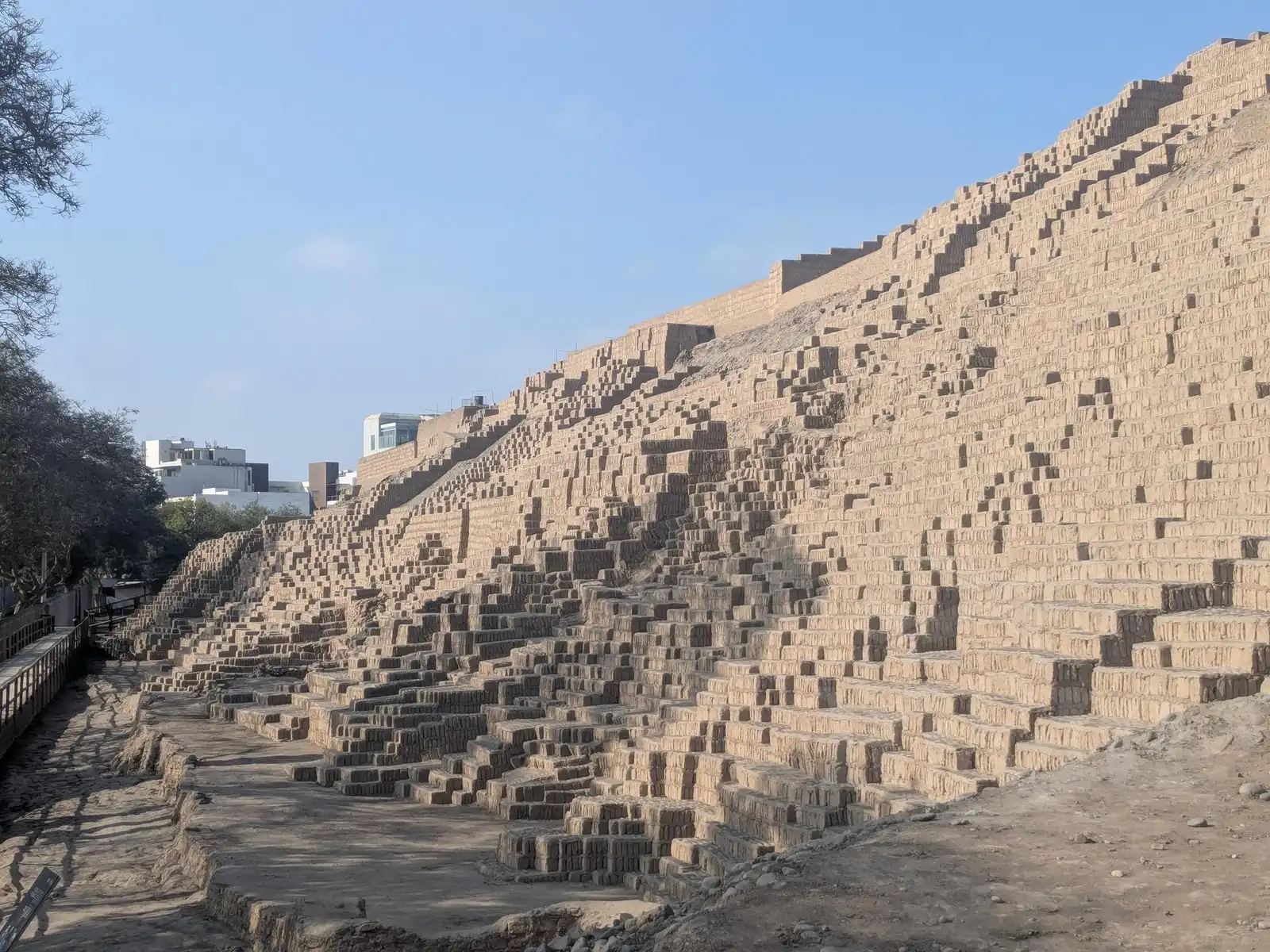
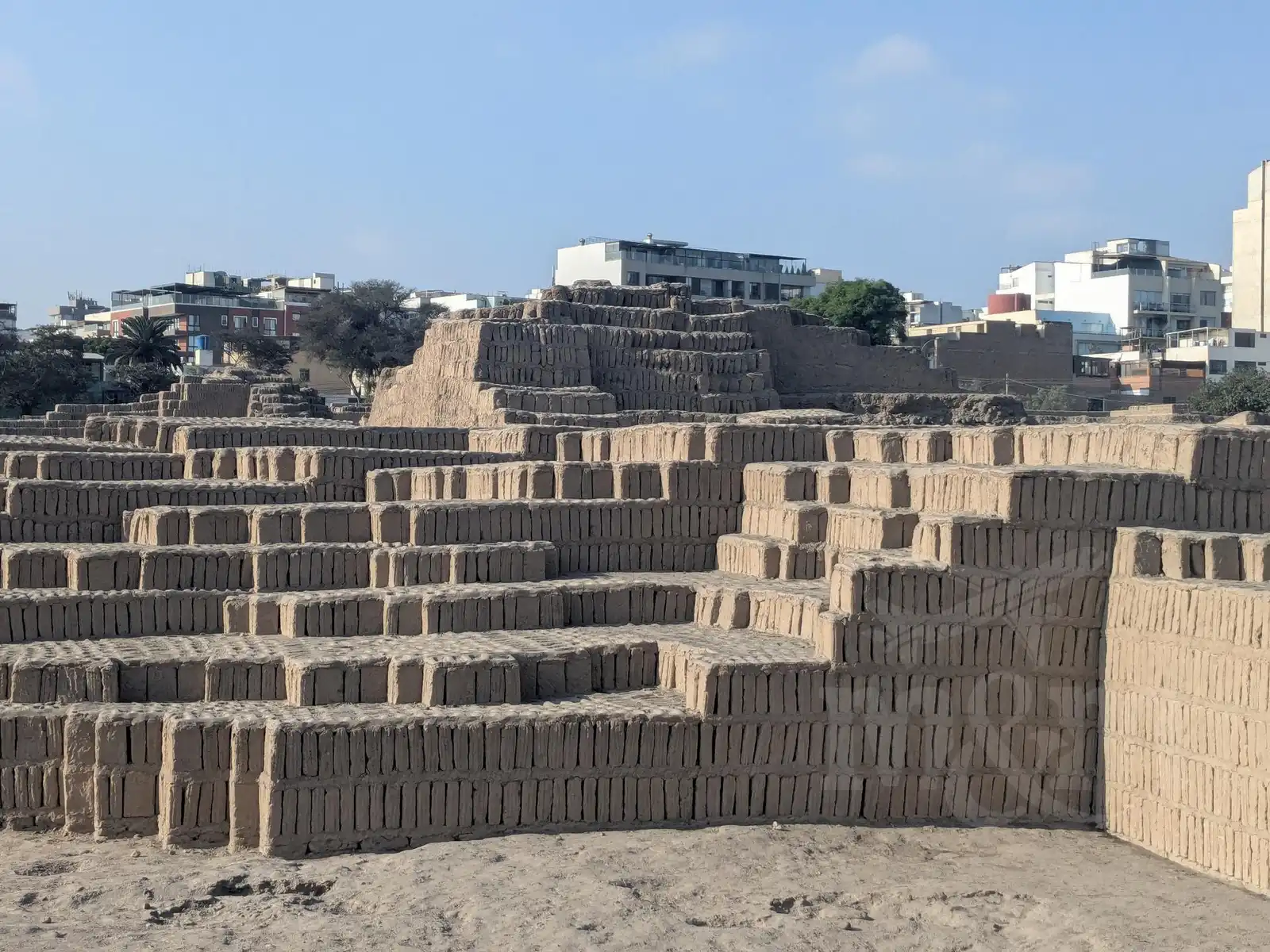
Then we headed to the Huaca Pucllana pyramid—an archaeological site right in the middle of the urban development. We wondered for a moment if it was even worth paying the entrance fee since part of the pyramid can be seen from the outside. In the end, it was definitely worth it. This more than 2,000-year-old adobe brick structure is surprisingly well-preserved, and views from its terraces are stunning. It is an interesting contrast to the modern buildings around it.
Having learned from the previous day, we didn’t underestimate the choice of restaurant for lunch this time. We found a great place called Casa Pacha, a short walk from the pyramid. A large portion of food including a drink for both of us cost 28 PEN (about 8 USD). A much more pleasant price than the previous day. We then looked for restaurants with similar prices for the rest of our stay in Peru—and mostly succeeded.
In the evening, we had a transfer to Huaraz, so we bought some small snacks for the bus during the day and then picked up our luggage at the hostel. Fortunately, they let us store them there during the day without any problems—as we later found out, this is a common (and very useful) service in Peru.
We took an Uber to the bus terminal, which was a bit of a bonus farewell experience. Traffic on the main roads in Lima is absolute madness. Lanes exist mostly symbolically—you drive where there is space, the horn is used more than the blinker, and the traffic jams seem never-ending. I really wouldn’t want to drive in Lima; I wouldn’t have the nerves for it.
For the trip to Huaraz, we chose a Cruz del Sur bus. The price was higher than we would have ideally liked—110 PEN (about 33 USD) per person—but the bus was comfortable, clean, and the seats could be reclined almost to a flat position. For our first night ride in Peru, we preferred to stick with a “safer” choice rather than trying the cheapest carriers right away.
Practical Information (2025 Prices)
- Airport Transport: A cheap and safe way to get from the airport straight to the Miraflores district is the Airport Express bus. It can be bought online or at a booth in front of the arrivals hall. It cost 15 PEN (about 4.5 USD) per person. A big plus (since we didn’t have a SIM card yet) was the Wi-Fi on board.
- Mobile Data: It is significantly cheaper to buy a local SIM card than to use an eSIM. We chose the operator Claro (and later Bitel for our second phone). 10GB of data for a month cost 30 PEN + 5 PEN for the prepaid card (about 10 USD total). You just need to go to a less visited branch or be patient. Passport registration for the SIM is mandatory.
- Where to Eat: Restaurants in the center are (as everywhere in the world) aimed at tourists and expensive. For cheaper and more authentic options, we recommend looking elsewhere (and look for the menu del día—soup, main course, and drink for a fixed price).