Peru - Amazon (Puerto Maldonado) and Lake Titicaca (Puno)
Puerto Maldonado
When we were planning our trip to South America, it was clear to us that we didn’t want to skip the Amazon either. The “real” one in Peru is mainly located in the north near Iquitos, but that didn’t quite fit into our itinerary. Fortunately, there is the southeastern region around the Madre de Dios River, which eventually flows into the Amazon. It’s a wilderness accessible by night bus directly from Cusco, and that’s exactly where our next steps led.
The night crossing from Cusco was quite bumpy, and the road wasn’t in the best condition, but it was survivable. We had read horror stories about how dangerous this route is and that it’s necessary to fly, but the reality was much calmer. Although we stumbled off the bus in the morning a bit sleep-deprived, we stepped out into the warmth. Even in the morning, it was T-shirt weather. Bliss compared to cold Cusco!
The bus station is located a few kilometers from the center, so we started looking for a ride. We met an Israeli couple and agreed to take a taxi together. We don’t like bargaining, but those two were pros. They just laughed at the taxi driver’s first offer and talked him down to half the price in no time.
Fortunately, in Peru, accomodations don’t care much about check-in times; in most cases, they let us check in first thing in the morning, and it was the same here. This was great because we could catch up on some sleep after the bus ride.
In the afternoon, we hit the streets to find a jungle trip. We definitely wouldn’t have dared to go there without a guide. We had a tip that we would get the best prices directly on the spot, and we can confirm that. The prices at the agencies were significantly lower than those they had previously offered us via WhatsApp or those on their websites.
We didn’t quite understand the vastly different price categories, but the map eventually explained it. Cheaper accommodations are around Puerto Maldonado, which are quicker to get to, but there are fewer sights and animals. More expensive tours go further from civilization, where you can see more. Even though we usually try to be budget-conscious, we ultimately decided on a more expensive tour with more remote accommodation (even with a pool!) that took almost 3 hours to reach. The three-day all-inclusive package (transport, accommodation, food, and guide) cost us 200 USD per person. It was the most expensive item in our Peruvian budget, but we didn’t regret it.
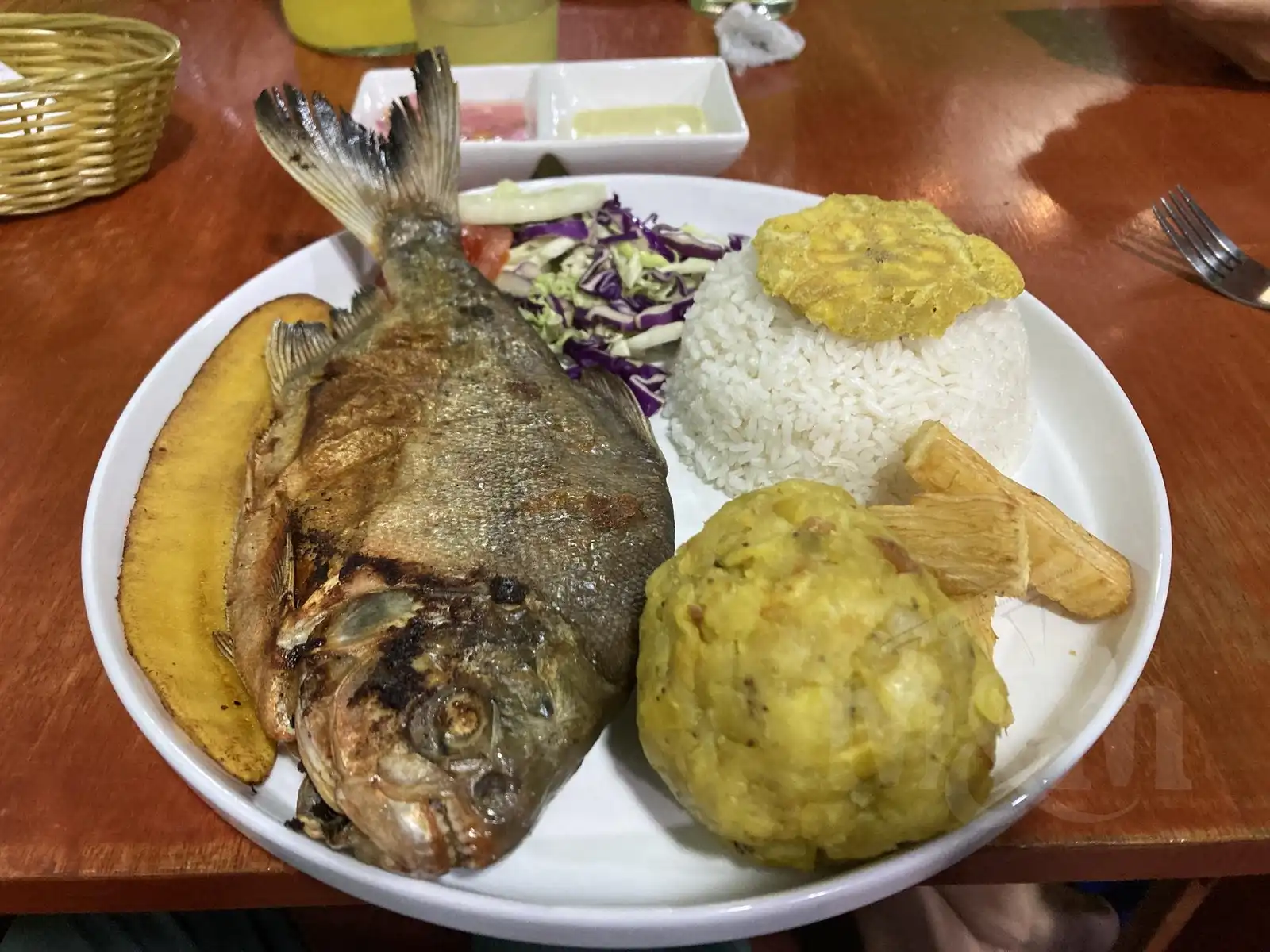
Our departure was the next morning, so we had the rest of the day free. We got a tip for a restaurant near our accommodation, so we went there for dinner. It was new, it wasn’t even on the maps, but it had plenty of local food: Paco fish (a relative of the piranha) and traditional Juane—seasoned rice with meat baked in a leaf. Huge portions for cheap. At the hotel in the evening, we packed our things for a few days in the jungle, leaving our large luggage at the hotel.
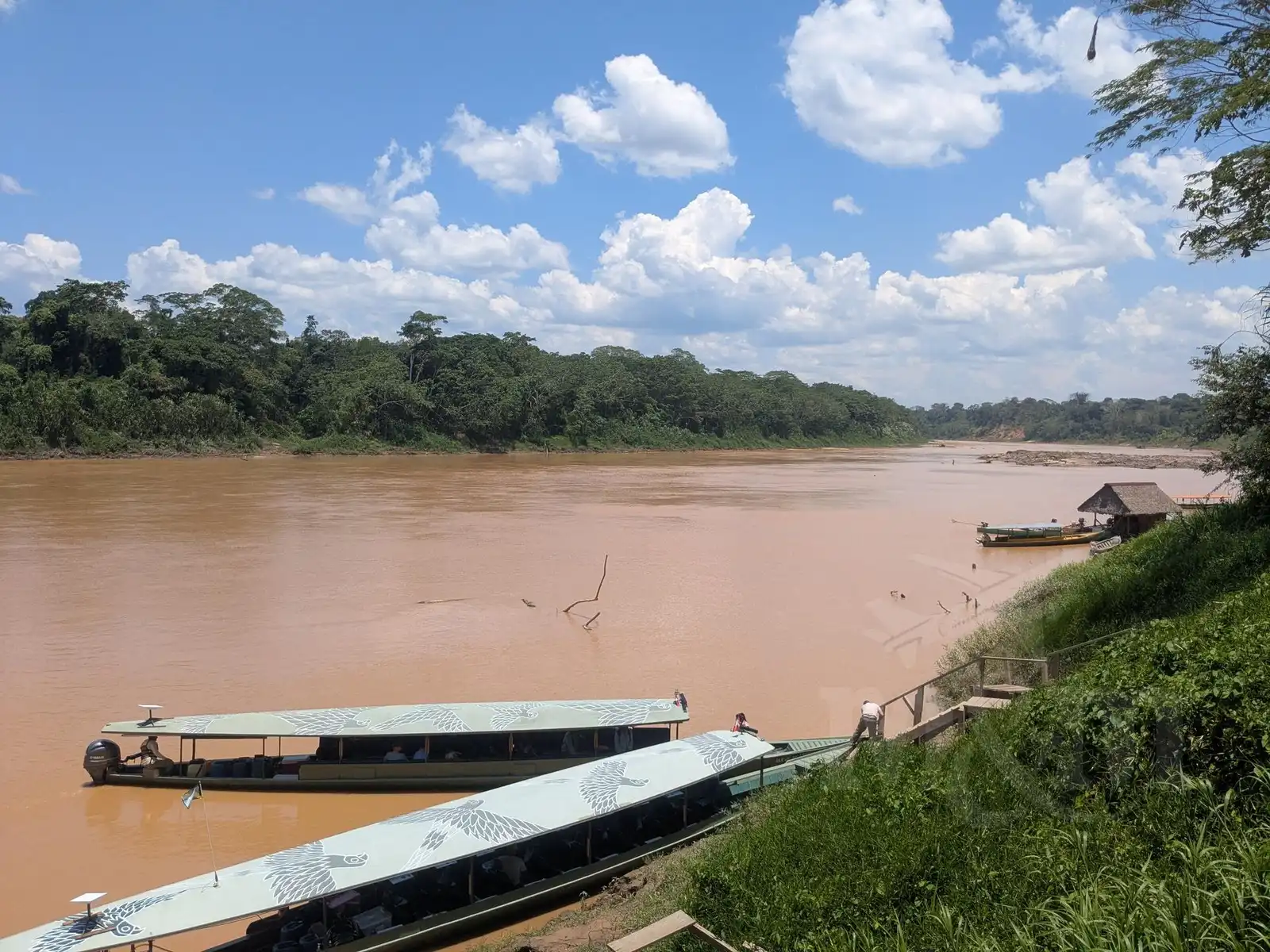
In the morning, a van took us to the Tambopata River, where we transferred to a motorboat. The journey upstream to our accommodation took another hour. The only flaw of the boat ride were the gold seekers in the riverbed. Their noisy and smoking pumps, which they use to sift sand from the bottom, significantly spoiled the impression of untouched nature.
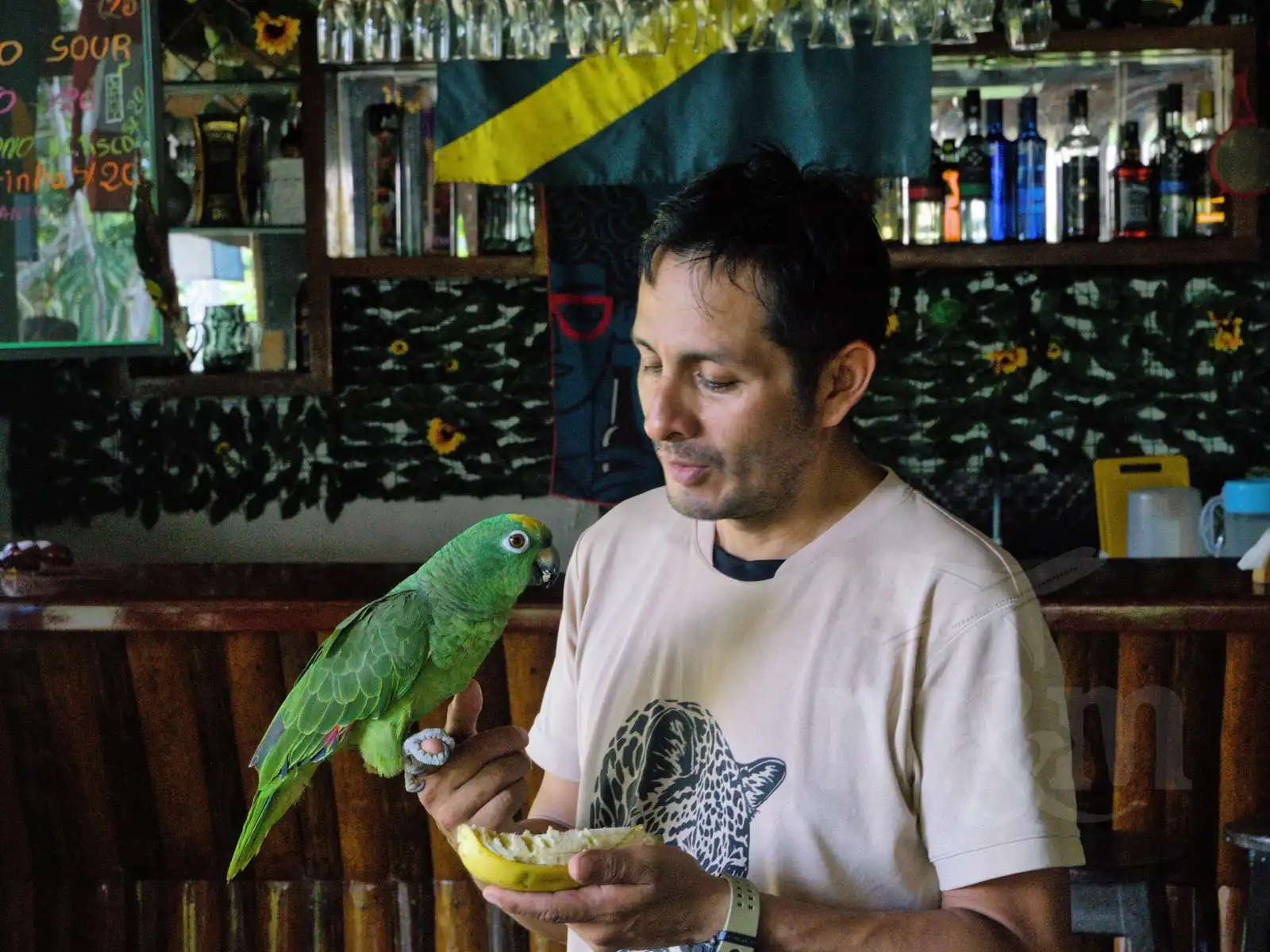
Our lodge was great—cabins scattered in the forest, a communal dining room, and that promised pool right next to it. Immediately upon arrival, we were greeted by a guide who arrived stylishly with a parrot.
What we experienced in the jungle:
- Introductory walk: First encounter with monkeys, but not many other animals. The guide then mainly showed us plants.
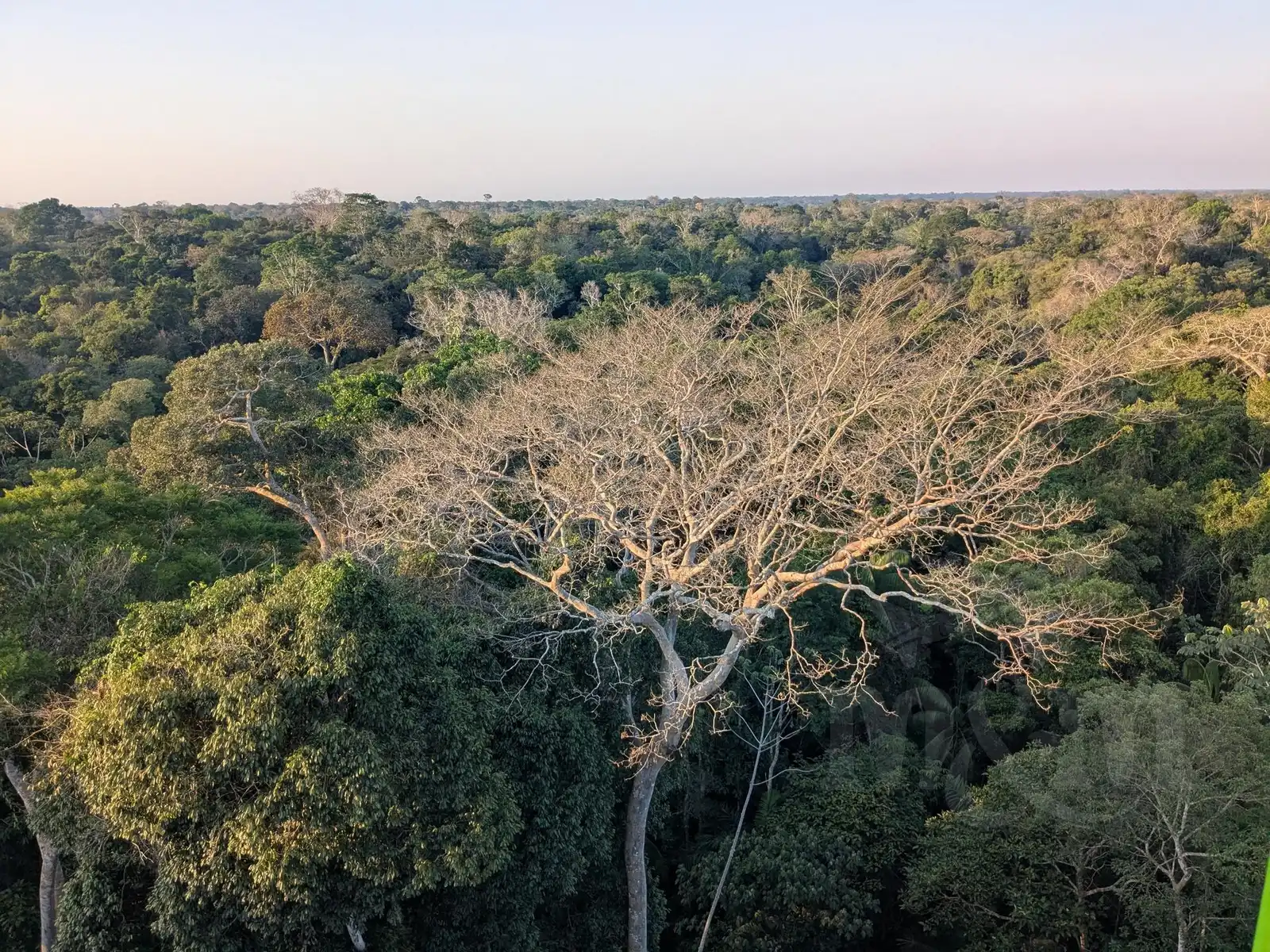
- Observation tower: A climb above the treetops, from where we observed toucans in the distance.
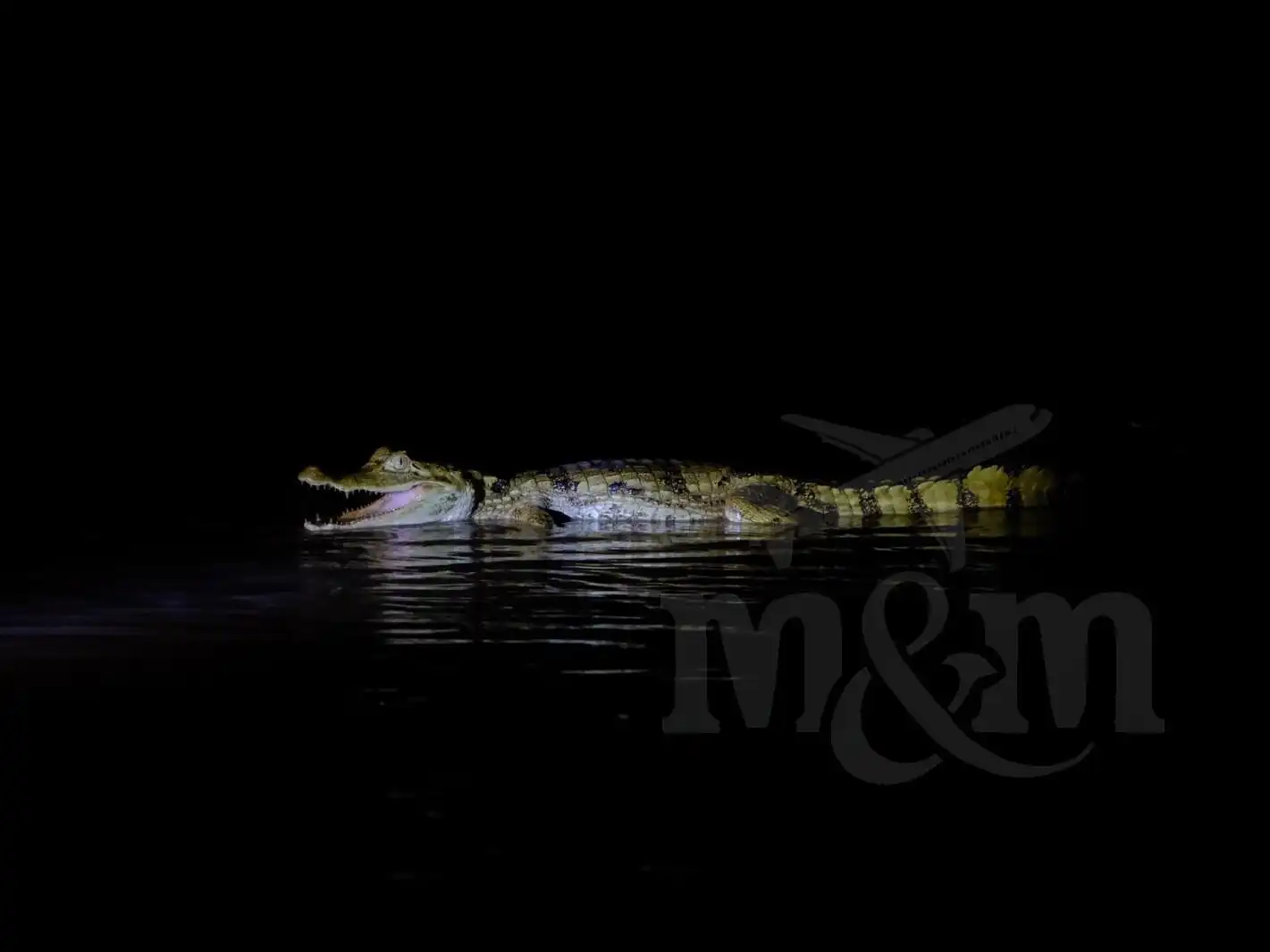
- Night boat ride: Looking for caimans on the river—basically searching for glowing eyes in the dark.
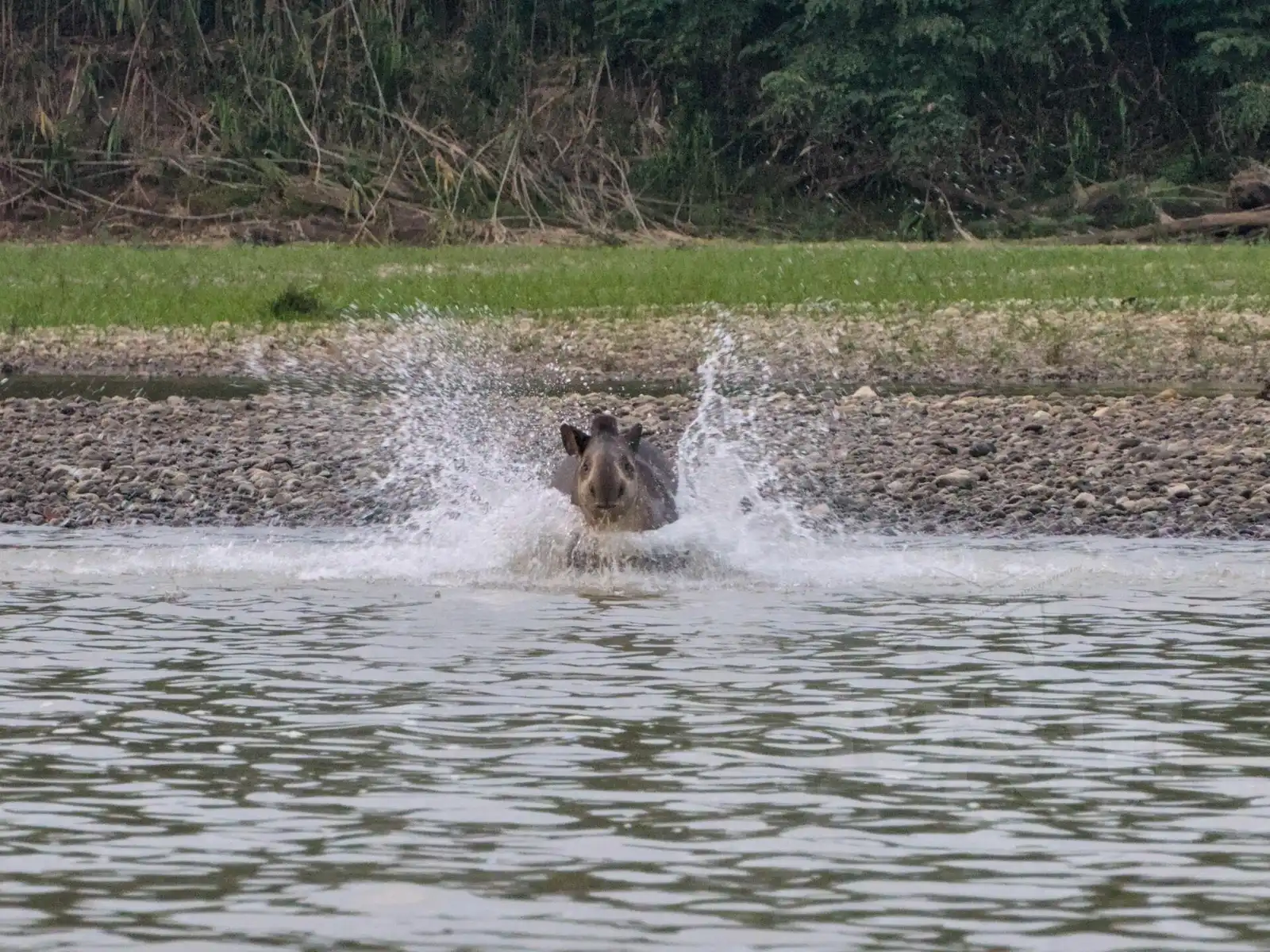
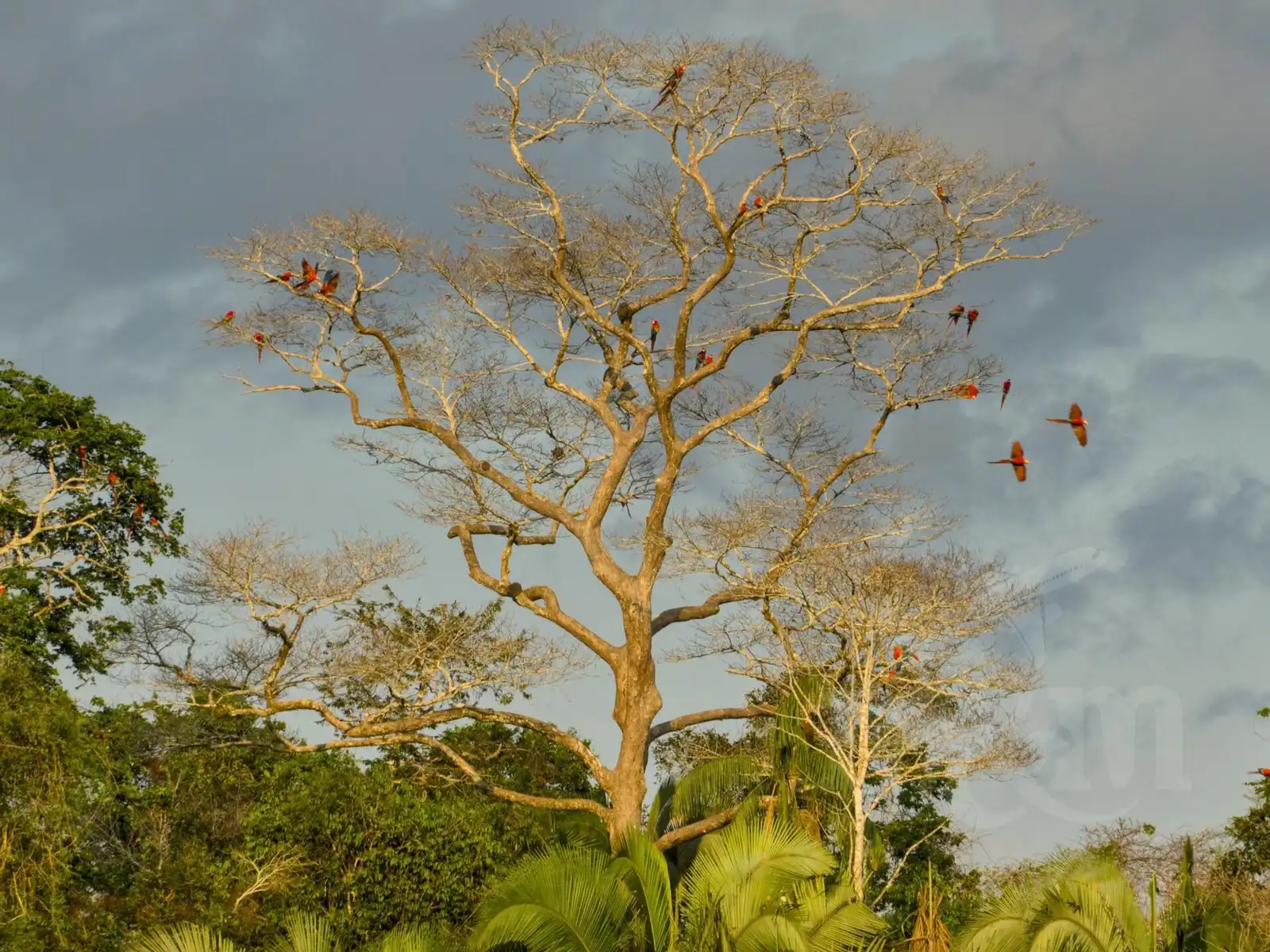
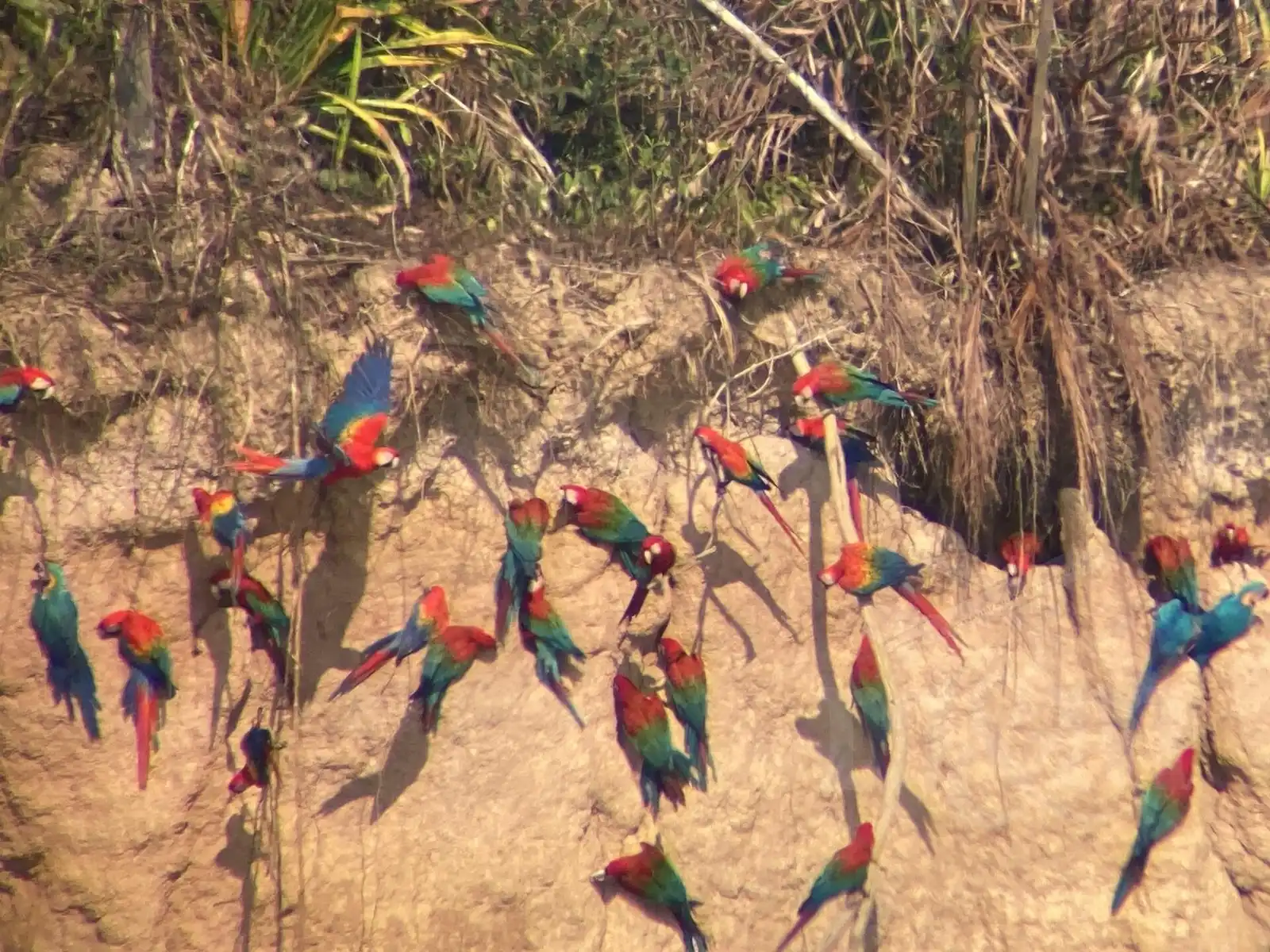
- Parrot Clay Lick: This was the highlight. Early in the morning, parrots fly in to lick the salty clay on the bank (the so-called colpa). The roar of hundreds of birds was incredible! Along the way, we also spotted a tapir and a family of capybaras.
- Canoeing on the river: In our opinion, a bit boring activity; there isn’t actually that much to see on the river itself.
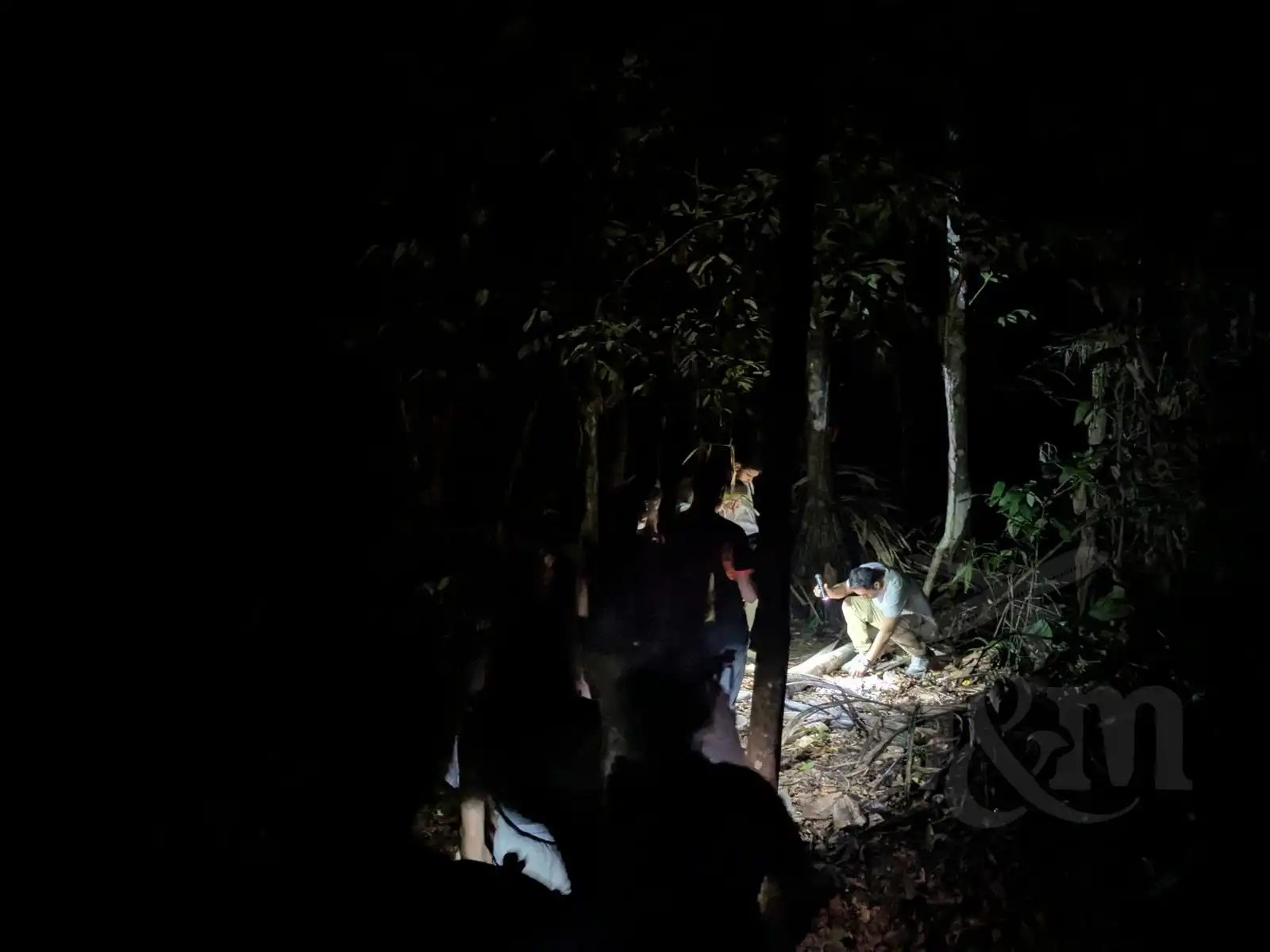
- Night jungle: We saw fire ants, multi-colored frogs, giant spiders, and lizards. Fortunately, you go with a guide in a group; I would be scared on my own if I knew what kind of monsters live here.
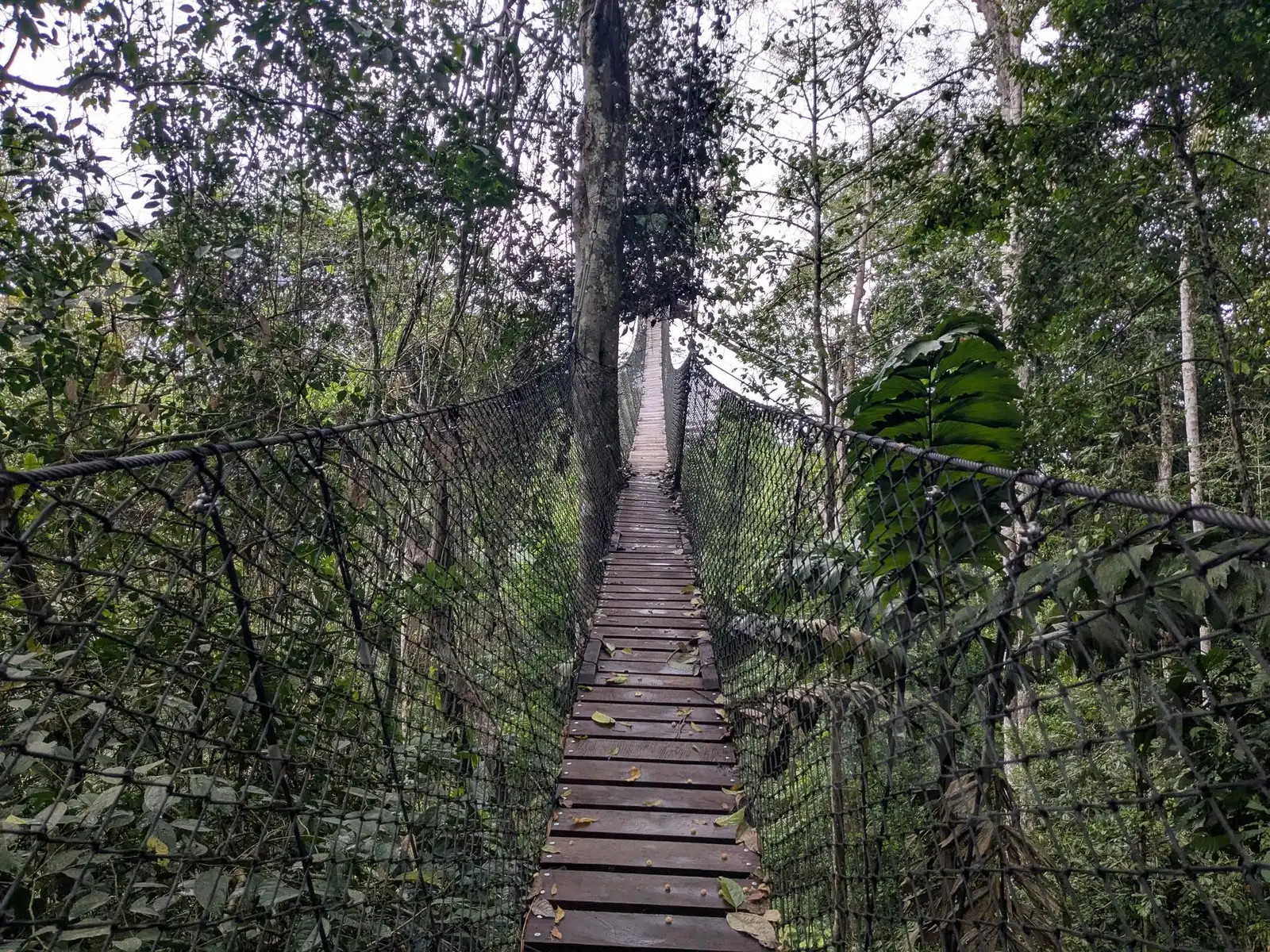
- Canopy Walk: A walk along rope bridges high in the treetops.
All in all, the Amazon was great, even though we perhaps saw fewer animals than we had hoped (it is the wilderness, after all, and depends on the season and luck). It was pleasant to rest for a few days and not worry about anything, not even travel logistics or food. After a month and a half on the road, we really needed it. We rested a bit, gathered our strength, and set off for our next destination: Lake Titicaca and the city of Puno.
Puno, Lake Titicaca
We headed to Puno directly from hot Puerto Maldonado. But buying a direct ticket was a difficult job—the big companies only offered connections with a night transfer in Juliaca, which we had heard warnings about as a dangerous and inhospitable place. In the end, we chose a lengthy but safer option: we went back to Cusco and from there immediately on to Puno. It was an endless, roughly eighteen-hour journey with only one short break in the morning during the transfer. By the end, I was quite bored on the bus and didn’t know how to keep myself entertained, but eventually, we successfully reached our destination.
In Puno, we planned more days than would be necessary for mere exploration. In neighboring Bolivia, where we were headed, elections were just taking place. The previous ones had been accompanied by riots and violence, which we didn’t want to get mixed up in. So we decided to stay in Peru instead and see how the situation developed. Additionally, we needed to rest, wash piles of clothes, and sort out our photos. We treated the first two days as purely relaxing. We entrusted our clothes to a local laundry, where they washed and folded them for a few coins, and we just strolled around the city. It was quite cold there (just above freezing at night), but our hotel was the first in all of Peru to have heating, which was absolutely fantastic.
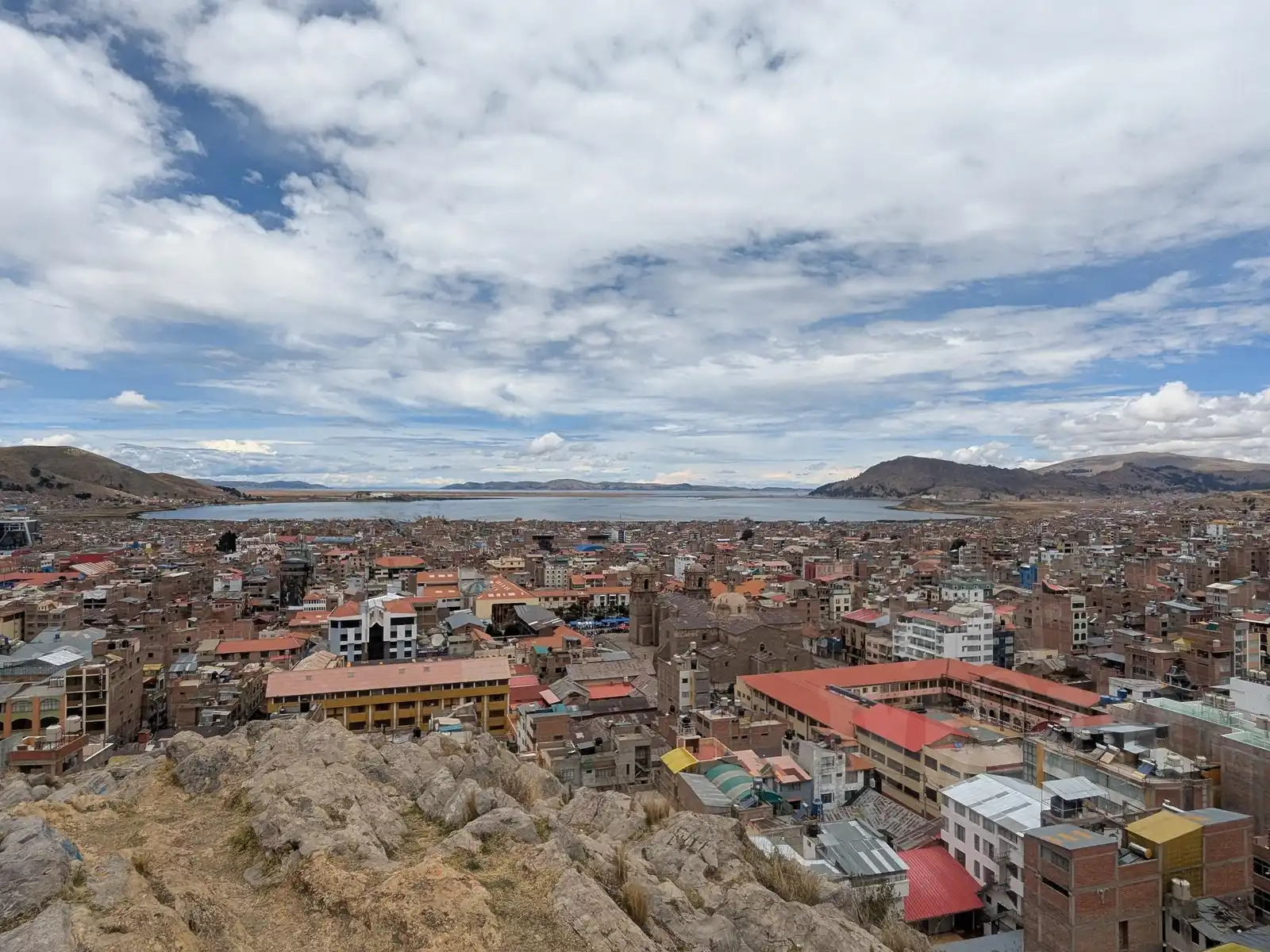
Only on the third day did we set off for the main attraction in Puno—Lake Titicaca and the islands on it. Closest to the city lie the famous Uros floating islands, where people go for short turnarounds. But we wanted to go further, so we chose a combined trip with an overnight stay on the more distant island of Amantaní. At the iPeru info center, they claimed that boats for locals (colectivo boats) go to the harbor, but after a fruitless search, we let an agency talk us into a boat that only pretended to be a colectivo. We paid 120 PEN for both of us (round trip) and, believing that the way there and back was secured, we departed.
The first stop was the Uros islands. I confess that we didn’t like it much. Seeing how people live on floating reed islands was interesting, but overall it’s one big tourist trap. The local residents immediately started offering us reed souvenirs. Then they lured us into their homes (another sales area) and finally tried to push us toward a paid cruise on their “traditional” boat. We, along with a few French people, withstood the pressure and refused. We understand that life there isn’t easy, but this aggressive pressure to buy something was quite unpleasant for us. At least I could (with the permission of the local “chief”) fly my drone and take some nice shots from above.
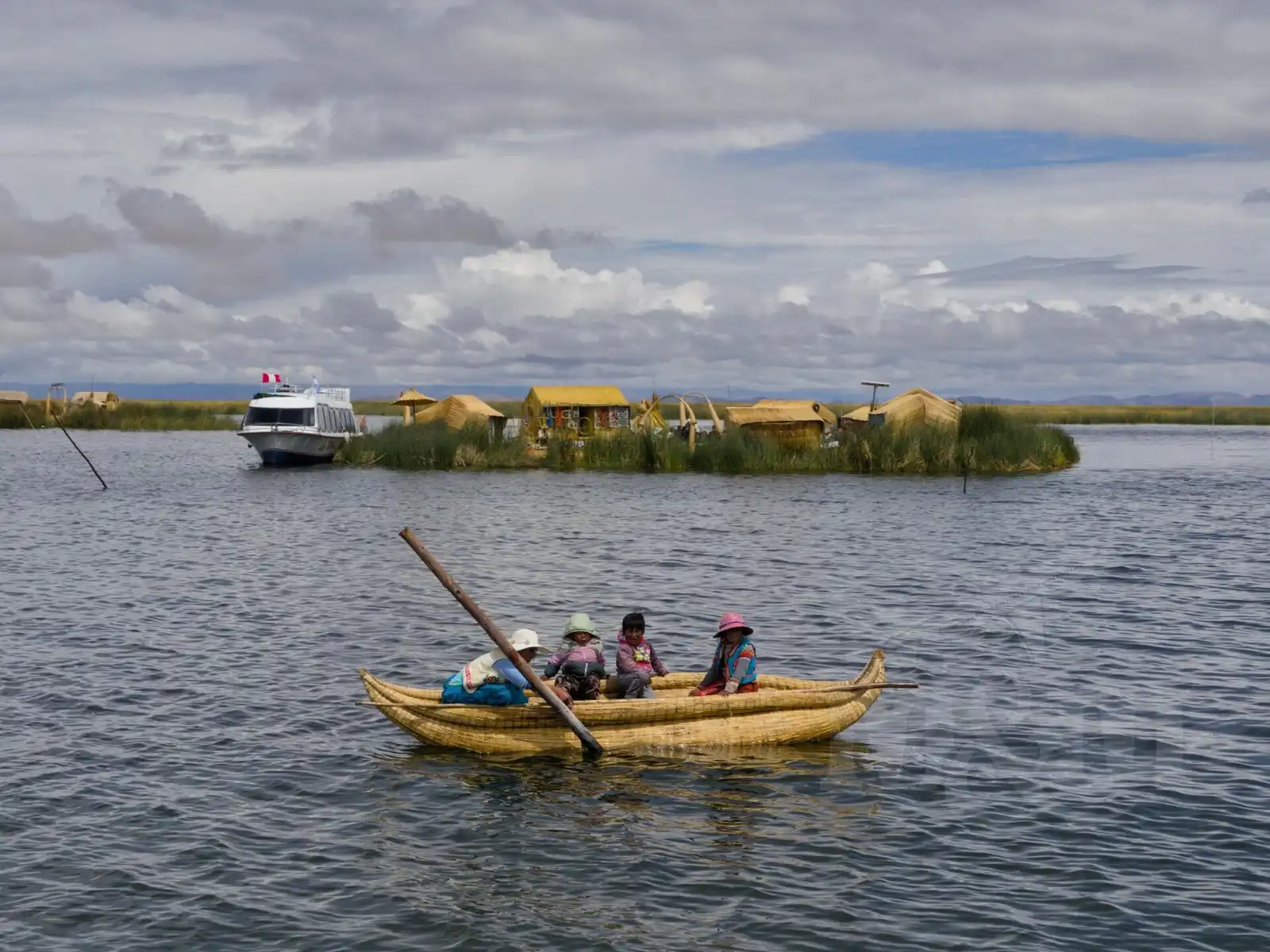
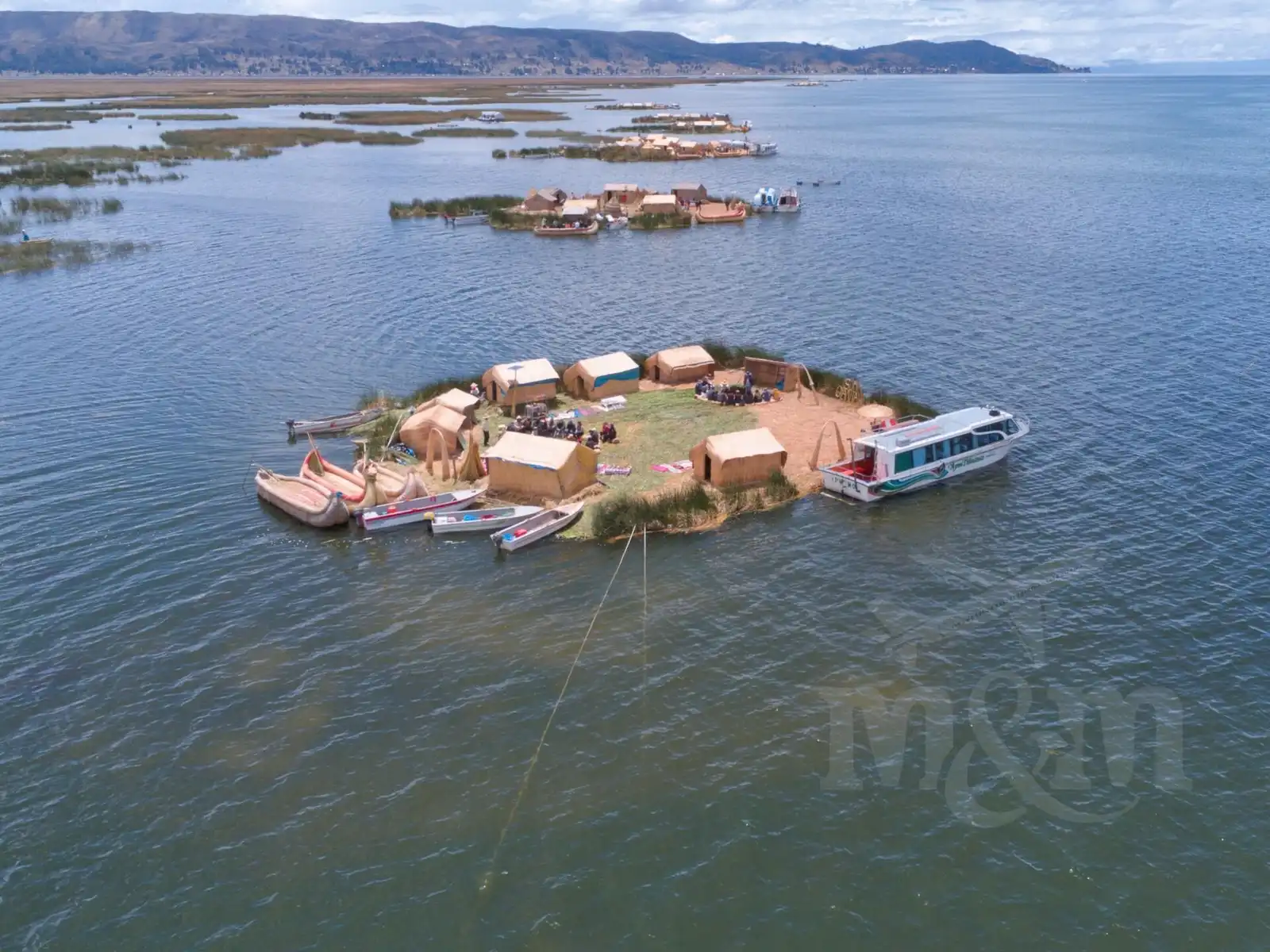
It was another two hours of sailing to the island of Amantaní. Along the way, someone from the crew offered to arrange a homestay for us with locals. We agreed, even though the price was a bit higher than we expected. At least we made sure that we would also get food and pay the money directly to the specific family (we had read that some organized tours collect the money and then don’t pay the locals).
At the harbor, an old lady named Juanita picked us up and led us to her modest little house. For lunch, she prepared dried potatoes with grilled cheese—Magda was thrilled that she got grilled cheese after months. As a thank you, we brought her fresh fruit, which is a rarity on the island. In the afternoon, we hiked up the two highest hills, Pachamama and Pachatata. The whole island is car-free, there is absolute peace, and the views of the endless surface of the lake remind you more of a view of the sea. After a good dinner, we went to bed early—there isn’t much else to do here after sunset anyway.
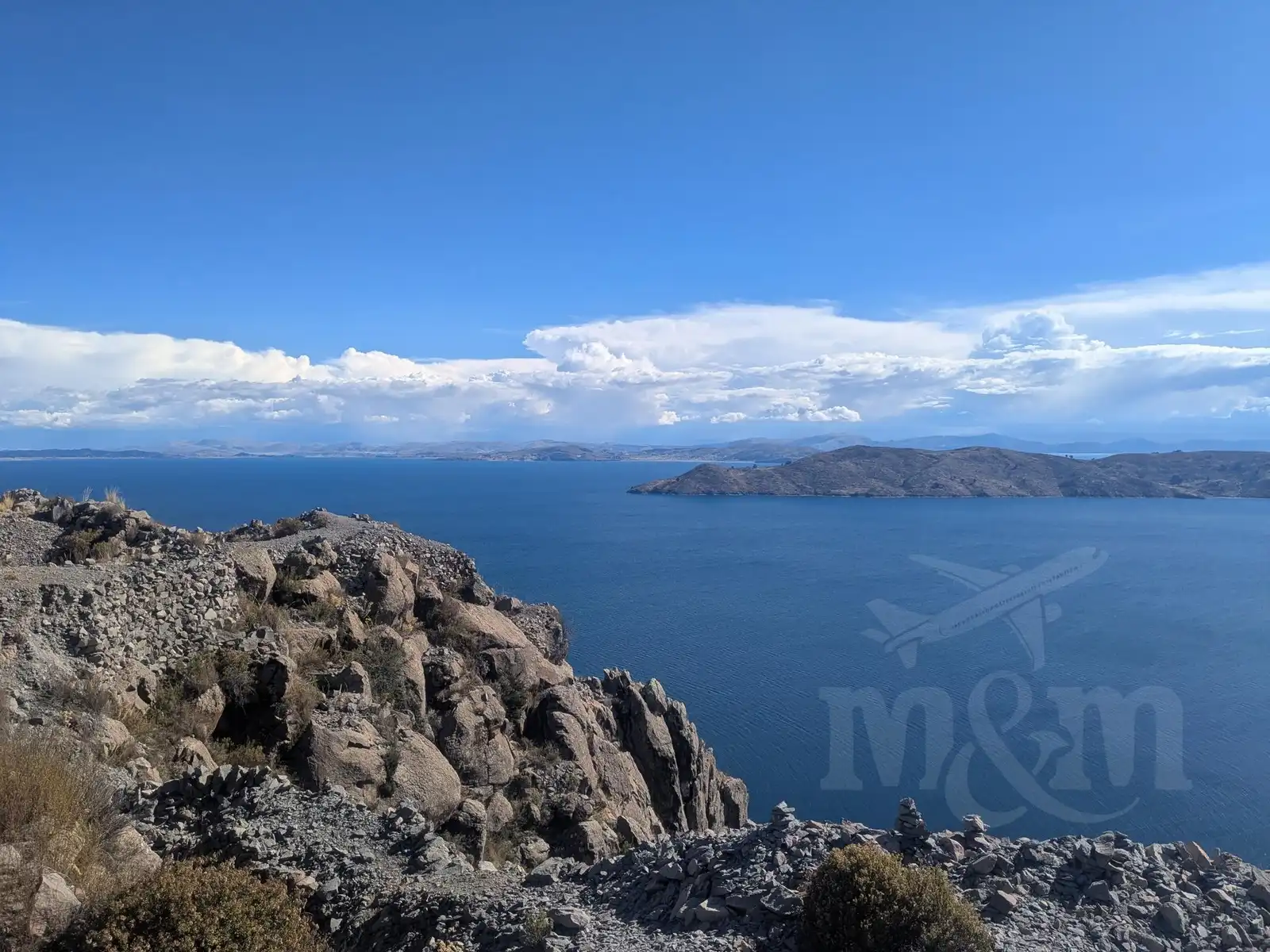
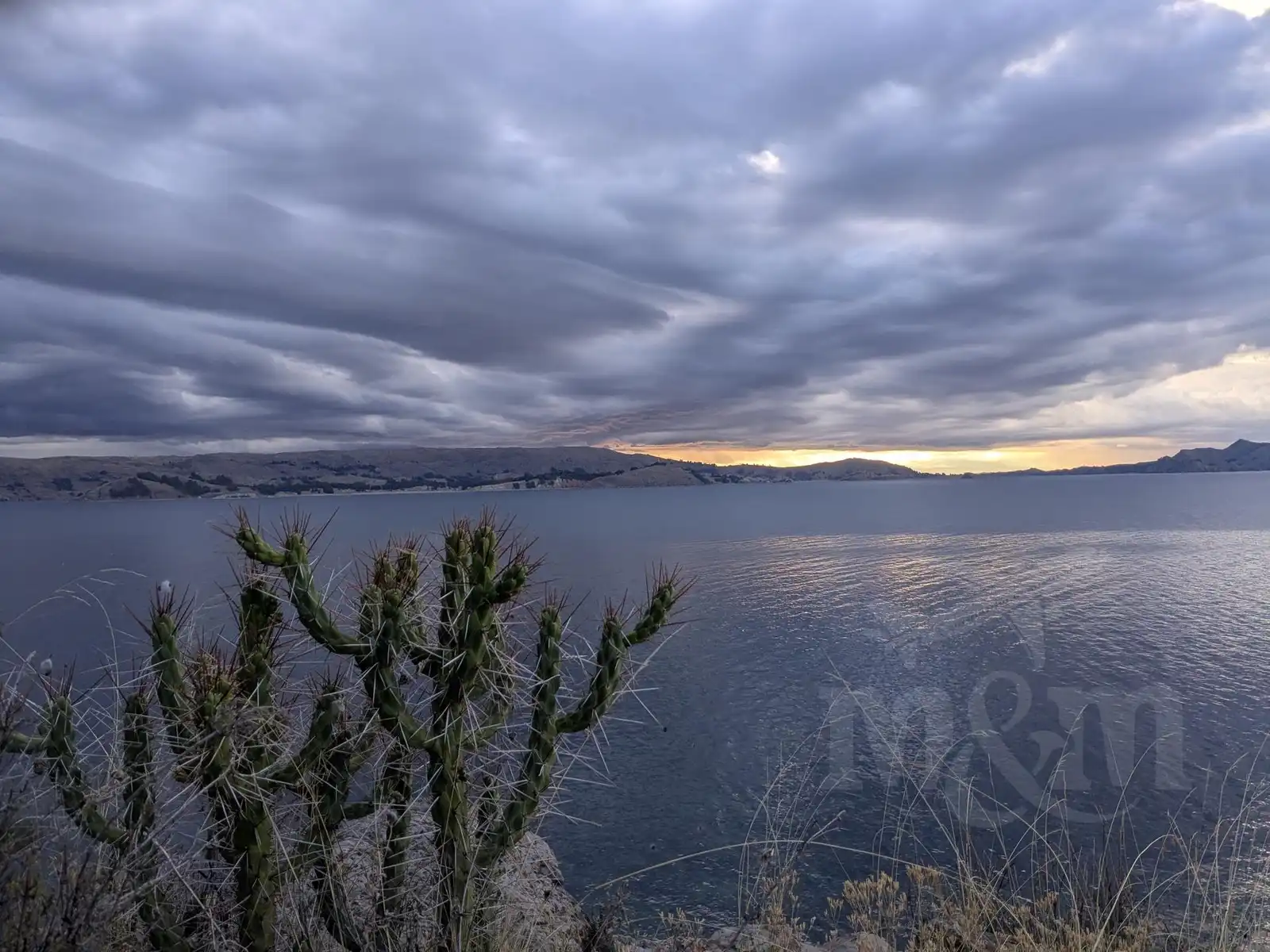
In the morning, after breakfast and another walk, we waited in the harbor at noon for our boat. At 12:30 still nothing, but we comforted ourselves with “Peruvian punctuality.” After a while, though, we couldn’t take it and started asking around. At the harbor, they told us they hadn’t seen our boat today and it probably wouldn’t come. We found a number on our payment confirmation and tried to call. The woman on the other end started claiming that the boat had been there and we were late. When we denied it, she started screaming at us and hung up. We were legitimately stranded on the island.
Fortunately, we found out that a real colectivo boat does indeed exist. However, it doesn’t go directly to Puno, but to the Capachica peninsula. We got ourselves transported there, took a taxi from there to the nearest town, and then a van to Puno. It cost us several hours of time and 50 PEN extra. Above all, though, we were thoroughly angry.
The next day, we were preparing to cross into Bolivia (the situation after the elections looked calm). Instead of the morning direct bus to Copacabana (operated by several companies, but all at an early morning hour), we chose a more pleasant option: a colectivo to Yunguyo, then a taxi to the border (Kasani), and from there another ride to Copacabana. These leave all day and are thus ideal for those who (like us) don’t like getting up early in the morning.
Before leaving, we stopped by the office of that agency. It was closed. So we went to the neighboring iPeru, where the official lady was quite interested. She bravely argued over the phone with several people on our behalf and asked us to fill out an official complaint. We thought the form would end up in a trash bin somewhere, but we were wrong. A month later, we received an email saying that the consumer protection office (INDECOPI) had looked into our complaint. They didn’t force the agency to refund the money, but at least we had the good feeling that we had made their lives a bit more difficult. By the way, in the reviews of that agency (and other agencies), we found similar experiences; it’s not an isolated case. Fortunately, this was the only bad experience we had during our two months in Peru.
For us, however, that was all from Peru for now. The van dropped us off in Yunguyo, where we shared a taxi to the border with a friendly Swiss couple. We had our Form 250 carefully prepared, which is supposed to be required to enter Bolivia, but the customs officer didn’t care at all. He just stamped our passports without a word, and we stepped into another country.
Practical Information (2025 prices)
- Jungle Trip: It’s enough (at least outside the main season) to arrange the jungle trip on the spot. There are plenty of agencies, most will have availability, and you’ll get a better price than online.
- Amantaní Accommodation: The price for 1 night in a homestay on Amantaní was 70 PEN (approx. 20 USD) per person, and as far as we know, it was uniform for all accommodations of this type. This also includes breakfast, lunch, and dinner.
- Peru/Bolivia: If you have time for either Puno (Peru) or Copacabana (Bolivia), in our opinion, Copacabana is better.